What to Know Before Buying a Super Clone Watch: An Evidence-Based Checklist
Verified Reddit Watch Specialist (RepTime / RepGuild)
Buying a super clone watch is less about finding the highest grade and more about verifying a specific watch. Terms such as super clone, 1:1, AAA, and exact replica watches are seller-defined marketing language. They do not create a shared standard for materials, movement construction, finishing, testing, or after-sales support.
A careful buyer therefore works from evidence: the exact reference and configuration, written specifications, current photos of the sample that will ship, test results with clear limits, and policies that explain what happens if the order is delayed or the watch arrives with a fault. This checklist shows what to confirm before payment.
At a Glance
| Claim to check | Evidence worth requesting | What the evidence cannot prove |
|---|---|---|
| Model and configuration | Reference, size, dial, bracelet or strap, clasp, functions, and sample-specific photos. | A catalog image cannot show the condition of the watch that will be shipped. |
| Materials | Written case, bracelet, crystal, coating, and insert specifications from the seller. | Color and polish in a photo do not verify a steel grade, crystal composition, or plating thickness. |
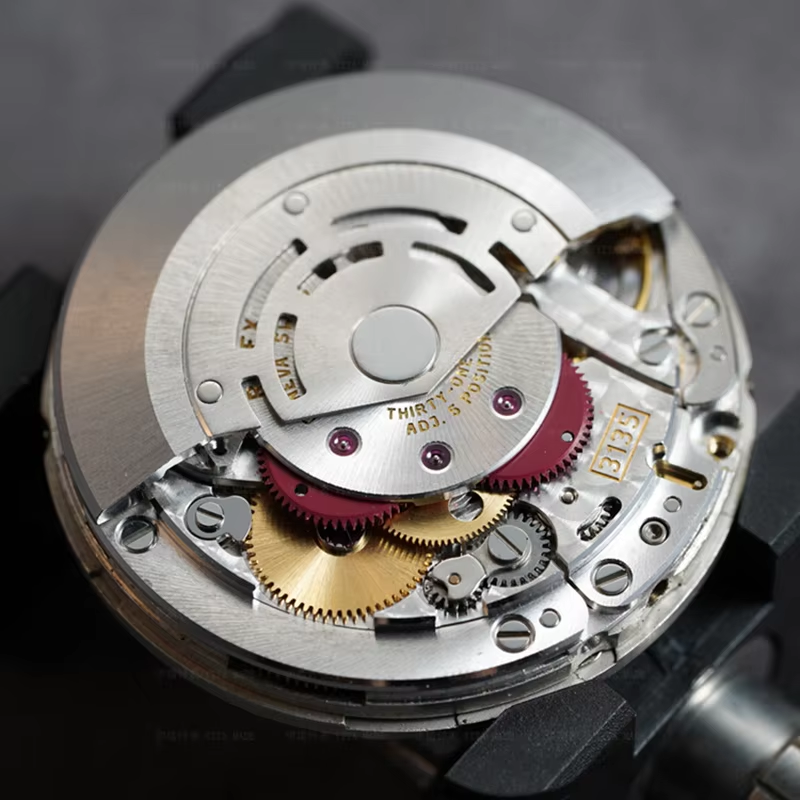
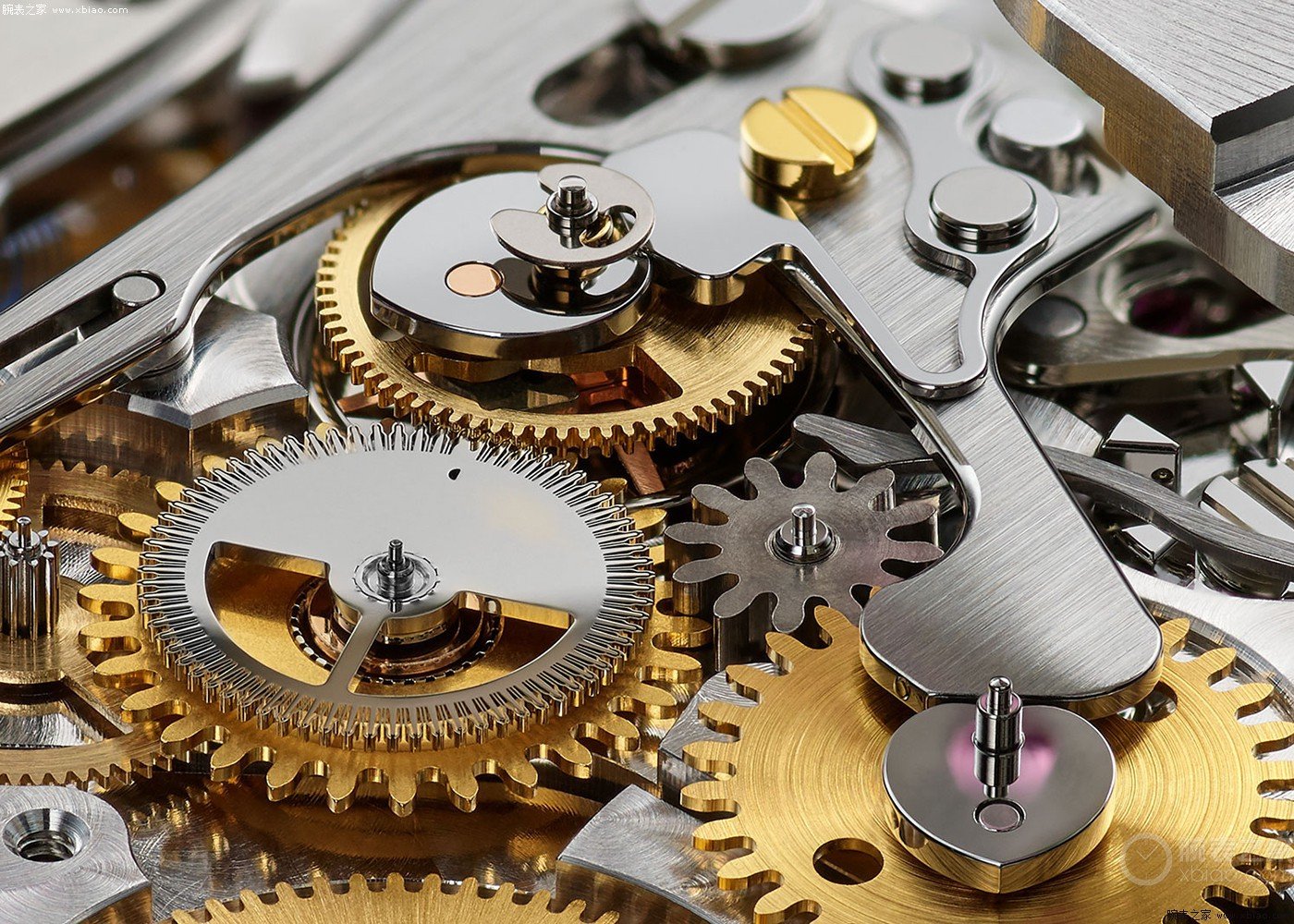
| Movement | Movement family, functions, service position, and a test image linked to the same sample. | A decorated bridge or rotor does not establish provenance or future reliability. |
| Water resistance | A pressure-test result for the exact watch, with the test method and seller policy stated. | A screw-down crown or dive-watch appearance is not a water-resistance guarantee. |
Decide on the exact watch before comparing sellers
Start with the model rather than the seller's grade label. Record the reference, case size, dial color, bezel, bracelet or strap, clasp, date layout, and every function you expect to work. Two watches can share a familiar design while differing in thickness, hand length, printing, date position, bracelet construction, and movement.
Prioritize the details you will notice in daily use. A buyer who values a thin case may accept a simpler movement; another may care more about a working chronograph or quick-set date. This makes it easier to judge whether a higher price pays for evidence and execution that matter to you, instead of an unexplained quality tier.
Turn the listing into a written order specification
Before payment, restate the order in one message: model and reference, case size, dial colour, bezel, bracelet or strap, clasp, movement, functions, included accessories, price, shipping method, and the seller's stated support period. Ask the seller to confirm that summary. This creates a clearer standard than a product link that may later be edited or removed.
Save the product page and every important answer. If the seller describes the crystal, case material, coating, movement, pressure test, or water resistance, preserve the exact wording without treating it as independent certification. The record helps you compare the delivered watch with the transaction that was agreed.
Treat material and movement descriptions as claims to verify
A listing may describe a high quality replica watch as using a particular steel grade, sapphire crystal, ceramic, or a Swiss or Japanese movement. Those statements may be useful, but appearance alone cannot confirm them. Ask the seller to identify the movement family and materials in writing, then keep that description with the order record.
Movement labels need particular care. A product can resemble another caliber without sharing its architecture, parts compatibility, or service requirements. Ask which functions are native, whether decorative parts are fitted, and whether a local watchmaker is likely to service it. No movement name or timegrapher photo guarantees years of trouble-free use.
Request QC for the exact sample that will ship
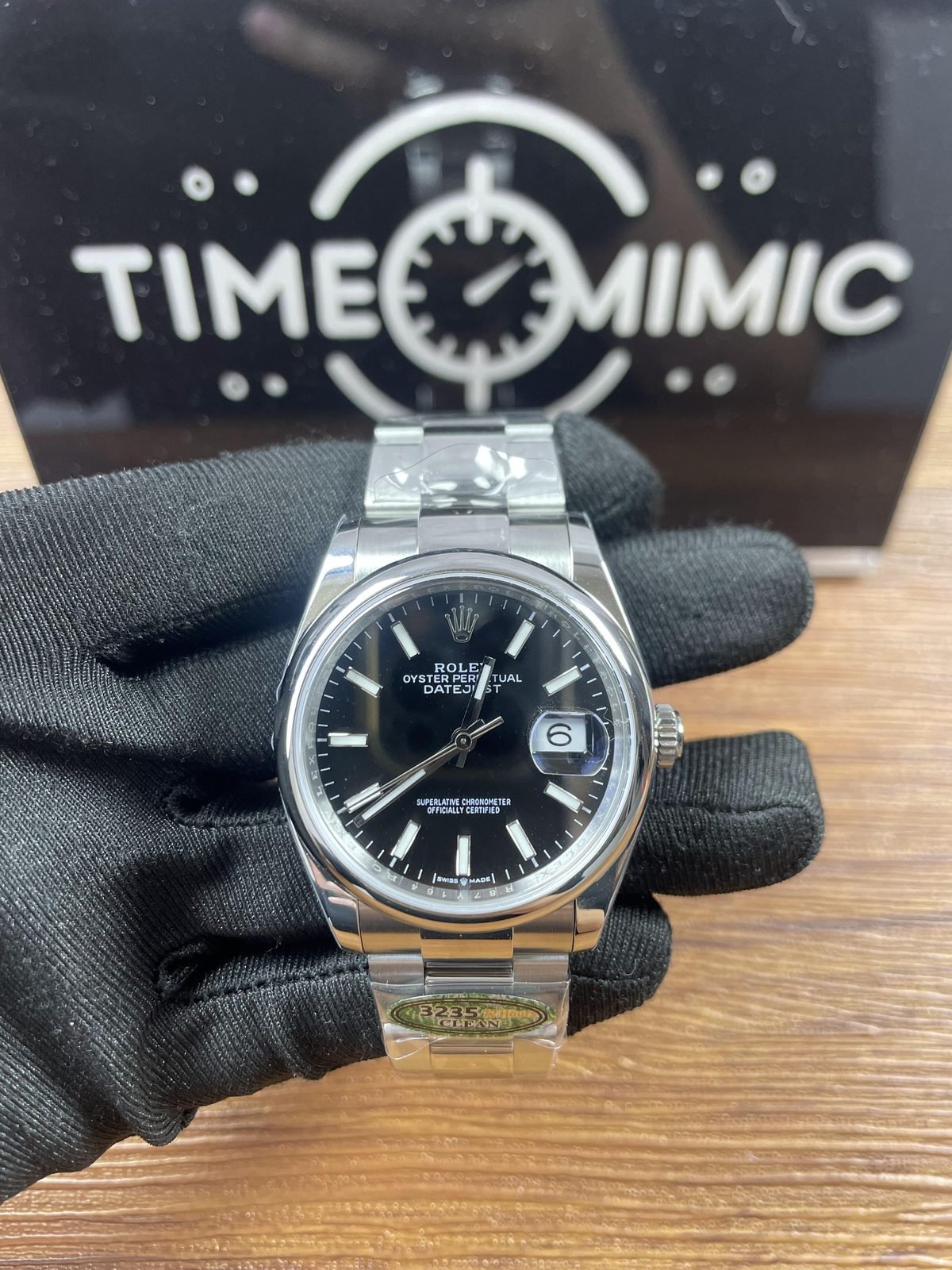
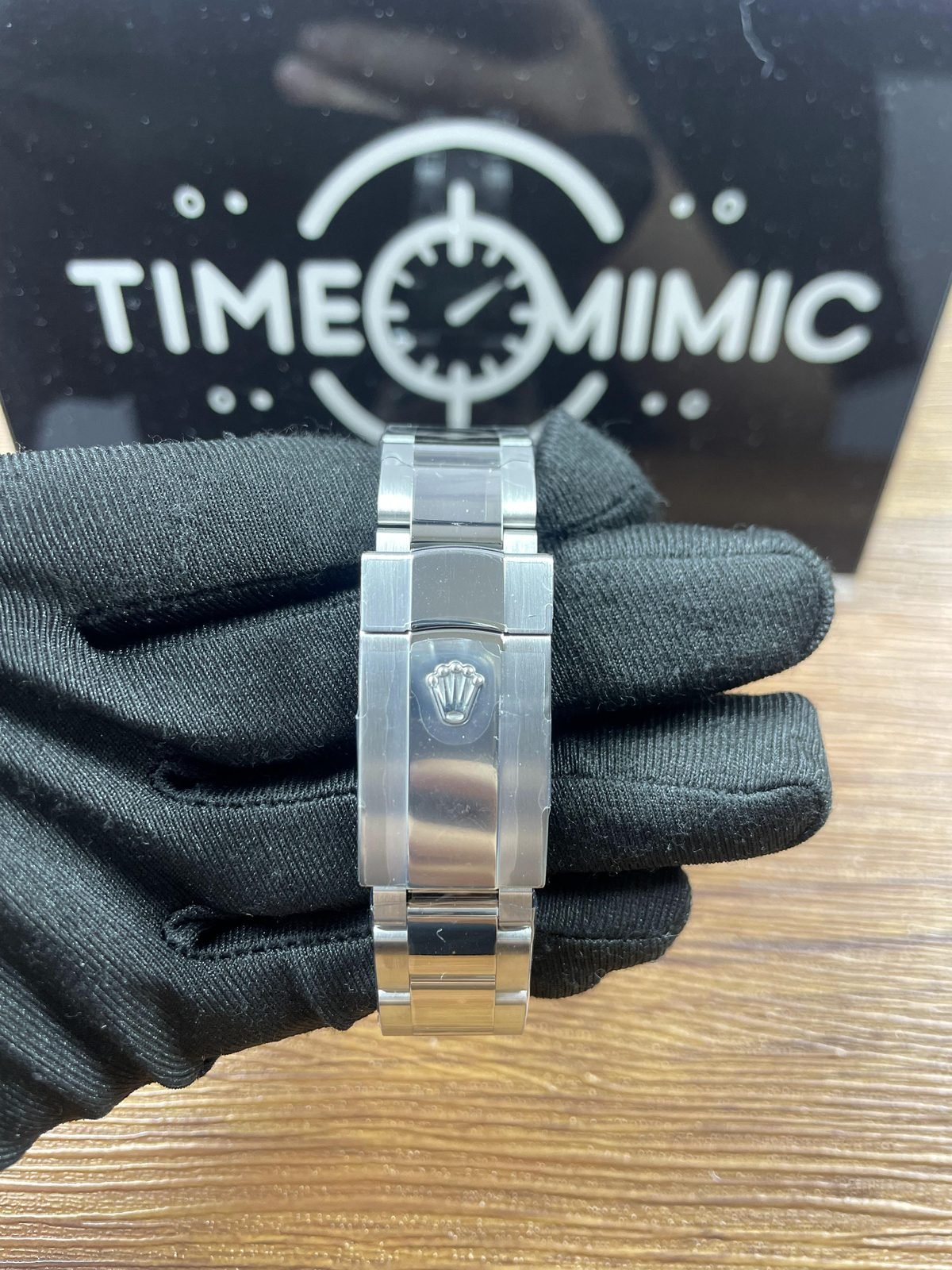
Sample-specific QC is more useful than edited product photography. Request a straight-on dial view, both case sides, crown, clasp, end links, caseback, and any area that tends to show alignment or finishing problems. Ask for the date to be shown in more than one position when date alignment matters, and request a short function check for complications.
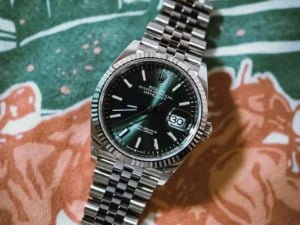
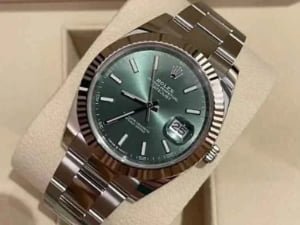
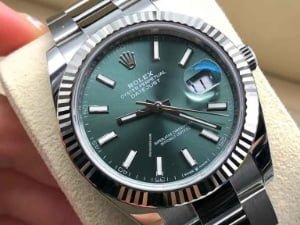
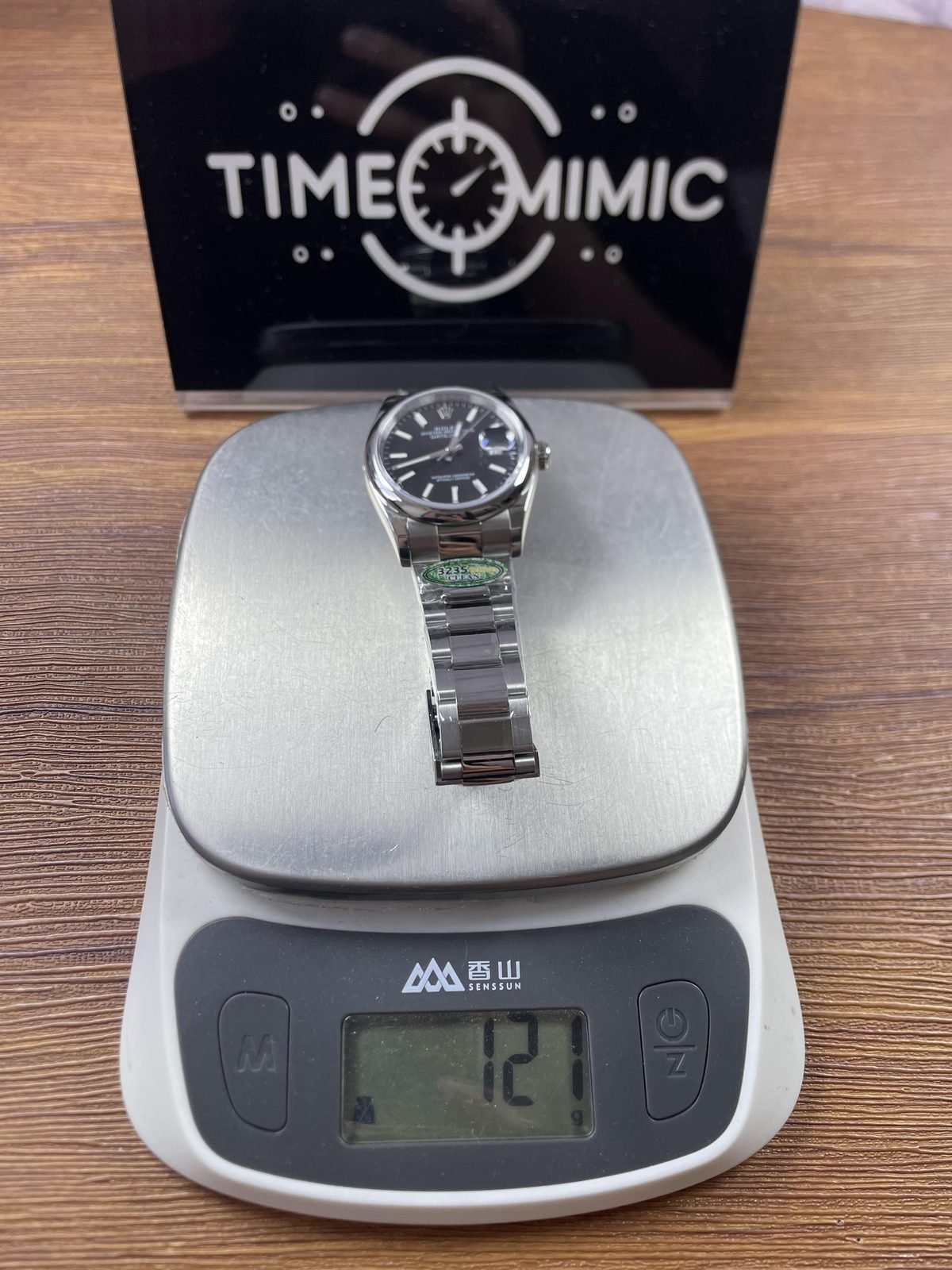
The two images below are visible QC examples for one Datejust-style sample. A front view supports checks of dial printing, hands, date, bezel, case, and bracelet. A clasp view documents finish, protective film, and exterior condition. They do not authenticate the watch or verify metal composition. Use them as examples of the angles and detail a useful QC set should provide.
Read mechanical test results in context
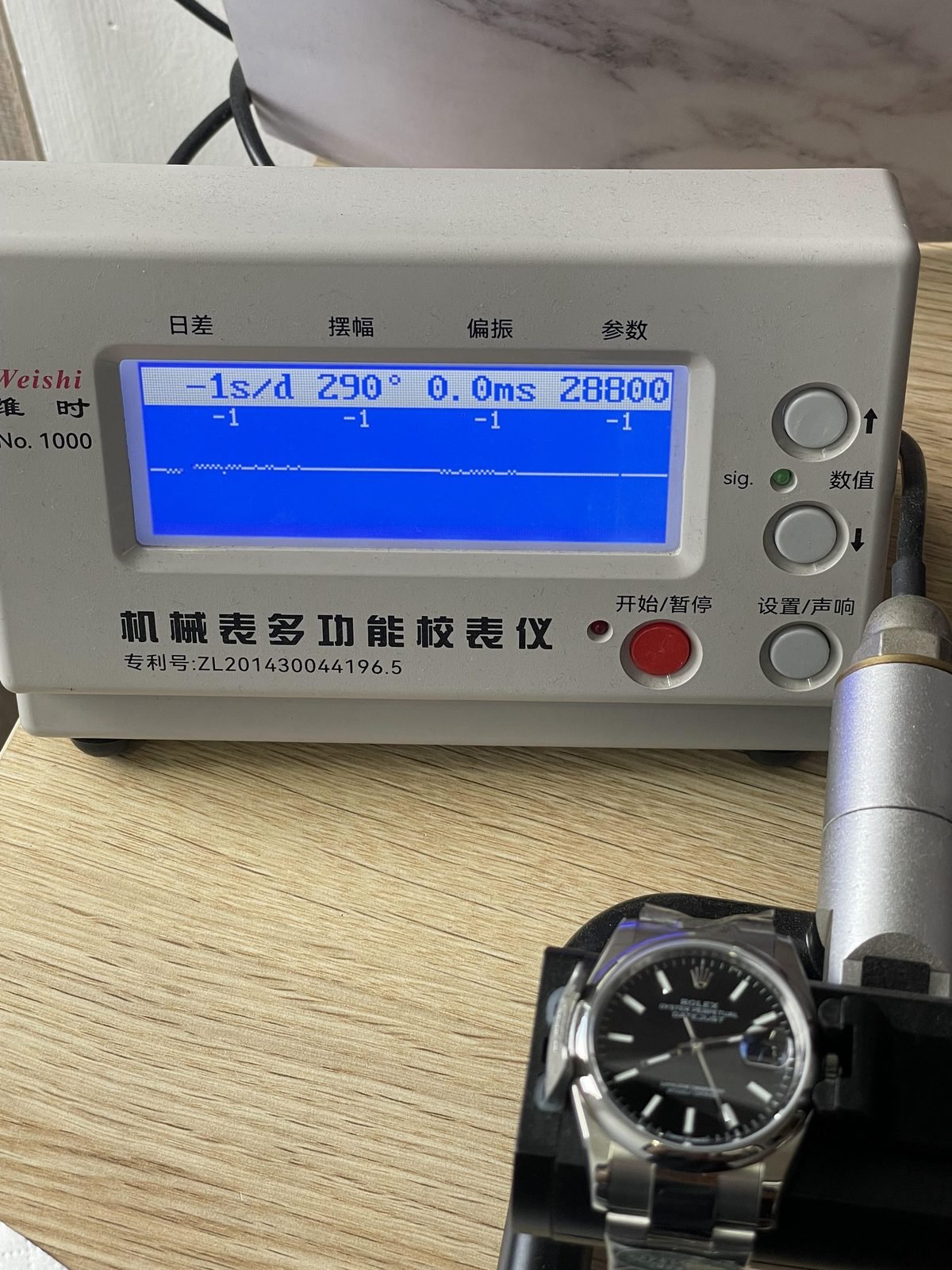
A timegrapher screen can report rate, amplitude, beat error, and beat rate under one test setup. The result is most useful when the seller confirms that the pictured watch is the same sample shown in the QC set. Position, wind state, lift angle, temperature, and handling can affect the reading, so treat it as a snapshot rather than a lifetime accuracy promise.
The visible example below shows one reading of minus one second per day, 290 degrees of amplitude, zero milliseconds of beat error, and a 28,800-beat rate on the display. Those numbers describe that displayed test only. They do not prove the movement's factory, material quality, service history, or performance in other positions.
Weight is another supporting measurement rather than a verdict. Bracelet size, removed links, protective film, and the scale setup affect the result. A visible scale photograph can confirm the displayed weight of one configuration, but it cannot identify the alloy or prove equivalence to an authentic reference.
Verify that the QC set belongs to one sample
Compare the date display, hand position, dial, bracelet, clasp, protective film, background, and visible stickers from image to image. Sudden changes can mean that photos from different watches were mixed. When the identity is uncertain, request a fresh image or continuous video that moves through the important views without a cut.
A dated note or order number beside the watch can show that the seller has access to a sample, but it does not authenticate the product or prove hidden specifications. Treat identity checks as one part of the evidence trail and keep the approved set with the invoice and messages.
Check the seller's process before sending money
Research recent, detailed transaction reports from more than one independent source. Give more weight to reviews that include dates, order details, unedited photos, delivery outcomes, and how the seller handled a problem. Forum status, follower counts, and testimonials displayed by the seller can be useful leads, but they are not substitutes for current verification.
Read the return window, repair terms, warranty exclusions, shipping responsibility, customs policy, and lost-parcel process. Confirm the final model, price, delivery method, and approved QC set before payment. Use a method that creates a clear record, and be cautious when a seller pressures you to pay before answering ordinary specification or policy questions.
Allow for legal, service, and resale realities
Rules on importing, selling, and possessing replica watches vary by country and delivery route. Check the law and customs rules that apply to your location before ordering. A replica should never be represented as authentic, and brand markings can create intellectual-property issues even when a purchase is described as personal use.
A luxury replica watch is also not an investment substitute for an authentic watch. Resale demand, parts availability, and repair access may be limited. Budget for servicing and possible shipping rather than assuming the seller's purchase price covers future ownership costs.
Plan the arrival and first-week inspection
Record the sealed parcel before opening if the seller requires evidence for damage or missing contents. Compare the watch with the approved QC set, then inspect the dial, case, bracelet, clasp, crown, caseback, and included parts under neutral light. Test winding, setting, date change, chronograph, GMT, or other advertised functions without forcing a control.
Check the return and claim deadline before making adjustments or removing all protective film. Note any issue with clear photographs and a short description, then contact the seller through the recorded channel. Prompt documentation gives both sides a better chance to distinguish shipping damage, a specification mismatch, and a fault that needs repair.
Your pre-payment checklist
- Write down the exact reference, size, dial, bracelet or strap, clasp, and required functions.
- Request written material and movement specifications without treating them as independently certified facts.
- Review current QC photos of the actual sample, including dial, sides, crown, clasp, end links, and caseback.
- Test every advertised function and link any timegrapher or pressure-test result to the same sample.
- Read the return, repair, warranty, delivery, customs, and lost-parcel terms before payment.
- Keep the listing, seller messages, invoice, payment record, and approved QC set.
- Inspect the parcel and watch promptly on arrival, document any issue, and contact the seller within the stated window.
The decision should rest on evidence
The useful question is not whether every super clone watch is good or bad. It is whether the seller has provided enough specific, current evidence for you to understand one watch, one transaction, and the support available afterward. If important claims stay vague or the sample cannot be inspected, the most practical decision is to pause and keep researching.
Looking for a Top-Tier Clone or Custom Build?
Direct access to VS, ZF, 3KF, Clean & BTF factory stock. We provide detailed multi-angle QC photo & video approval prior to final payment.