What Do Experts Say About the Craftsmanship of Super Clone Watches?
Verified Reddit Watch Specialist (RepTime / RepGuild)
Experts usually give a qualified answer: the best-finished super clone watches can look surprisingly careful at arm’s length, yet craftsmanship cannot be judged from resemblance alone. A watchmaker or experienced inspector will look past the first impression and examine geometry, surface transitions, dial assembly, hand clearance, movement construction, measured performance and the way the watch can be serviced.
That wider view matters because “super clone” is a seller’s category, not an independent watchmaking standard. Two watches sold under the same label may come from different production runs and show different levels of assembly. A detailed product photo can reveal some visible work, but it cannot prove the case material, movement identity, water resistance, accuracy over time or consistency across other units.
The most useful expert opinion is tied to one watch, one inspection and documented observations. A tier name, factory nickname or price is background information, not proof of craftsmanship.
What experts mean by craftsmanship
Craftsmanship is the combined result of design execution, manufacturing, finishing, assembly, adjustment and quality control. Experts therefore judge several layers at once:
- Geometry: whether the case, bezel, crown, lugs and bracelet hold the intended proportions and clean edge lines.
- Surface finishing: whether brushing, polishing and transitions are even, controlled and appropriate to each part.
- Dial-side assembly: whether markers, printing, hands, date displays and luminous material are clean and aligned.
- Movement work: whether the mechanism is what the seller says it is, functions correctly and has been assembled cleanly.
- Measured performance: how the exact watch behaves during rate, power-reserve, water-resistance and function checks.
- Consistency and serviceability: whether another sample is equally good and whether a competent repairer can maintain the watch later.
This approach is close to the way documented watch-quality systems separate appearance from function. The Patek Philippe Seal, for example, addresses the complete watch, including the movement, case, external parts, geometry, finishing and measured precision. TIMELAB’s explanation of the Hallmark of Geneva likewise separates craftsmanship and finishing from reliability checks such as functions, water resistance, accuracy and power reserve. These programs do not apply to replica watches. They are useful here because they show how demanding evaluations use several kinds of evidence.
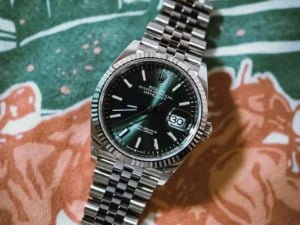
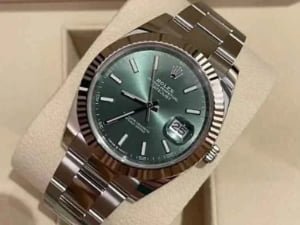
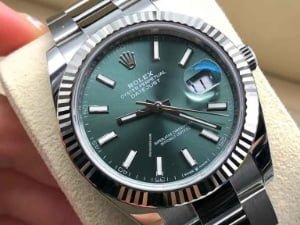
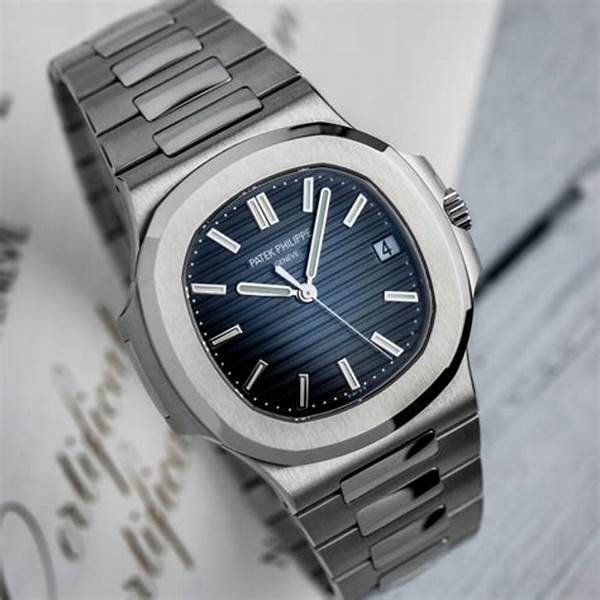
The supplied feature image lets you inspect the visible dial, bezel, case and bracelet together. It can support observations about alignment and surface appearance. It cannot establish the maker, material, internal construction or performance of the pictured watch.
Why experts do not treat “super clone” as a grade
There is no ISO, COSC, METAS or Hallmark of Geneva definition for “super clone.” You may see seller-created labels such as 1:1, top grade or exact replica watches, but those labels do not tell you which measurements were taken, how many samples were checked or what pass limits were used.
The same caution applies to factory names. A name used in a listing may help you compare marketplace descriptions, but it is not a traceable certificate unless the claim can be connected to the exact watch through records you can verify. Packaging, stickers and a timegrapher photo can also be reused or matched to a different unit.
Experts ask for evidence at the sample level. They want the actual watch photographed from consistent angles, its dimensions measured, its functions exercised and its test results recorded. If a seller cannot show which unit was tested, a statement about a “high quality replica watch” remains a marketing description.
What the case and bracelet reveal
Case finishing is often where an experienced eye notices the difference between a strong first impression and controlled workmanship. Good polishing should appear smooth without rounding away intended edges. Brushed surfaces should run in a consistent direction. Where a polished plane meets a satin-finished one, the boundary should be deliberate rather than cloudy or wavy.
Sharpness alone is not the goal. An edge can be crisp in the design and still need to feel safe against your skin. The Grand Seiko account of Zaratsu polishing explains the difficulty of producing distortion-free surfaces while retaining sharp ridge lines. Rolex’s case-and-bracelet production overview shows that machining, manual polishing, satin finishing, hand assembly and functional checks are separate operations. The lesson for your inspection is simple: a bright shine says little by itself. Look at the shape that remains after finishing.
On a bracelet, check the gaps between links, side-to-side play, screw or pin seating, clasp closure and how the end links meet the case. Move the bracelet through its normal range. It should articulate without grinding, catching or exposing a sharp unfinished surface. Wear comfort counts as craftsmanship because poor tolerances often become obvious on the wrist before they appear in a photograph.
Do not infer metal grade from color or weight. Surface coating, internal construction and component thickness can affect the feel. If material matters to your decision, ask for an appropriate test on the exact unit rather than relying on a copied specification.
Dial, hands and date work deserve close inspection
The dial concentrates many small parts, so minor errors can become visible quickly. Inspect it straight on and under soft angled light. Look for:
- hour markers that point toward the correct minute track;
- even spacing and level seating of applied elements;
- clean printing without broken edges, ink spread or inconsistent weight;
- hands that are centered, parallel and free from marks;
- adequate clearance so the hands do not touch each other, the dial or the crystal;
- a date that sits consistently in its window during several date changes;
- luminous material that is contained within its intended areas.
The manufacturing examples on Rolex’s dial-production page separate printing, appliques and luminous material into their own steps. Grand Seiko’s 9F description notes how delicate hand installation can be when multiple hands share a very small vertical space. These are not comparison claims about any replica. They explain why alignment and hand clearance deserve their own checks.
Magnification can help, but it also changes expectations. A tiny speck visible only in a high-resolution macro image is different from a tilted marker visible during normal wear. Record both the defect and the viewing condition, then decide whether it affects appearance, function or long-term reliability.
Movement appearance is only part of movement quality
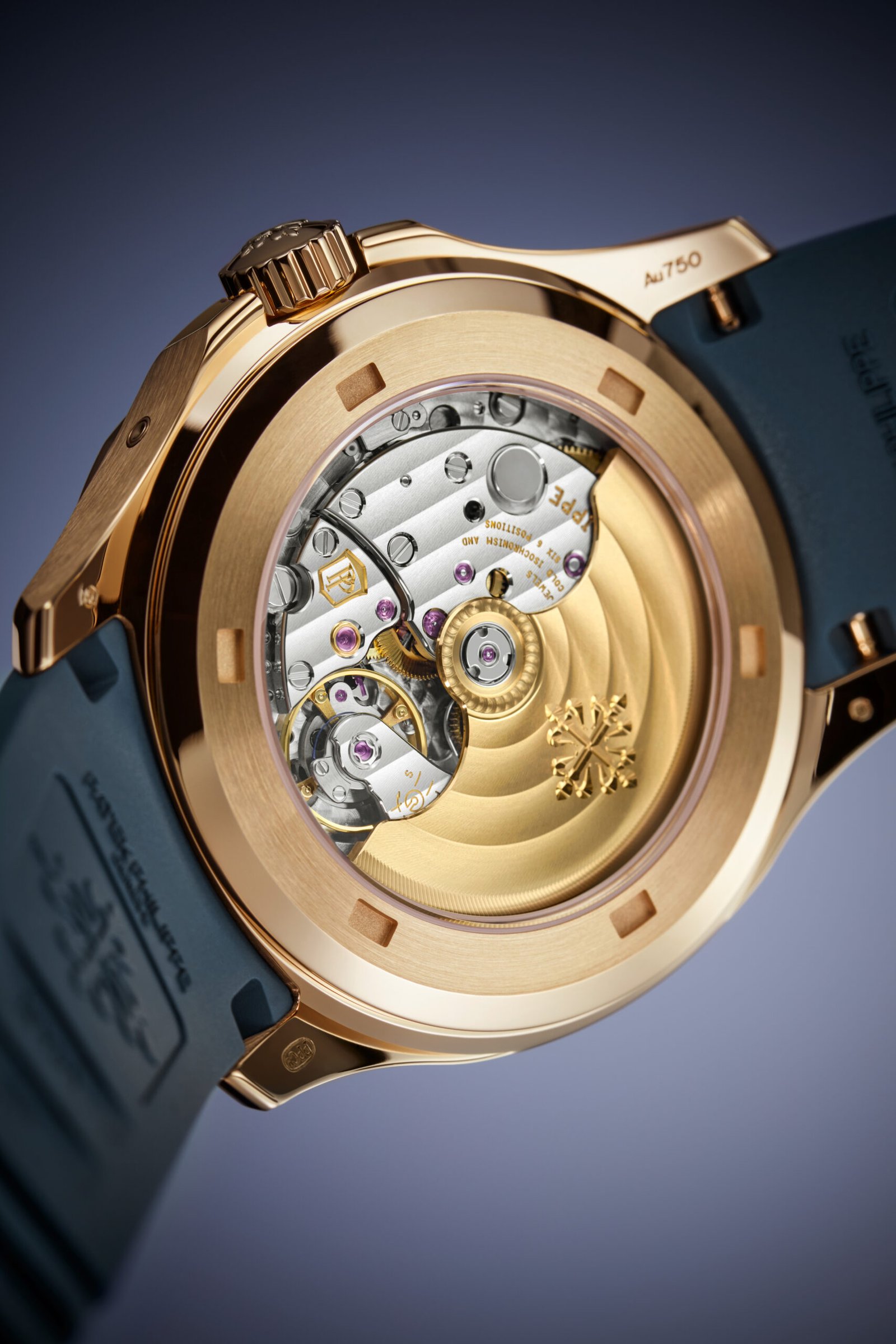
A decorated movement can be attractive, and the supplied case-back image provides a clear view of bridges, screws, jewels, the rotor and visible surface patterns. You can discuss what is visible. You cannot identify every material, confirm the caliber, judge hidden parts or prove regulation from the image alone.
Experts first confirm the movement architecture and functions. They check whether the crown positions match the claimed functions, whether the date changes properly, whether a chronograph starts, stops and resets cleanly, and whether winding feels consistent. If the watch is opened by a qualified person, they can look for contamination, damaged screw heads, loose parts, poor lubrication practice and finishing that ends at the visible surface.
True decorative finishing is more specific than a striped bridge or colored screw. Audemars Piguet’s guide to movement finishing distinguishes polishing, circular graining, Cotes de Geneve and hand chamfering, while also explaining that assembly and friction control are functional concerns. The Patek Philippe glossary similarly treats finishing and fitting as defined operations. A pattern that resembles high-end decoration may be neatly applied, but it does not by itself show that edges, countersinks, hidden surfaces and running components received the same care.
For an automatic replica watch, rotor noise and winding feel may provide useful clues, but they are not a diagnosis. A loud rotor could reflect construction, lubrication, wear or contact. Have a repairer inspect it if the sound changes, the rotor scrapes or winding performance declines.
Measured QC carries more weight than adjectives
An expert separates what can be seen from what must be measured. International and industry programs provide useful examples of this distinction. ISO 3159 defines a test program and minimum requirements for wrist chronometers. ISO 764 covers magnetic-resistant watches, and ISO 1413 covers shock-resistant wristwatches. METAS certification evaluates complete watches for areas that include precision, magnetic exposure, water resistance and power reserve.
A replica should never be described as meeting one of those standards unless the exact product has undergone the applicable authorized procedure and the claim can be verified. Still, the standards point you toward useful questions:
| Quality claim | Useful evidence for the exact watch | What a photo cannot prove |
|---|---|---|
| Accurate timekeeping | Dated readings in several positions and over a meaningful interval | Rate stability during wear or at different power levels |
| Full power reserve | Start time, stop time and winding method recorded for the unit | Mainspring condition or efficiency |
| Water resistance | Recent pressure-test result tied to the watch | Gasket condition, seal integrity or future resistance |
| Magnetic resistance | Defined test method and before/after rate data | Resistance from movement appearance |
| Functional reliability | Repeated operation of crown, date and complications | Long-term wear or batch consistency |
| Claimed movement | Clear architecture evidence and qualified inspection | Identity from rotor engraving alone |
A timegrapher reading is useful when it is connected to the watch and test settings. It is a short measurement in a controlled position, not a lifetime forecast. Ask which positions were tested, the lift angle used, the state of wind and whether the result came before or after regulation.
Treat “waterproof replica watch” as an unsupported claim unless a recent test applies to your unit. The ISO explanation of water-resistant watches makes clear that water resistance depends on defined requirements and tests. Even a passing result describes the watch at the time of the test; seals can age and opening the case can change the condition.
Sample consistency is the hard part
Many favorable comments about replica watches describe one carefully selected sample. That can be honest and still fail to predict what you will receive. A workshop may produce a visually impressive unit while another unit from the same batch has a tilted marker, rough crown tube, contaminated dial or poorly fitted bracelet.
Experts therefore ask how the inspection process covers watches beyond the display piece. Was every watch checked or only a sample? Are failures rejected, repaired or shipped? Are dimensions and test limits written down? Does the seller retain photographs and results for the serial or order being sent to you?
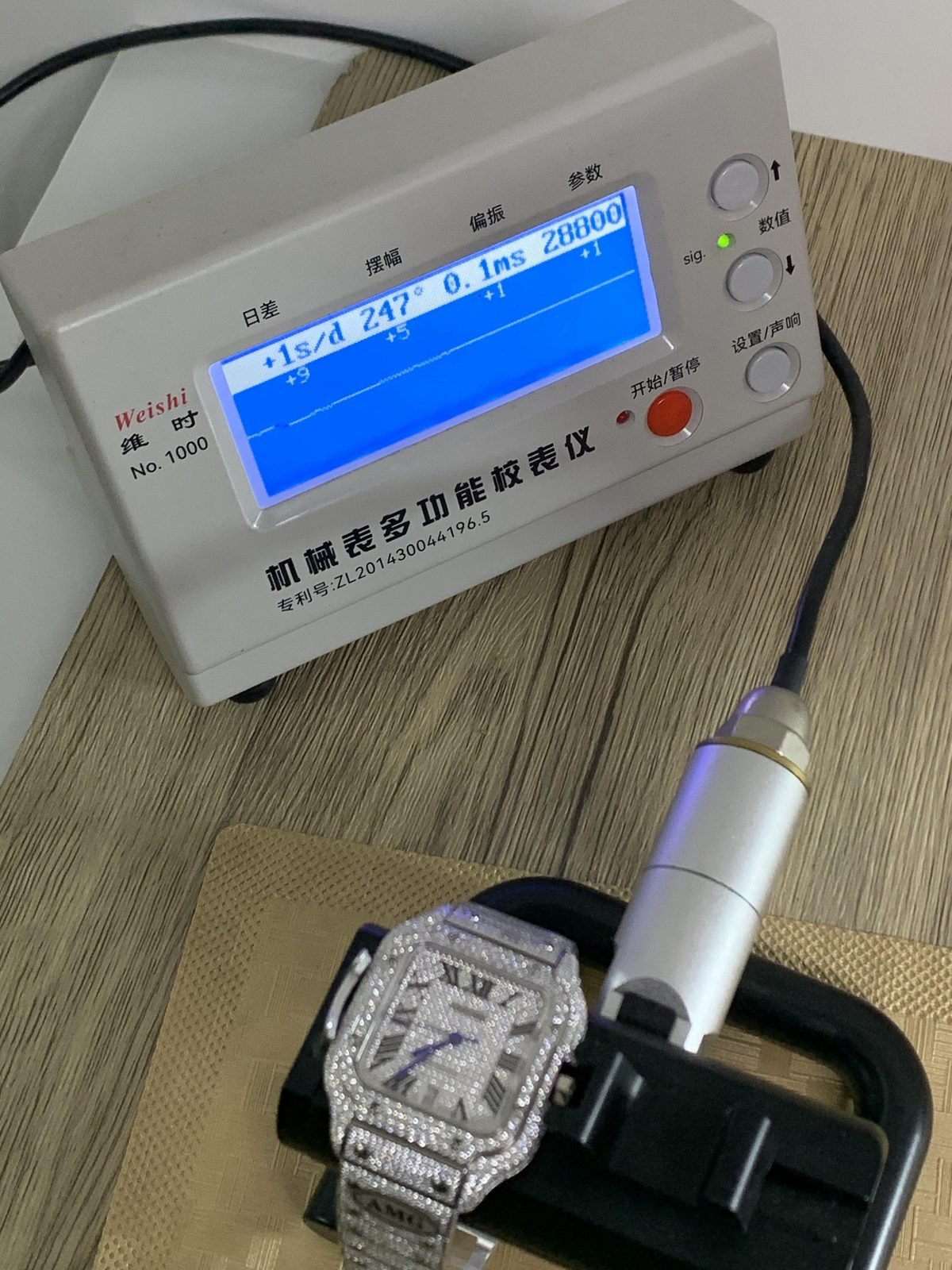
This is where existing QC images can add authority if they are used honestly. A real inspection photo can show that a visible step occurred. It does not prove a result you cannot read, guarantee that all checks were completed or establish that every later unit is identical. Match each image to a clear caption and avoid treating a generic bench photo as the record for your watch.
Serviceability changes the expert verdict
Craftsmanship continues after purchase. A watch can look convincing yet become a poor ownership choice if replacement parts are unavailable, the movement cannot be identified or local watchmakers will not accept the work. Before buying, ask who can service the movement, whether common wear parts exist and whether the case can be opened without special unsupported tools.
Documented luxury-watch service processes show why this matters. Patek Philippe’s service description includes complete disassembly, component assessment, cleaning, lubrication, reassembly and final quality control. Rolex World Service similarly separates movement, case and bracelet work before accuracy, pressure and final checks. A replica is not entitled to those brand services. The useful point is that long-term quality depends on inspection, parts, skills and repeatable checks, not just initial appearance.
Ask about ordinary maintenance before you focus on upgrades. A replaceable gasket, crown, tube or movement component may matter more to you than decorative engraving. If a seller cannot identify the movement well enough for a repairer to source parts, include that limitation in your assessment of value.
How you can inspect one without specialist equipment
You can perform a disciplined first review at home. Work slowly and keep a record:
- Photograph the watch straight on, from both sides, from the back and at each bracelet connection.
- Compare the left and right sides for alignment, gaps and finish transitions.
- Set the hands to times that reveal marker alignment and hand clearance.
- Operate the crown, date, clasp and any complications several times without forcing them.
- Track time against one reliable reference over several days and note the watch’s resting position.
- Measure the running duration from a consistent full-wind procedure if power reserve matters.
- Listen for scraping, rattling or a change in winding feel.
- Arrange professional pressure testing before water exposure; do not test it by wearing it in water.
Keep the inspection proportionate. You are looking for repeatable observations, not trying to dismantle the watch without the right tools. Opening a case can damage a gasket, scratch a surface or introduce dust. A qualified watchmaker is better placed to examine the movement and reseal the case.
| Area | Strong sign | Warning sign | Best follow-up |
|---|---|---|---|
| Case finishing | Clean planes and controlled transitions | Rounded edges, ripples or polishing over brushed areas | Compare under soft angled light |
| Dial assembly | Consistent marker, print and hand alignment | Tilted appliques, debris or touching hands | Inspect at several hand positions |
| Bracelet and clasp | Even articulation and secure closure | Binding links, sharp edges or excessive gaps | Check every link and clasp action |
| Movement function | Predictable crown and complication operation | Slipping, scraping, erratic reset or poor winding | Stop forcing it and seek inspection |
| Performance | Results recorded for the exact unit | Cropped, undated or unmatched test images | Request unit-linked evidence |
| Serviceability | Identified movement and accessible wear parts | No movement identity or repair route | Ask a repairer before purchase |
Questions that produce a useful seller answer
Avoid asking only, “Is the craftsmanship good?” That invites an adjective. Ask for evidence you can compare:
- Can you send current, uncropped photos of the exact watch from the front, sides, clasp and case back?
- What are the measured diameter, thickness, lug width and bracelet or strap dimensions?
- Which movement architecture is inside, and who can service it?
- Which functions were tested on this unit, and how many times?
- Are rate and power-reserve results tied to this watch and dated?
- Has this unit passed a pressure test, at what pressure, and when?
- What defects cause a watch to fail QC rather than be shipped?
- What happens if the received watch differs from the inspection record?
Be especially careful with origin language. A listing for swiss super clone watches does not prove Swiss origin or compliance with Swiss rules. The Swiss Federal Institute of Intellectual Property explains that “Swiss Made” is a regulated indication tied to defined production criteria. Ask for verifiable origin evidence instead of reading “Swiss” as a synonym for good.
So, what do experts actually say?
The balanced expert view is that some luxury replica watch samples show competent machining, neat visible finishing and careful dial-side assembly. Those qualities can make the watch feel more refined than a low-cost replica. The same expert will add that visual similarity is a narrow part of the evaluation, and that quality varies by unit.
An informed verdict sounds specific: the brushing is even; the polished and satin surfaces meet cleanly; the hands clear each other; the functions work; the measured rate is stable under the stated conditions; a pressure test was passed on a stated date; or the movement can be identified and serviced. Broad statements such as “identical to genuine” or “best factory” do not carry the same weight.
If you are assessing replica watches, use the label only to find candidates. Make the decision from the exact unit’s visible workmanship, documented QC, measured performance and repair path. That gives you a realistic picture of craftsmanship without asking a product nickname to answer questions it was never designed to answer.
Looking for a Top-Tier Clone or Custom Build?
Direct access to VS, ZF, 3KF, Clean & BTF factory stock. We provide detailed multi-angle QC photo & video approval prior to final payment.