The Ultimate Guide to Super Clone Watches: What You Need to Know
Verified Reddit Watch Specialist (RepTime / RepGuild)
The phrase "super clone" sounds precise, but the market does not use it as a controlled technical grade. One seller may use it for a watch with a decorated movement. Another may use it for any model with convincing photographs. If you treat the label as proof, you are trusting the least verifiable part of the listing.
What you need is a map of the whole ownership cycle: identify the exact watch, separate visible evidence from seller claims, test the functions that matter, understand the transaction, and plan for service before you pay.

This guide gives you that map. It does not authenticate a watch, endorse a factory, or promise that a reproduction is legal to import where you live. It shows you what can be checked, what needs documentation, and what should remain unproven.
Start with the terms, then ignore the hype
Super clone watches sit inside the wider market for replica watches. Neither phrase tells you which movement is installed, how the case was finished, whether the seals were tested, or whether the photographed watch is the one you will receive. Labels such as "1:1," "AAA," "best edition," and "Swiss grade" have no shared certification behind them.
That does not mean every watch is equal. It means quality has to be described in parts. Searches for exact replica watches can create an all-or-nothing expectation, while real comparisons are usually mixed. You can compare case proportions, dial assembly, bracelet fit, control behavior, movement architecture, timing evidence, pressure testing, and seller terms. Each conclusion should stay as narrow as the evidence.
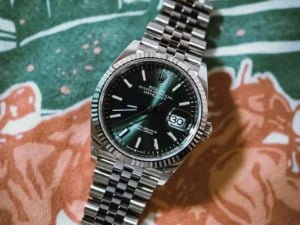
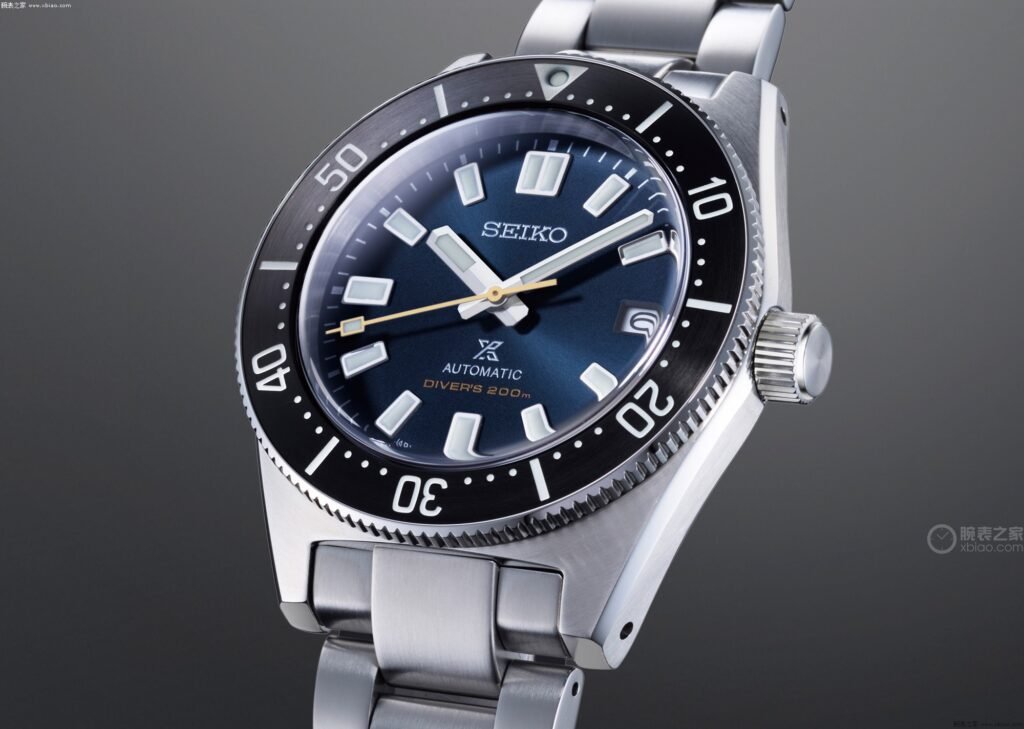
The supplied dive-watch image below is a useful design reference. You can study the relationship among bezel width, dial opening, hands, markers, date window, crown, case facets, and bracelet. It is not QC for a current order and does not prove authenticity, materials, movement identity, water resistance, durability, or factory source.
Translate every sales claim into a test
The fastest way to reduce uncertainty is to turn marketing language into a question that can be answered with a photo, video, specification, or written term.
| Term or claim | What it may mean | Evidence to ask for | What remains unproven |
|---|---|---|---|
| Super clone or 1:1 | The seller believes the watch is a close visual reproduction | Exact reference, straight photos, side views, dimensions, and an uncut function video | A universal grade, authentic origin, or exact equivalence |
| Swiss super clone watches | A movement, part, or marketing story is associated with Switzerland | Named calibre, clear movement images, supplier documentation, and service information | Swiss origin from engraving, wording, or price alone |
| Automatic replica watch | The watch uses a self-winding mechanical movement | Rotor movement, manual winding, time-setting video, power-reserve test, and movement layout | Calibre identity, service life, or accuracy from the word automatic |
| Sapphire crystal | A hard transparent crystal is claimed | Supplier record or an appropriate material test | Coating quality, thickness, impact resistance, or freedom from damage |
| Waterproof replica watch | The seller claims resistance to water entry | A recent pressure-test result tied to the exact sample, with the test conditions stated | Permanent protection, dive suitability, or survival after impact or opening |
| High quality replica watch | The seller is making an overall quality claim | Complete QC set, demonstrated functions, test results, defect terms, and a repair path | Consistency across other pieces, long-term durability, or factory identity |
This table is also a defense against false precision. A clear timegrapher image may support one timing observation, but it says nothing about pressure resistance. A sharp dial photograph may show good marker placement, but it cannot identify the movement under the dial.
Build an authentic reference sheet first
Before you judge a reproduction, identify the authentic reference and generation. A family name can cover different sizes, dials, bezels, bracelets, clasp designs, movements, and functions. Save the maker's official product page, manual, or archive information. Record the case dimensions that are actually published, the dial layout, date position, hand shape, bezel scale, crown and pusher arrangement, bracelet connection, and advertised functions.
Official watchmaking sources show why relationships matter. Patek Philippe explains that a finished watch is judged as a complete product, while Audemars Piguet documents deliberate contrasts between brushed and polished surfaces. Cartier discusses proportion, line, and shape as design fundamentals. These sources describe genuine watches, not reproductions. They help you decide what to compare without pretending that the replica was made by the same process.
Use the official reference to prepare five non-negotiables. They might be the correct case size, a working GMT hand, the right bracelet, a centered date, and a serviceable movement. This keeps you from approving a photogenic watch that fails your actual purpose.
Read QC as evidence from one sample
QC should identify one physical watch. Ask for a full front view, both case sides, case back, crown and pushers, clasp, end links, bracelet or strap, and close-ups of any area you question. Request the original files rather than compressed screenshots when possible.
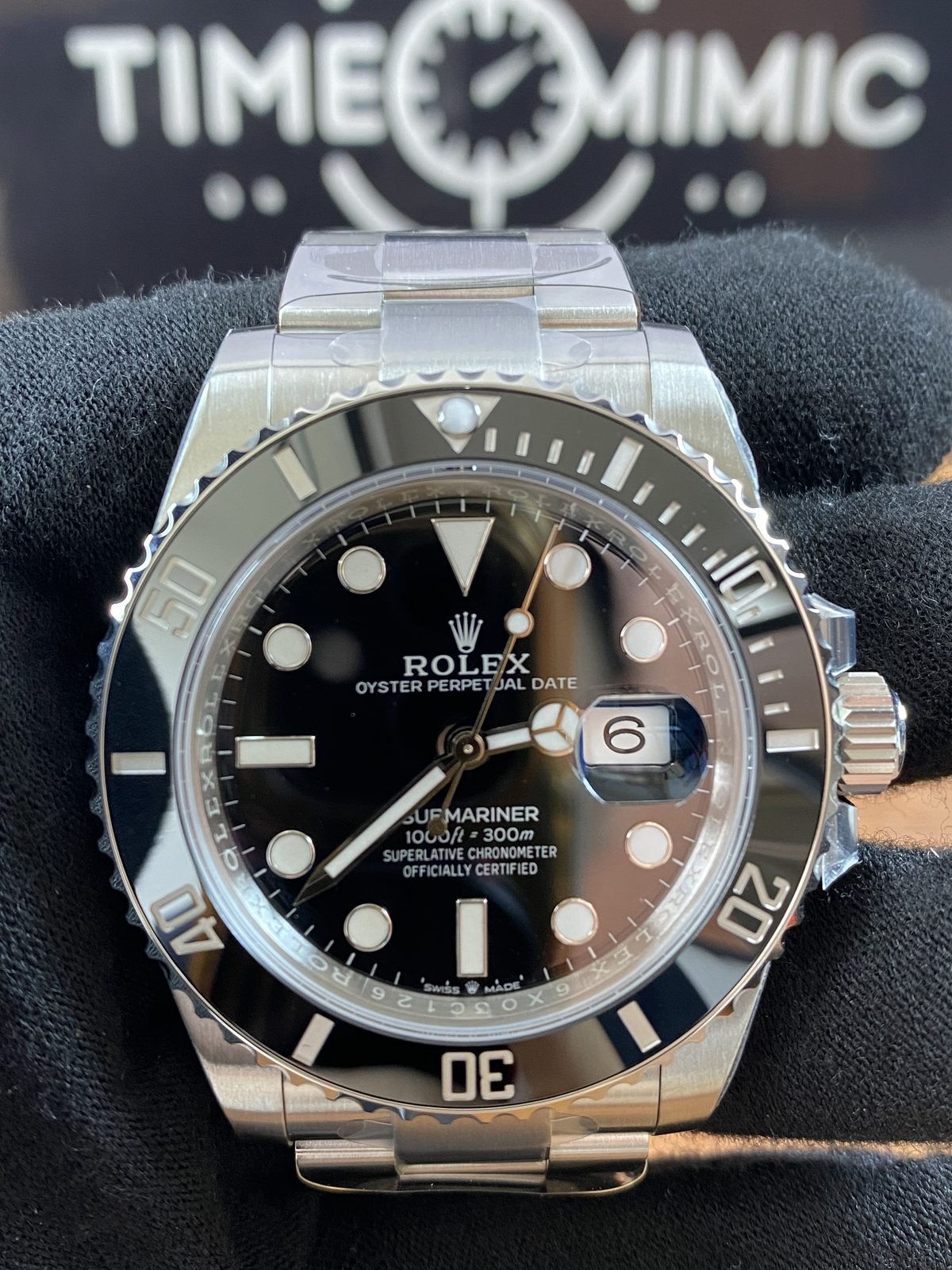
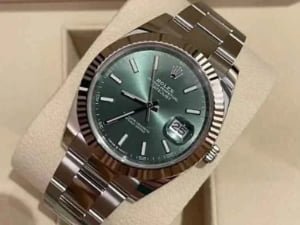
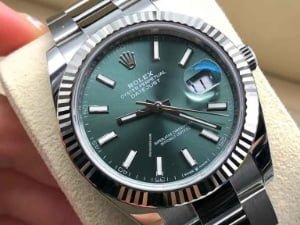
A visible QC front image below shows the kind of sample-level evidence you can use. Trace imaginary lines from the hour markers to the center pinion. Check whether the bezel marker, dial markers, minute track, hands, and date share the expected axes. Look for dust, scratches, uneven gaps, hand contact, shifted printing, and damage. Judge only what the photograph reveals.
Camera position can create false alarms. A close wide-angle view enlarges the nearest part of the case. Curved crystal reflections can bend lines. If a proportion looks wrong, ask for a centered retake from farther away before deciding.
Then make the watch move. An uncut video should show winding, every crown position, time setting, date adjustment, bezel action, pushers, and each advertised complication. A chronograph needs start, stop, visible minute progression, and reset. A GMT watch needs a demonstration of which hand moves independently and how the date behaves around midnight. Skipped functions are unanswered questions.
Understand movement claims without becoming a watchmaker
You do not need to identify every screw. You need to know whether the movement claim matches visible architecture and demonstrated behavior. Compare the balance position, bridge layout, rotor, regulator, date mechanism, crown positions, and function set with documentation for the named movement.
Movement makers publish useful baselines. Miyota's catalogues list named automatic movements with layouts and specifications. ISO 3764 provides standardized movement types, dimensions, and nomenclature. Those references show what traceable technical documentation looks like. A decorative rotor or copied engraving is not the same kind of evidence.
Ask three ownership questions before you care about decoration: Can a local watchmaker service this movement? Are ordinary wear parts obtainable? What happens if a proprietary-looking component fails? A simpler movement with a clear repair path can be a better daily choice than a visually elaborate mechanism with no parts support.
Power reserve is easy to test. Fully wind the watch, record the start time, leave it undisturbed, and note when it stops. The result belongs to that sample and condition. It should not be stretched into a permanent guarantee.
Use test results for the question they answer
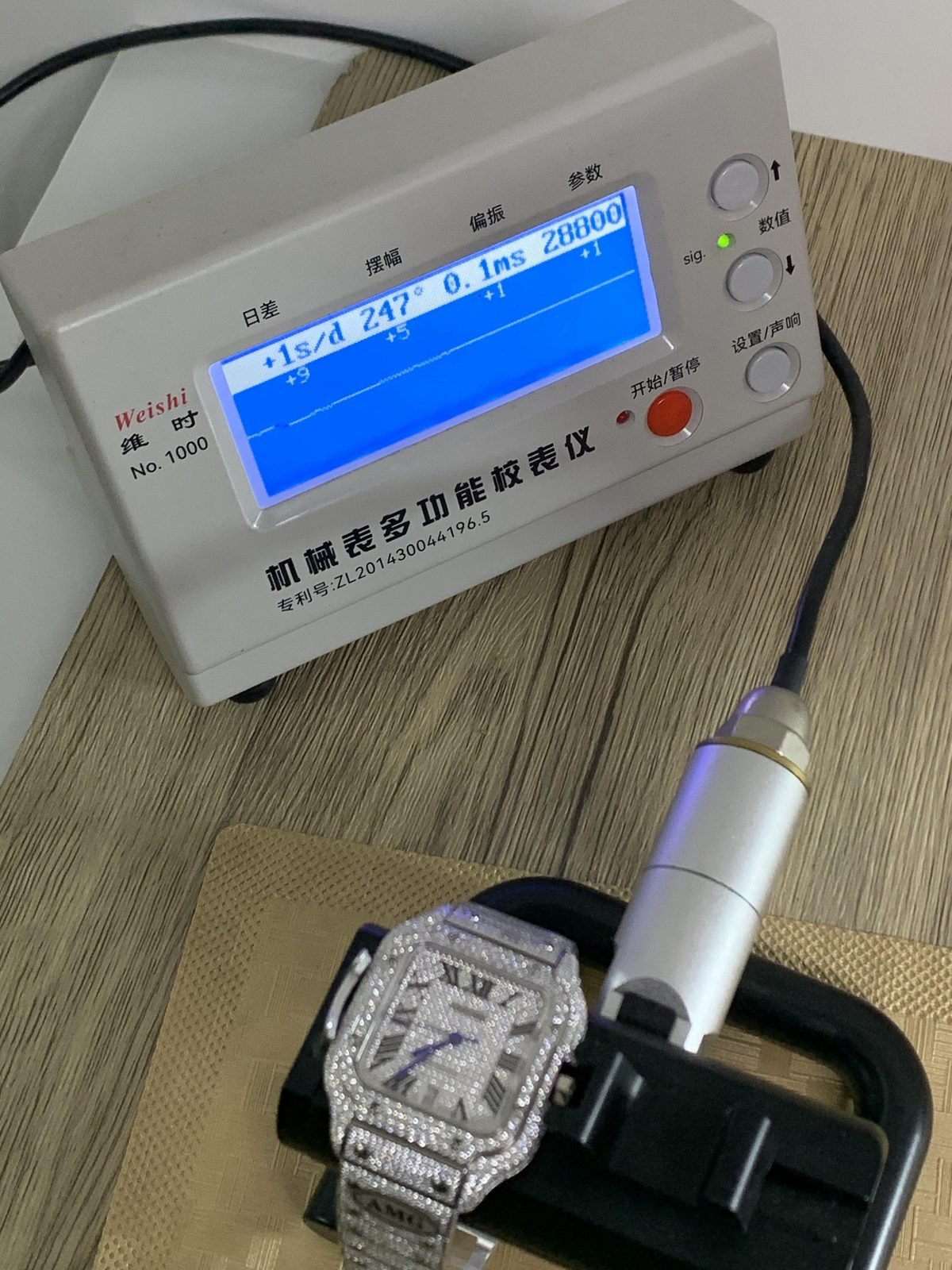
A timing QC image below records one instrument setup. Read the rate, amplitude, beat error, lift angle, position, and test duration when visible. Ask whether the watch was fully wound and whether another position was checked. A single result can show how the sample behaved at that moment. Daily accuracy may change with position, power level, regulation, magnetism, temperature, shock, and shipping.
Formal standards help define the boundaries of other claims. ISO 22810 covers requirements and test methods for water-resistant watches. ISO 6425 adds requirements for divers' watches. ISO 764 addresses magnetic resistance, and ISO 1413 addresses shock resistance. These are separate performance questions. Passing or appearing to pass one does not prove the others.
METAS certification for complete mechanical watches examines water resistance, chronometric performance, magnetic resistance, and power reserve through a defined program. A seller's generic test screen is not METAS certification. The comparison is useful because it shows that a broad performance claim requires several controlled checks.
If water exposure matters to you, ask for a recent pressure test tied to the exact watch. Repeat the test locally after delivery and again after the case is opened. Seals age, assembly varies, and impact can change the result. Treat an untested watch as dry-use only.
Know what "Swiss" does and does not establish
Swiss law and industry guidance attach conditions to the Swiss Made designation, including the movement, casing-up, final inspection, technical development, and a minimum share of Swiss manufacturing costs. That framework applies to qualifying Swiss products. It does not validate a reproduction because a seller types "Swiss" in a title or copies markings onto a movement.
For a replica, ask for the exact movement family and supporting documents. If the evidence stops at engraving or seller terminology, record the origin as unverified. This is more useful than arguing about a label that the listing cannot substantiate.
Price the ownership, not just the order
Your real cost includes the watch, shipping, payment fees, possible tax or duty, inspection, pressure testing, regulation, bracelet work, and future repairs. It also includes the chance that a watch has to be returned internationally.
Genuine-brand service pages show the scope of professional maintenance: assessment, complete disassembly, cleaning, lubrication, replacement of worn parts, case work, timing checks, seal replacement, pressure testing, and final control. A replica may not have access to original-brand parts or service. Ask an independent watchmaker what they are willing to inspect and which movement families they can maintain before a problem appears.
Keep a small reserve for first-year work. Do not rely on an unwritten promise that a seller will pay local repair costs. Get the defect remedy, reporting window, shipping responsibility, and return address in writing.
Protect the transaction and your records
The FTC advises online marketplace buyers to check seller contact details, real item photos, return rules, deadlines, and payment protection. It also advises keeping messages and avoiding payment methods that are difficult to reverse. A beautiful QC set is not a substitute for workable transaction terms.
Save the listing, reference specification, seller's configuration message, original QC files, your questions, the approval message, payment record, tracking, and the return policy. If the delivered watch differs, photograph the parcel opening and report the mismatch promptly. Credit-card dispute rights depend on the circumstances and deadlines, so check your issuer's rules rather than assuming a chargeback will always succeed.
Trademark and import rules vary. WIPO describes trademark counterfeiting as unauthorized use of a sign identical or essentially indistinguishable from a registered mark for the covered goods. Customs authorities may detain or restrict such items. The United States has a narrow traveler personal-use exemption under stated conditions, but that does not mean every postal shipment or quantity is permitted. Check the rules that apply to your country, route, and intended use. Do not resell a reproduction as authentic.
Keep one record through the ownership cycle
| Ownership stage | Your task | Record to keep |
|---|---|---|
| Define | Choose the exact reference, purpose, budget, and five non-negotiables | Official reference page, measurements, and your requirement list |
| Verify | Match one sample to the order and test visible details and functions | Original QC photos, uncut videos, questions, and seller answers |
| Approve | Accept only the sample and terms you can identify | Approval message, final price, payment protection, and return conditions |
| Receive | Confirm parcel condition, identity, appearance, and functions | Opening video, delivery photos, serial or sample identifiers, and initial test results |
| Stabilize | Arrange local timing, pressure, bracelet, or movement checks as needed | Watchmaker report, invoices, readings, and any parts replaced |
| Maintain | Monitor accuracy, power reserve, seals, controls, and wear | Dated observations, service history, and pressure-test results |
| Exit | Describe the watch honestly and follow applicable law | Original disclosure, service records, and sale correspondence |
This record prevents a common problem: the listing, QC, delivered watch, and later service history become separate stories. When they remain connected, you can make better decisions and explain any defect clearly.
A ten-question knowledge check before payment
- Can you name the exact reference, size, generation, dial, bracelet, and function set?
- Are the photos and videos tied to one identifiable sample rather than stock material?
- Have you compared the large geometry before focusing on tiny printing?
- Does an uncut video demonstrate every control and advertised function?
- Is the movement claim supported by architecture and behavior, not engraving alone?
- Are timing, power-reserve, and pressure claims tied to the exact piece and stated conditions?
- Do you know which claims remain unverified?
- Can a watchmaker you can reach inspect or service the movement?
- Are the defect remedy, return deadline, shipping responsibility, and payment protection written down?
- Have you checked the import and trademark rules that apply to you?
If several answers are no, more browsing will not automatically solve the problem. Ask for the missing evidence or choose a lower-risk alternative.
Choose the option that solves your real goal
Sometimes the right answer is a carefully inspected reproduction. Sometimes it is a used genuine watch, a microbrand, a homage without copied marks, or a reliable watch that borrows only the general style. Compare the total ownership cost, service access, legal risk, and your tolerance for visible differences.
The useful standard is not "perfect replica." It is informed consent. You should know what the watch is claimed to be, what the specific sample demonstrates, what the seller will do if it differs, and what remains uncertain. That approach makes luxury replica watch research calmer and more practical because every decision has a reason you can explain.
Your next step
Create a one-page reference sheet for the exact model you want. Add your five non-negotiables, the required QC views, the full function-video list, the test evidence you need, the written defect remedy, and the local service plan. Send that list before payment. If the seller cannot answer it clearly, you already have the most important answer.
Looking for a Top-Tier Clone or Custom Build?
Direct access to VS, ZF, 3KF, Clean & BTF factory stock. We provide detailed multi-angle QC photo & video approval prior to final payment.