Super Clone Watches vs Real Watches: How to Spot the Differences
Verified Reddit Watch Specialist (RepTime / RepGuild)
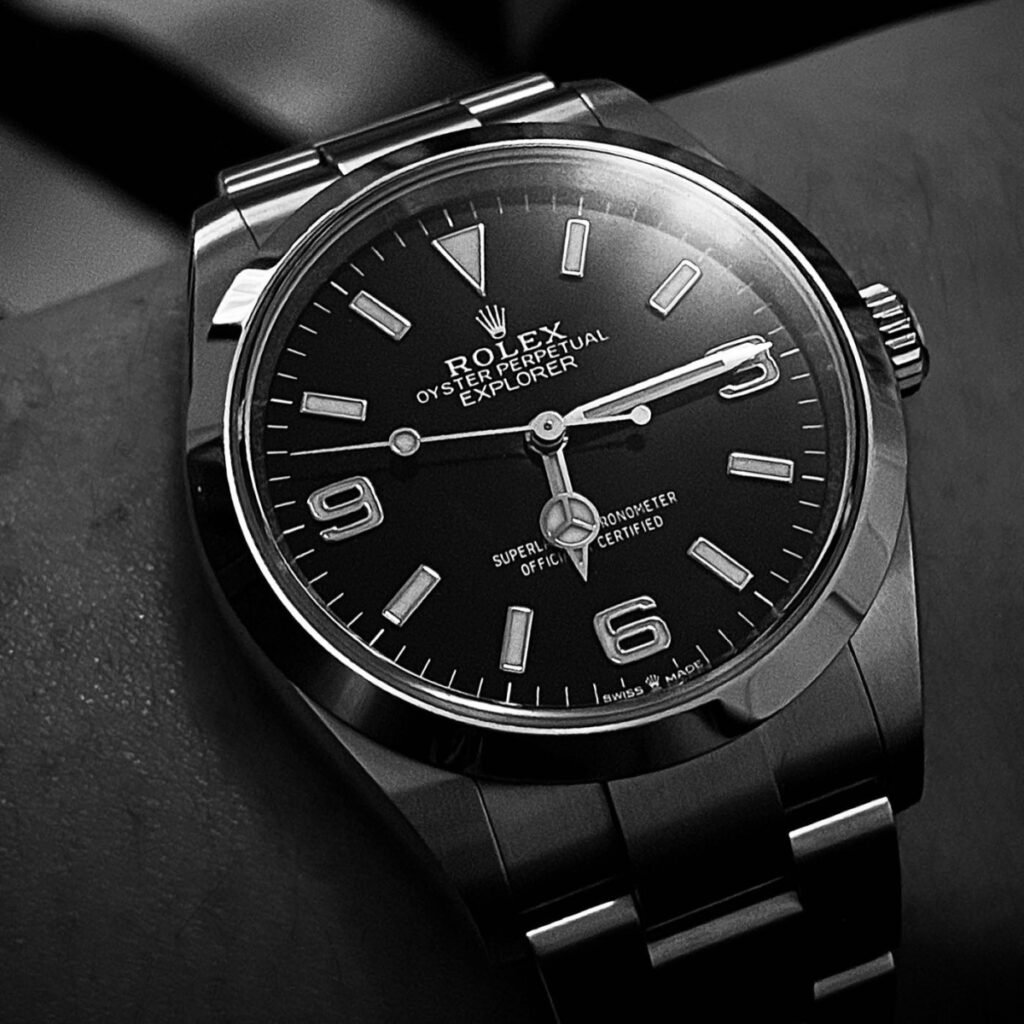
Super clone watches can look convincing in a single photograph. The harder question is whether the watch remains convincing when the dial, case, bracelet, movement, and paperwork are checked against the correct authentic reference. That comparison often reveals differences, but no single visual trick works for every model.
A reliable inspection uses several kinds of evidence. It confirms the exact reference, checks measurements and finishing, tests the functions, reviews serial and service records, and uses a qualified authenticator when the financial stakes are high. Weight, a smooth second hand, or a copied serial number can support an inspection, but none of them proves authenticity alone.

At a Glance
| Area | What to compare | Why it is not conclusive alone |
|---|---|---|
| Dial | Printing, marker spacing, hand length, date position, lume, and dust under the crystal. | Photos can hide depth, texture, or small alignment errors. |
| Case and bracelet | Dimensions, lug shape, brushing, polished edges, end-link fit, clasp, and crown action. | A replica may match one measurement while differing elsewhere. |
| Movement | Caliber architecture, beat rate, setting sequence, functions, finishing, and service marks. | A decorative cover or rotor can imitate the visible layout. |
| Records | Serial, warranty card, invoice, service history, and seller identity. | Numbers and documents can be copied or paired with the wrong watch. |
Start with the exact reference
Luxury brands revise cases, dials, bracelets, clasps, and movements over time. A detail that is correct for one reference can be wrong for another made a few years later. Before comparing a replica with a real watch, identify the model, reference number, approximate production period, dial variant, and bracelet configuration.
Use clear reference material from the manufacturer, authorized documentation, or a reputable specialist. Marketplace photos are useful for orientation, but they may show edited images, aftermarket parts, or another replica. Authentication fails quickly when the comparison watch is not the same configuration.

Use the same inspection order every time
A repeatable sequence makes small conflicts easier to notice. Record the seller's claimed reference, production period, movement, dimensions, materials, included parts, and serial information before looking for confirmation. Then inspect the dial, case, bracelet, controls, movement, and documents in the same order. Keep the original listing and unedited photographs so the evidence does not change during the transaction.
Do not turn one correct detail into a verdict. A matching case width cannot excuse the wrong dial configuration, and a familiar movement layout cannot prove that the case and paperwork belong together. Authentication becomes stronger when independent details agree with the same reference and weaker when explanations are needed to reconcile them.
Inspect the dial in a straight-on view
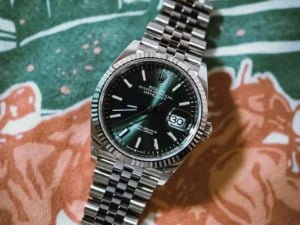
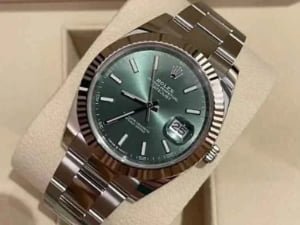
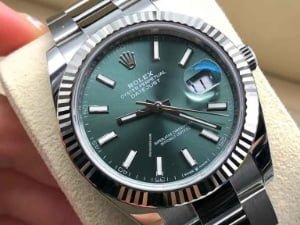
The dial concentrates many details in a small area. Compare the typeface, logo shape, minute-track spacing, marker alignment, hand length, date-window position, and the way the hands stack on the center pinion. Look for dust, fingerprints, uneven lume, or a marker that sits off-axis. Macro photographs can expose details that disappear at wrist distance.
Color is harder to judge because lighting, white balance, screen settings, and image compression can change its appearance. A dial that looks too dark in one photograph may look correct in daylight. Texture and applied-marker height are easier to assess from several angles than from one front-facing product image.
Check the case, bracelet, and controls
Measure case width and thickness with the same method used for the authentic specification. Then examine lug shape, bezel profile, crown guards, caseback fit, and the transition between brushed and polished surfaces. On the bracelet, inspect end-link gaps, screw or pin finishing, clasp engraving, and how the links articulate.
Weight can reveal a large mismatch, but it is not a stand-alone test. Different metals, bracelet sizing, and removed links change the result. A high quality replica watch may be adjusted to approach the published weight while still differing in construction. Crown feel also varies with lubrication and wear, so one stiff or smooth control does not settle the question.
Test every advertised function
Operate the crown through winding, date setting, hand setting, and any quick-set positions described for the reference. Test the chronograph, calendar, or GMT function through a complete cycle when applicable. Incorrect pusher behavior, a nonfunctional subdial, or a setting sequence that differs from the authentic caliber can be informative.
Second-hand motion is commonly overused as a test. Both authentic and replica watches can use mechanical movements with a frequent beat, while some genuine models use quartz or less common display systems. The useful comparison is the specified caliber's behavior, not a general rule that real watches sweep and replicas tick.
Movement inspection can reveal deeper differences
An experienced watchmaker can compare movement architecture, bridge shapes, regulator design, jewel placement, finishing, and service marks. Some replica watches use decorative parts to resemble the authentic caliber from the caseback side. A closer inspection may show that the underlying layout and service procedure are different.
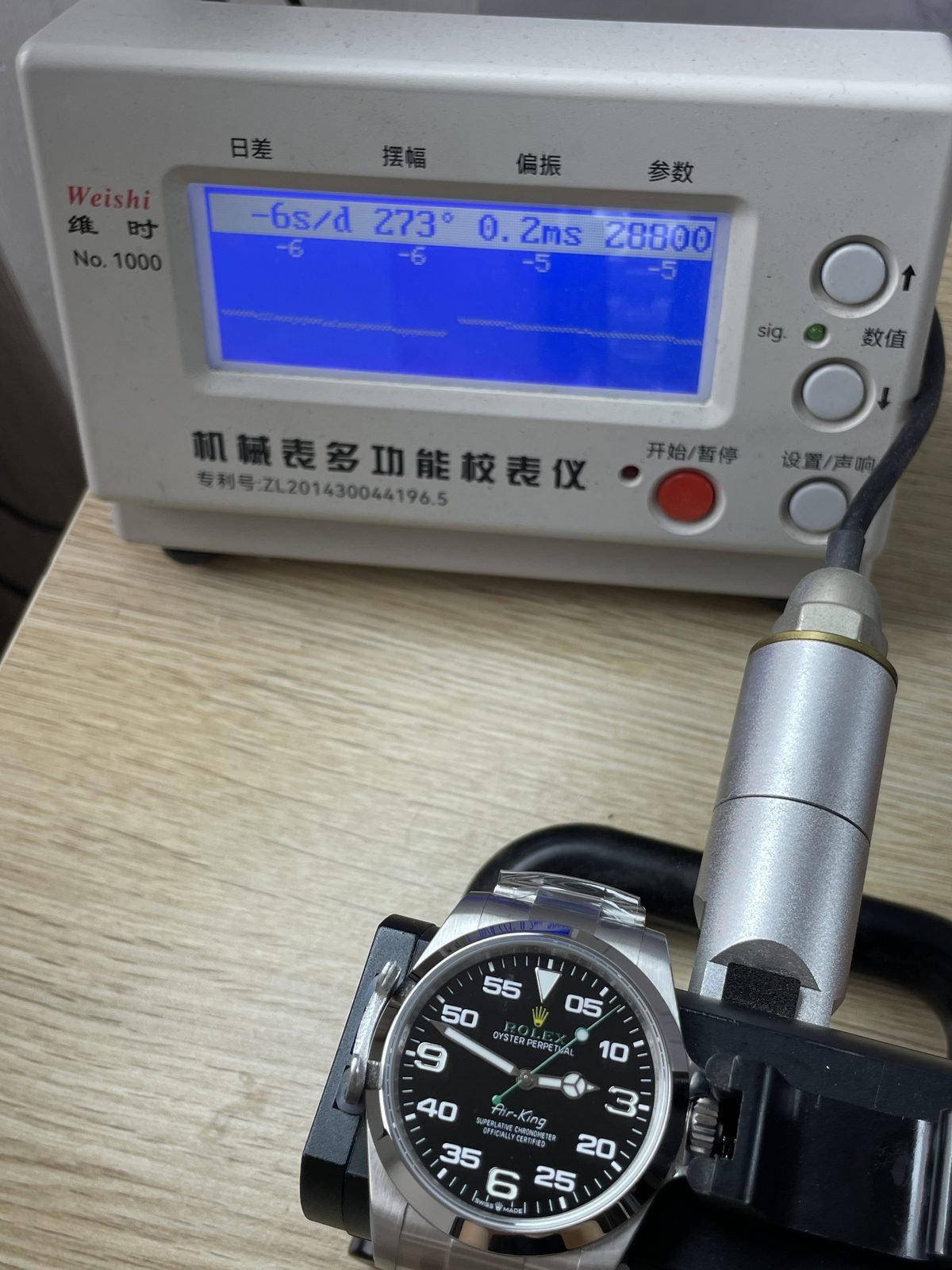
Timing equipment adds another data point. A timegrapher can record rate, amplitude, beat error, and beat rate for a mechanical movement under stated conditions. The reading may identify a movement in need of adjustment, but a good result does not authenticate the watch.
Use QC photos as evidence, not certification
QC photographs are most useful before shipment. Ask for the actual watch from consistent angles and compare the visible serial area, dial, case sides, clasp, and caseback across the set. The images should match one another. A sudden change in protective film, hand position, or background may indicate that photos from different samples were mixed.
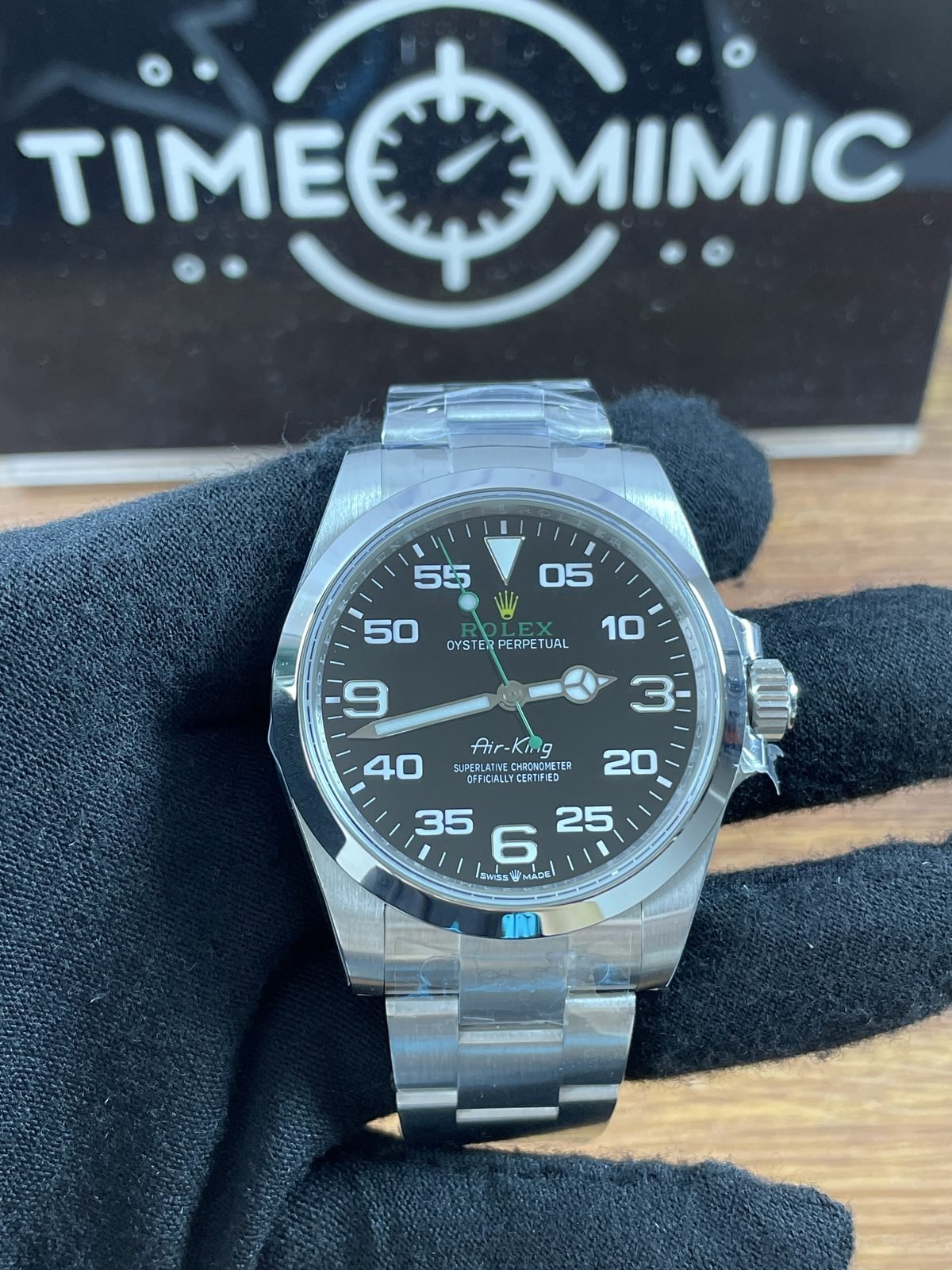
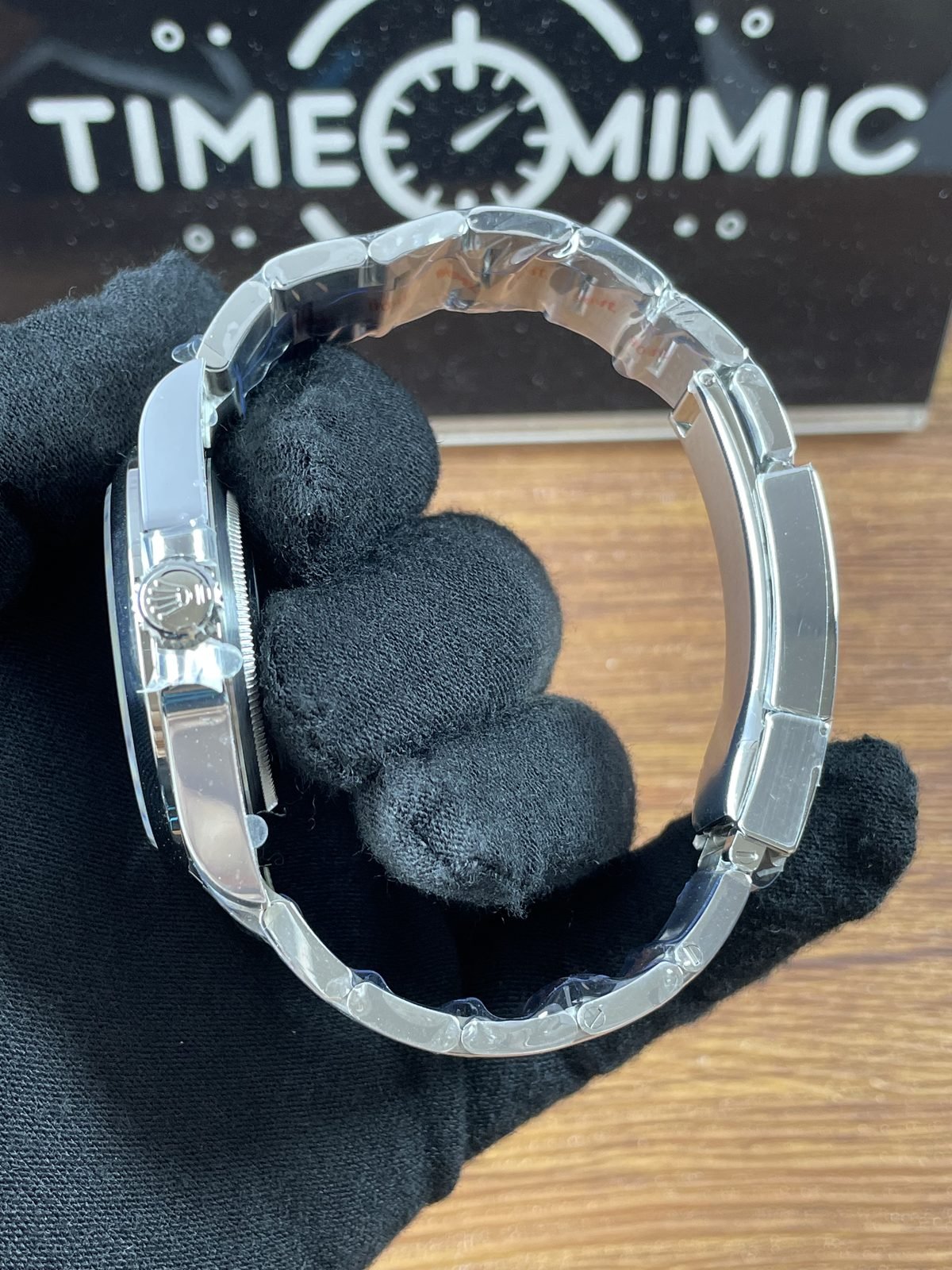
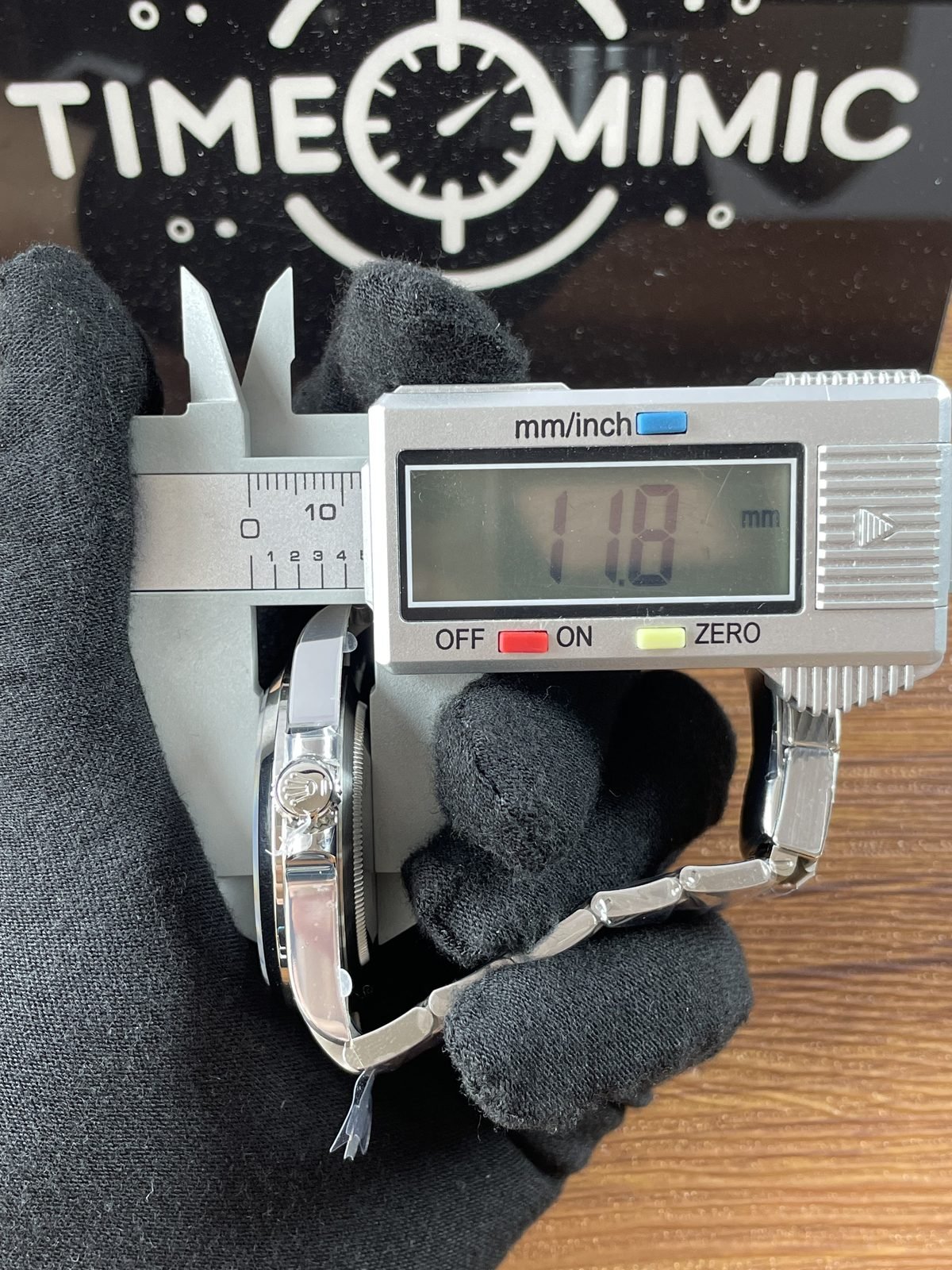
The examples below show one Air-King-style sample. The side view documents case shape and crown placement. The timegrapher photo records one test under the conditions displayed on the machine. These visible checks make a transaction easier to review, but they do not certify the watch as authentic or guarantee future performance.
Ask what each image can establish. A front view documents visible alignment and condition. A side view shows the case profile and crown area. A calliper records one pictured measurement, while a timegrapher records one movement snapshot. None of these images independently proves alloy, crystal composition, water resistance, movement origin, serial validity, or future reliability.
Serial numbers and paperwork must match the watch
A serial number can support authentication when it matches the reference, paperwork, service record, and manufacturer or authorized dealer information. The number alone is weak evidence because it can be copied from an authentic watch and repeated across replicas. Cards, boxes, tags, and receipts can also be reproduced or paired with a different watch.
Look for a coherent ownership history rather than one impressive item. The watch, seller identity, invoice, warranty details, and service documents should tell the same story. If the price depends on authenticity, verify the records through an appropriate channel before the return period or buyer-protection deadline expires.
Know what remote inspection cannot settle
Sharp photographs and video can reveal many inconsistencies, but they do not replace physical access. Lighting can hide dial texture, perspective can distort proportions, and a seller can omit the angle that matters. Internal markings, movement components, gasket condition, and signs of replaced or aftermarket parts may require the case to be opened by someone with the right tools.
The purchase channel should match the consequence of being wrong. For a low-cost item sold openly as a replica, sample-specific QC and clear terms may be enough for the buyer's purpose. When a watch is priced and represented as authentic, use payment protection, preserve the listing and messages, confirm the return deadline, and arrange independent inspection before that protection expires.
Request original-resolution files when fine details matter, and ask for a short continuous video that moves from the dial to the case sides, clasp, caseback, and functions. This can make it harder to hide obvious inconsistencies, but it is still supporting evidence rather than a certificate. File dates, backgrounds, or stickers can be copied, so they must agree with the watch, documents, seller history, and physical inspection.
When to use a professional authenticator
Professional inspection is appropriate for a high-value purchase, an insurance valuation, a disputed sale, or any watch whose case must be opened to verify the caliber and internal markings. Choose a specialist who knows the specific brand and reference, and ask for written findings that identify the watch examined.
Most casual observers will not identify every well-made replica at a glance. A careful examiner often can when the correct reference and tools are available. The dependable method is cumulative: compare the configuration, inspect the visible construction, test the functions, review the records, and escalate to professional authentication when the consequence of being wrong is significant.
Looking for a Top-Tier Clone or Custom Build?
Direct access to VS, ZF, 3KF, Clean & BTF factory stock. We provide detailed multi-angle QC photo & video approval prior to final payment.