Super Clone Watches vs. Originals: Can You Spot the Difference?
Verified Reddit Watch Specialist (RepTime / RepGuild)

You can sometimes spot a difference between super clone watches and originals from an ordinary wrist view. In other cases, a carefully photographed replica may look convincing until you check the side profile, operate the functions, measure the case, inspect the movement, or verify the records.
That leads to a useful distinction. Spotting a visible difference is a screening task. Proving authenticity is an evidence task. A sharp eye can reject a poor copy, but a good photograph cannot give a replica an original manufacturer record, authorized warranty, or verified history.
Use your eyes to decide what deserves a closer look. Use measurements, operation, inspection, and records to decide what the watch actually is.
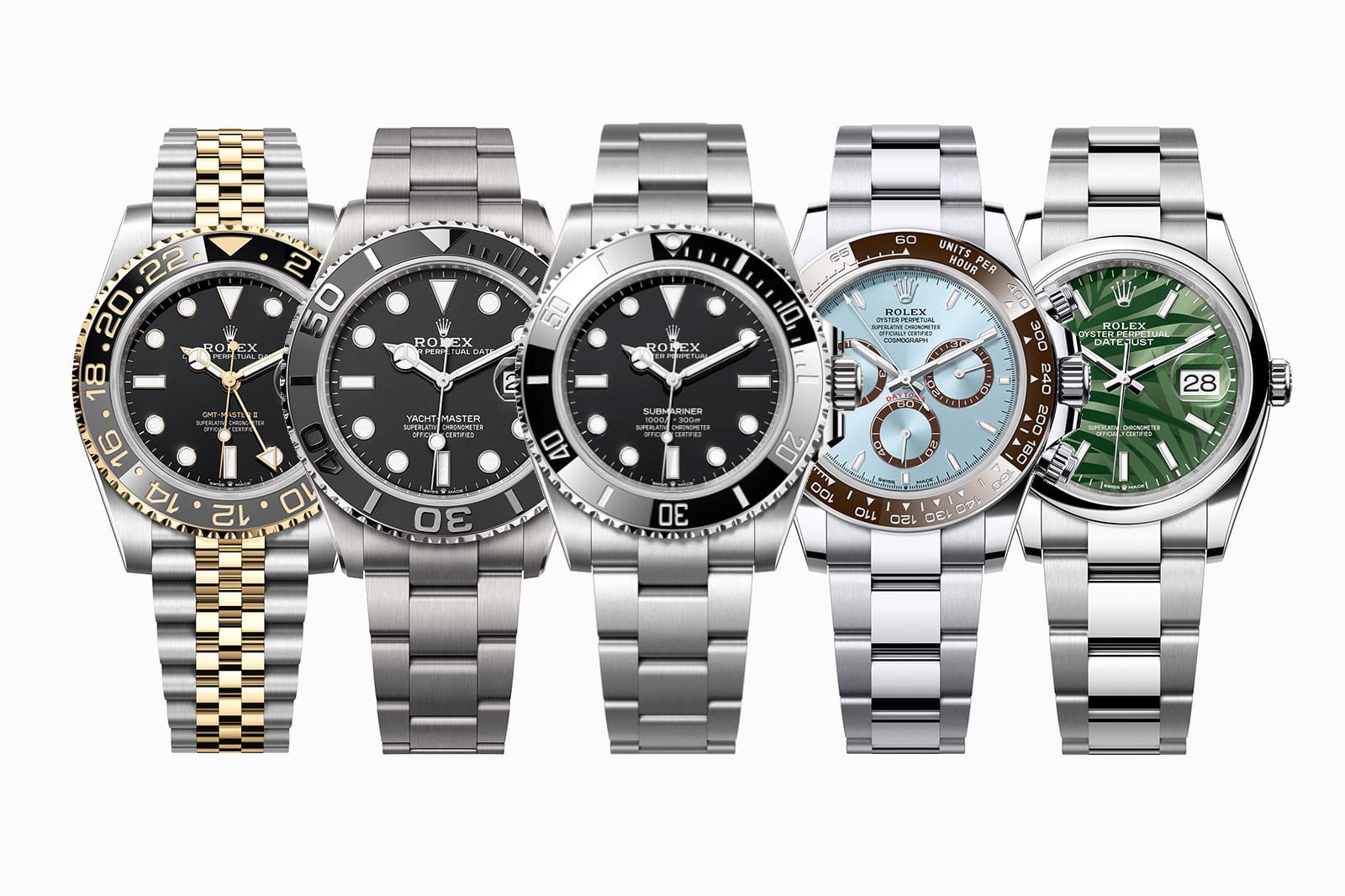
The short answer depends on how close you are
Most comparisons become easier when you divide them into three viewing distances. Each distance answers a different question.
| Viewing distance | What you can judge | What may remain hidden | Best next step |
|---|---|---|---|
| Normal wrist distance | Overall silhouette, dial color, bezel style, bracelet type, and obvious proportion errors | Fine printing, hand clearance, edge finishing, movement construction, and records | Decide whether the watch looks coherent enough to inspect further |
| Close visual or macro view | Dial alignment, date display, printing, lume application, finishing transitions, clasp details, and visible damage | Internal parts, material composition, pressure resistance, and provenance | Compare the exact reference under several lighting angles |
| Opened and documented inspection | Movement architecture, component consistency, service marks, case interior, and some identifying details | Complete ownership history, every material claim, and future reliability | Match the findings with manufacturer or qualified specialist evidence |
At wrist distance, a high quality replica watch may reproduce the broad shape well enough to pass a casual glance. That is the environment sellers often emphasize. Authentication happens in a less forgiving environment: repeatable photos, direct comparison, functional checks, measurements, an opened case when appropriate, and records that can be confirmed.
If you are considering a purchase, do not ask only, “Does it look real?” Ask, “Which parts can I verify, and what evidence would change my decision?”
Start with silhouette and proportions
Begin before you magnify anything. The case, bezel, crystal, lugs, crown, bracelet, and clasp should form the same overall geometry as the exact original reference. A watch can have convincing dial printing and still look wrong because it is too thick, the bezel sits too high, the lugs curve differently, or the first bracelet links spread too far.
Use straight-on, side-profile, and three-quarter views. Compare the case diameter, thickness, lug-to-lug length, bezel width, crystal height, crown position, bracelet taper, and clasp length. Ask for caliper photographs that show the measuring points and display. Published dimensions for an original describe the target; they do not prove that the replica matches it.
Proportions matter because errors affect several features at once. Extra movement height may require a thicker case back. A different date-wheel position may alter the window or magnifier. A broad rehaut can make the dial appear smaller. These relationships are often more revealing than one isolated engraving.
Do not rely on weight as a shortcut. Bracelet sizing, internal construction, added mass, and different materials can produce similar readings. A scale photograph is useful for comparing the delivered sample with a stated figure, but weight alone cannot authenticate a luxury watch.
Read the dial as a complete layout
The dial offers many small clues. Check logo shape, letter spacing, text density, minute-track position, applied-marker alignment, lume fill, hand length, hand-stack order, date-window position, date font, magnification, and the gap between the dial and rehaut.
Compare one exact reference and production period. Genuine watches can change through model generations, dial revisions, service replacements, regional configurations, and limited editions. A feature that is correct on one version can be wrong on another. Mixing reference photos can make an authentic watch look suspicious or allow a replica to escape scrutiny.
Lighting changes what you see. A dark dial may shift color under hard light. Polished hands can disappear against the dial. Anti-reflective treatment can change crystal reflections. Camera sharpening may make printing look crisper, while compression can hide rough edges. Request the same reserved watch in diffuse daylight, hard side light, and ordinary indoor light.
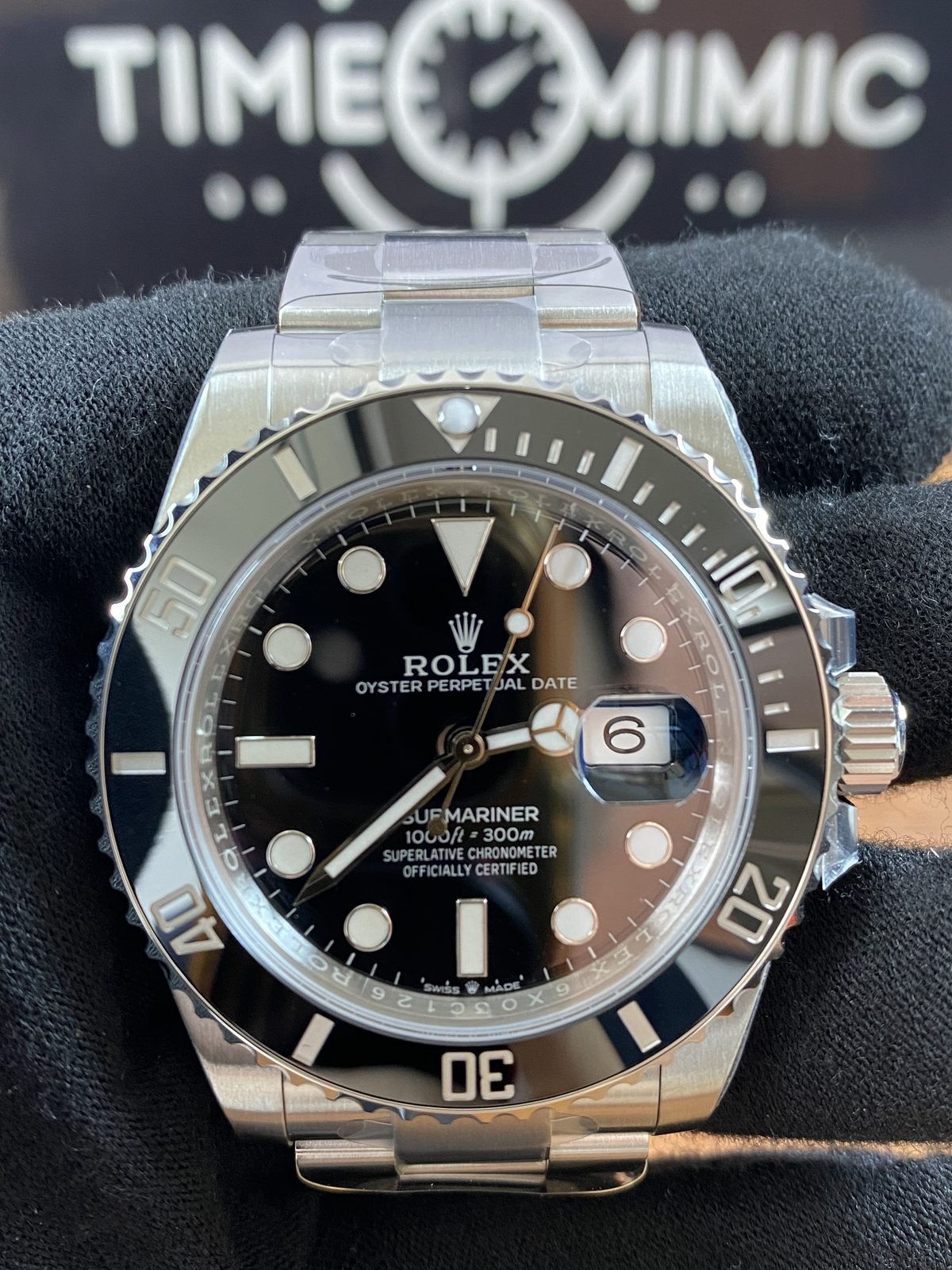
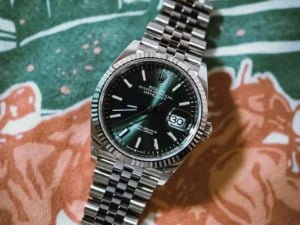
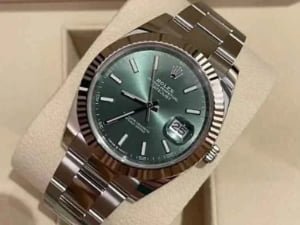
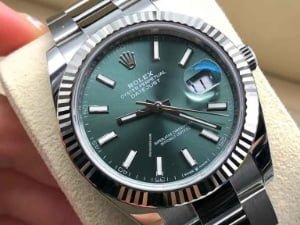
The supplied front-view QC image below is a visible example of the level of detail you can request. You can examine alignment, dust, scratches, and exterior condition. You cannot confirm authenticity, alloy, crystal composition, water resistance, movement origin, or long-term durability from that image.
Check the date and every operating function
A still image cannot show how the watch behaves. Ask for one continuous video tied to your order note and the same reserved sample. The video should show winding, each crown position, hand setting, date correction, midnight transition, and every advertised complication.
Use this sequence:
- Wind the watch and note whether the crown action feels consistent.
- Move through each setting position without forcing it.
- Set the hands across midnight and watch the date transition.
- Test quick-set date, GMT, chronograph, day, moon phase, or other listed functions.
- Check whether hands align with their markers and whether a chronograph resets cleanly.
- Listen for scraping, skipping, or unusual rotor movement while the crown turns.
Different behavior can expose a basic replica movement. Correct behavior still does not prove the caliber or its origin. A decorated module may imitate the setting sequence of the original while using different parts underneath. Treat operation as one layer of evidence.
Case and bracelet finishing reveal consistency
Follow the finishing around the watch. Brushed grain should run in a controlled direction. Polished and brushed surfaces should meet at deliberate boundaries. Lug shapes should match each other. Bezel teeth, crown guards, case-back notches, screw slots, and clasp edges should look consistent rather than individually impressive.
Then handle the bracelet. Check end-link fit, link articulation, screw condition, clasp closure, adjustment range, safety locks, and sharp edges. A loose or uncomfortable bracelet can matter more in daily use than a tiny printing difference seen only through a macro lens.
Surface color does not identify a metal. Photography, white balance, polishing, plating, and screen settings can all change the appearance. If a seller claims a specific alloy, coating, ceramic, sapphire, or precious material, ask for reliable documentation or appropriate testing. ISO’s horology catalogue lists separate standards for coatings, watch glass, wear, shock, magnetism, and water resistance because these properties require different methods.
Movement inspection can change the comparison
The movement is often where a close exterior copy becomes easier to distinguish, but only if you know what belongs in the exact reference. An inspection can compare bridge architecture, wheel positions, jewel locations, rotor construction, regulation system, fasteners, engravings, finishing, and how decorative parts relate to the mechanism below.
The movement image used in this guide is a QC example from one photographed sample. It can show one visible arrangement and one condition. It cannot establish the manufacturer, caliber, materials, assembly quality, lubrication, service history, performance, or durability.
Decorative plates can imitate the outline of an original caliber. Engraved words can be copied. A transparent case back may reveal only the upper layer. If movement identity affects your purchase, ask a watchmaker to inspect the complete architecture rather than accepting a rotor engraving or seller nickname.
Known movement makers publish model-specific data. MIYOTA’s 8215 page, for example, lists dimensions, functions, frequency, jewels, running time, and an accuracy range. That kind of technical record gives you something concrete to compare. A broad claim such as “Swiss movement” or “clone caliber” does not.
Do not open a watch casually. The wrong tool can scratch the case, contaminate the movement, damage a gasket, or affect a return agreement. Arrange inspection with a qualified independent watchmaker when the value and decision justify it.
Timing evidence helps, but it has limits
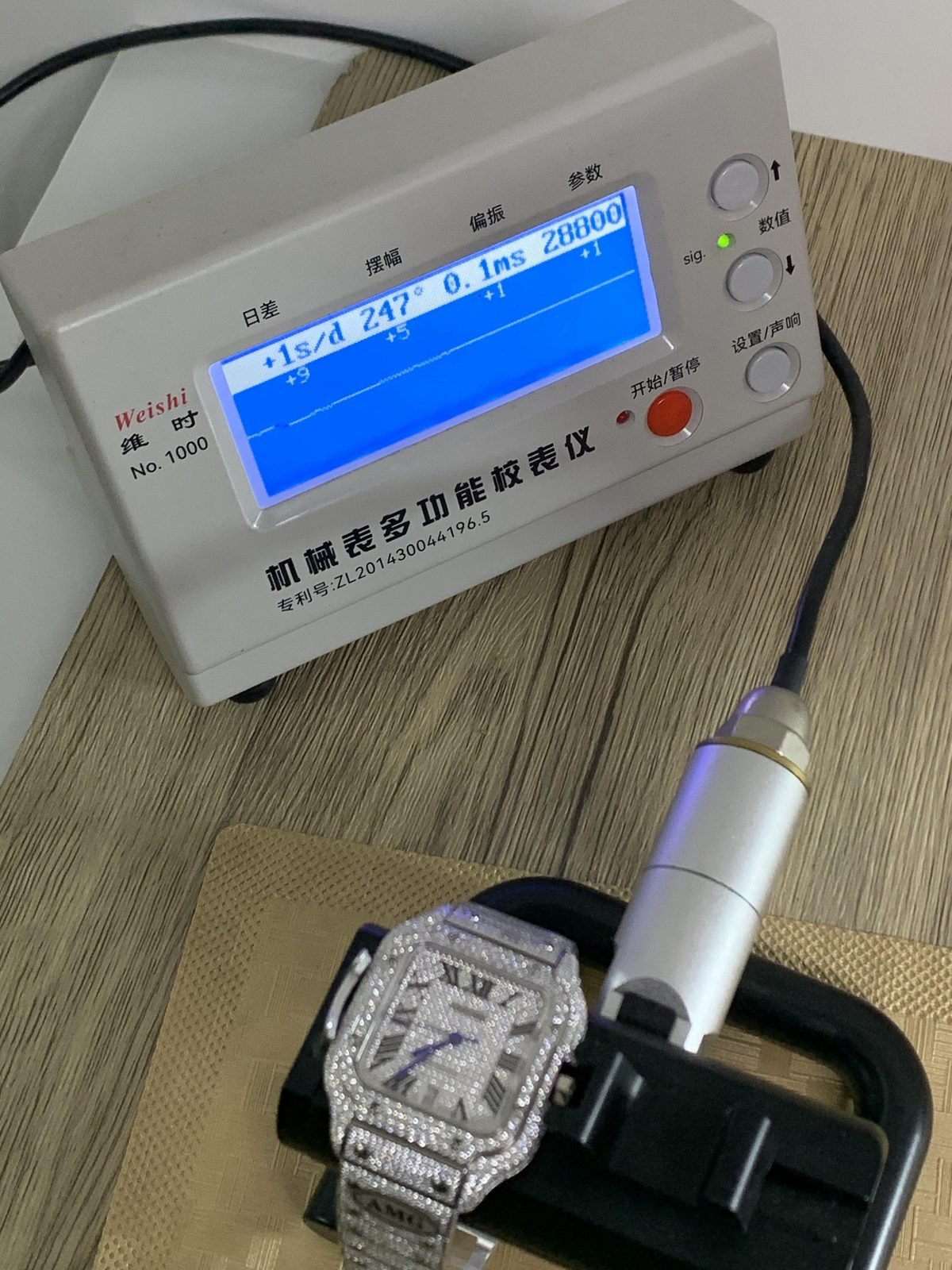
A timegrapher image records a movement in one position, at one state of wind, over one test interval, using one setup. It can help you discuss rate, amplitude, and beat error, but it does not authenticate the movement or predict performance in every position during normal wear.
Ask the seller to state the test position, wind state, lift angle setting, test duration, and displayed result. After delivery, compare the watch over several days of real use. Temperature, position, magnetism, impact, regulation, lubrication, and wear can change what you observe.
Formal certification is much broader than one timing screen. METAS explains that Master Chronometer certification concerns the complete watch and defined tests, including chronometric performance, magnetic resistance, water resistance, and power reserve. A copied dial phrase or printed certificate does not place a replica inside that program.
Water resistance cannot be spotted in a photo
A screw-down crown, diver-style bezel, thick case back, or seller video under a faucet does not prove pressure resistance. ISO 22810 defines requirements and test methods for watches described as water resistant. The exterior style is not a substitute for a test.
If water use matters, request a dated test method and result tied to the exact sample. Treat it as evidence for those conditions at that time. Shipping impact, opening the case, aging seals, crown damage, and later service can change resistance.
Keep a delivered replica dry until a trusted local watchmaker pressure-tests it. Do not assume that a test of another unit, a factory statement, or an online review applies to yours.
Photos are evidence only when they belong to your watch
Seller galleries and studio photographs help you identify the claimed model, but they may show a selected sample, older batch, edited image, or a different watch. A useful QC set needs to connect the evidence to the unit reserved for you.
Ask for a handwritten order note or another agreed identifier in the frame. Request front, back, both sides, crown, crystal edge, bracelet, end links, clasp, and any area that matters to you. Add one continuous video so separate images cannot quietly mix different samples.
| Evidence level | What it can support | Main limitation |
|---|---|---|
| Seller listing and stock photos | Claimed style, option, and broad appearance | May not show the reserved unit or current batch |
| Current sample photos and video | Visible condition, alignment, functions, and sample continuity | Cannot prove hidden construction, records, or future performance |
| Measurements and defined tests | Dimensions, weight, timing snapshot, and test result under stated conditions | Limited to the equipment, method, and time of the test |
| Opened inspection by a qualified watchmaker | Internal architecture, condition, and component observations | May not establish complete history or manufacturer database status |
| Confirmed manufacturer or authorized records | Authentic identity, eligible service history, or program status within stated terms | Availability and scope depend on the brand and watch |
Move up this ladder when the price or consequence rises. A casual fashion purchase may not justify a full internal examination. A watch represented as authentic should never depend on listing photos alone.
This discipline also keeps search labels in perspective. When you compare super clone watches vs originals, terms such as luxury replica watch, “Rolex super clone,” or “real vs fake watch” describe what you are trying to find, not a verified quality level. Replica watches can vary from one unit to the next even when listings use the same photographs and grade name. Bring the comparison back to the reserved sample, the exact original reference, and evidence you can repeat. That gives you a clearer answer than a seller category or search phrase.
Authenticity includes records and support
The hardest difference to copy is the relationship between the watch and its manufacturer. An original can be connected to authorized sale, serial and reference records, service history, controlled parts, warranty terms, archives, and brand-supported authentication routes.
Rolex’s Certified Pre-Owned process says eligible watches return to its workshops for authentication, service, and testing, with an official guarantee. Rolex also states that only Rolex can confirm the authenticity of a Rolex watch. Patek Philippe’s archive service describes records tied to key watch details and explains the difference between an Extract from the Archives and a Certificate of Origin.
A copied serial format, card, seal, QR code, box, or receipt may look persuasive without connecting to the original system. Treat documents as claims until their source and consistency can be checked.
Older authentic watches can also contain service parts or later replacements. A watch may combine genuine, aftermarket, and incorrect components. This is why authentication is not a simple visual contest between a perfect original and an obvious fake. The exact reference, production period, service history, and component configuration all matter.
A five-minute first screen
When you need a quick decision, use this order:
- Confirm the exact reference and production period you are comparing.
- Check the overall silhouette, thickness, lugs, bezel, crystal, and bracelet taper.
- Compare the dial layout, hands, date, printing, markers, and rehaut as one system.
- Operate the crown, setting sequence, date change, and all complications.
- Review current sample photos, video, measurements, and defined test evidence.
- Escalate to movement inspection and confirmable records when authenticity or price requires it.
Stop when the evidence fails an essential requirement. You do not need to diagnose every flaw before rejecting a watch with mismatched geometry, missing functions, inconsistent photos, an unidentified movement, or unverifiable history.
What to do before paying
For a replica purchase, obtain the exact configuration, total price, QC rights, return conditions, shipping terms, and claim deadline in writing. Use a payment route whose protections you understand. The FTC’s online marketplace guidance recommends examining actual-item photos, keeping records, understanding platform help, and avoiding payment methods that are hard to reverse.
Check local rules for counterfeit goods, import, and resale. Never present a replica as authentic. Treat it as a personal-use purchase with restricted service and resale rather than as an investment.
For a watch sold as authentic, make the sale conditional on inspection by an appropriate brand specialist or qualified independent expert. Confirm what will be examined, whether the case may be opened, who pays, and what happens if the result differs from the listing. Verification should fit inside the return or escrow window.
Final answer
Can you spot the difference between super clone watches and originals? Sometimes. At wrist distance, a well-presented replica can look close. Under macro inspection, measurement, functional testing, and movement examination, more differences may appear. Even then, appearance alone does not prove authenticity.
Use a layered process. Start with silhouette and proportions, move through dial and finishing, test every function, review sample-specific QC, inspect the movement when justified, and confirm records for any watch represented as authentic. The closer the decision gets to serious money, service rights, or resale, the less you should rely on a visual guess.
The most dependable distinction is not a single font, tick, weight, or engraving. It is a consistent physical watch supported by evidence that a copy cannot create: traceable identity, qualified inspection, and confirmable manufacturer or authorized records.
Looking for a Top-Tier Clone or Custom Build?
Direct access to VS, ZF, 3KF, Clean & BTF factory stock. We provide detailed multi-angle QC photo & video approval prior to final payment.