5 Differences Between Super Clone Watches and Originals
Verified Reddit Watch Specialist (RepTime / RepGuild)
When you compare super clone watches vs originals, the first difference may be the price, but it is not the most important one. A close-looking replica can copy the general shape, dial layout, colors, and bracelet style of a luxury watch. It cannot copy the manufacturer’s identity, documented production history, testing program, official warranty, or service network.
That distinction makes the comparison easier. You do not need to decide whether every small visual detail is perfect. You need to ask what the watch is, what evidence supports its claims, and what happens after you pay.
A super clone may imitate a design. An original combines the design with brand-controlled materials, production records, testing, warranty, and after-sales support. Those parts of ownership are not visible in a wrist photo.
The five differences at a glance
| Difference | Original watch | Super clone watch |
|---|---|---|
| Identity and provenance | Made or officially certified by the named manufacturer, with records tied to its sales and service system | Uses another brand’s design or marks without becoming a product of that manufacturer |
| Materials and configuration | Reference-level specifications and parts are documented by the brand | Materials and parts depend on the actual sample and need independent evidence |
| Movement and testing | A stated calibre may be produced, certified, and tested through a defined program | Appearance or a seller label does not establish movement origin, architecture, or certification |
| Water resistance and consistency | Model claims are supported by manufacturer procedures and standards | A current test may describe one sample at one moment, not every watch or future condition |
| Warranty, service, and resale | Official channels, parts policies, records, and brand-backed remedies may apply | Support comes from the seller or an independent repairer, with different legal and resale limits |
Difference 1: Identity and provenance are fundamentally different
An original watch is connected to the company named on its dial. That connection includes authorized production, model records, official distribution, and whatever documents the brand issues for that watch. A replica can reproduce the name and visible styling, but it does not enter the manufacturer’s records by doing so.
Rolex describes its Certified Pre-Owned process as an in-house authentication and service program. Its official certification page says the original configuration is checked in Rolex workshops and that certified watches receive a brand-issued seal, guarantee card, service booklet, and papers. Patek Philippe’s Extract from the Archives transcribes manufacturing history and the date of sale from records dating back to 1839. Audemars Piguet makes an equally useful distinction: its archive extract confirms that numbers appear in the records, while its certificate of authenticity addresses whether the watch, materials, and components are genuine.
This is why a high quality replica watch can look convincing and still be categorically different from the original. Serial engravings, packaging, cards, or a matching reference number are visual objects. They are not manufacturer confirmation unless the issuing brand verifies them through its own process.
The legal status also differs. The European Commission’s guidance on fake goods tells online buyers to examine logos, packaging, manufacturer information, supply-chain details, and the legality of the source. EU guidance defines unauthorized use of another party’s registered mark as counterfeiting. Import, possession, and resale consequences vary by location, so you should check the rules that apply to your shipment and planned use.
What you should ask: Is the seller representing the watch clearly as a replica? Are the sample photos current and consistent? What import or resale restrictions apply where you live? A vague answer such as “same as genuine” does not resolve any of those questions.
Difference 2: Original specifications are documented; replica materials require proof
An original manufacturer can publish exact materials, dimensions, construction, and reference-level configurations because it controls the product. Rolex, for example, identifies Oystersteel, 18 ct gold, 950 platinum, and ceramic in its official Oyster presentation. TUDOR model pages separate case material, diameter, thickness, movement, power reserve, bracelet, and water-resistance specifications.
Those original specifications are a comparison target, not evidence about a replica. A seller may use phrases such as “904L,” “sapphire,” “solid gold,” “Swiss made,” or “same weight.” You cannot confirm them from color, shine, or a product title. Ask for sample-specific measurements and documentation, then keep your conclusion limited to what the evidence actually supports.
The phrase “Swiss made” also has a defined origin framework. The Federation of the Swiss Watch Industry explains that a watch using the designation must satisfy requirements including a Swiss movement, casing-up and final inspection in Switzerland, and a minimum Swiss value threshold. Search phrases such as swiss super clone watches or swiss movement replica watches do not prove that a particular sample meets those rules.
Use a simple evidence ladder:
- A clear photo can show visible finish, alignment, scratches, and external condition.
- A caliper or scale can show dimensions and weight when the display and contact points are visible.
- A seller invoice can state a material claim, but it is still the seller’s claim.
- Independent analysis may provide stronger material evidence, but it must identify the tested part and method.
- None of these steps turns a replica into an original or creates brand authorization.
The practical difference is control. With an original, the brand stands behind the reference specification. With a replica, you must evaluate the exact sample because another seller’s watch, an earlier batch, or a stock photograph may not match yours.
Difference 3: Movement architecture and certification are not the same as a similar display
A movement can be compared at several levels: basic function, layout, dimensions, decoration, power reserve, rate stability, shock behavior, magnetic resistance, serviceability, and documented origin. A smooth seconds hand or a familiar-looking rotor addresses only a small part of that list.
Official programs show the depth of the original side. TUDOR’s manufacture-calibre overview names specific calibres, frequencies, escapement components, power reserves, and COSC certification. Its METAS explanation covers precision at different temperatures, six positions and two power levels, exposure to 15,000 gauss, waterproofness, and power reserve. An official OMEGA manual likewise describes complete-watch Master Chronometer testing rather than judging performance from appearance alone.
A seller may call a replica movement “clone,” “Swiss,” or “1:1.” Treat that label as a claim until you see enough evidence to narrow it. Ask for an uncut video showing winding, setting, date change, and every complication. If movement identity matters, request clear movement images and ask an independent watchmaker whether the layout and service parts match the description.
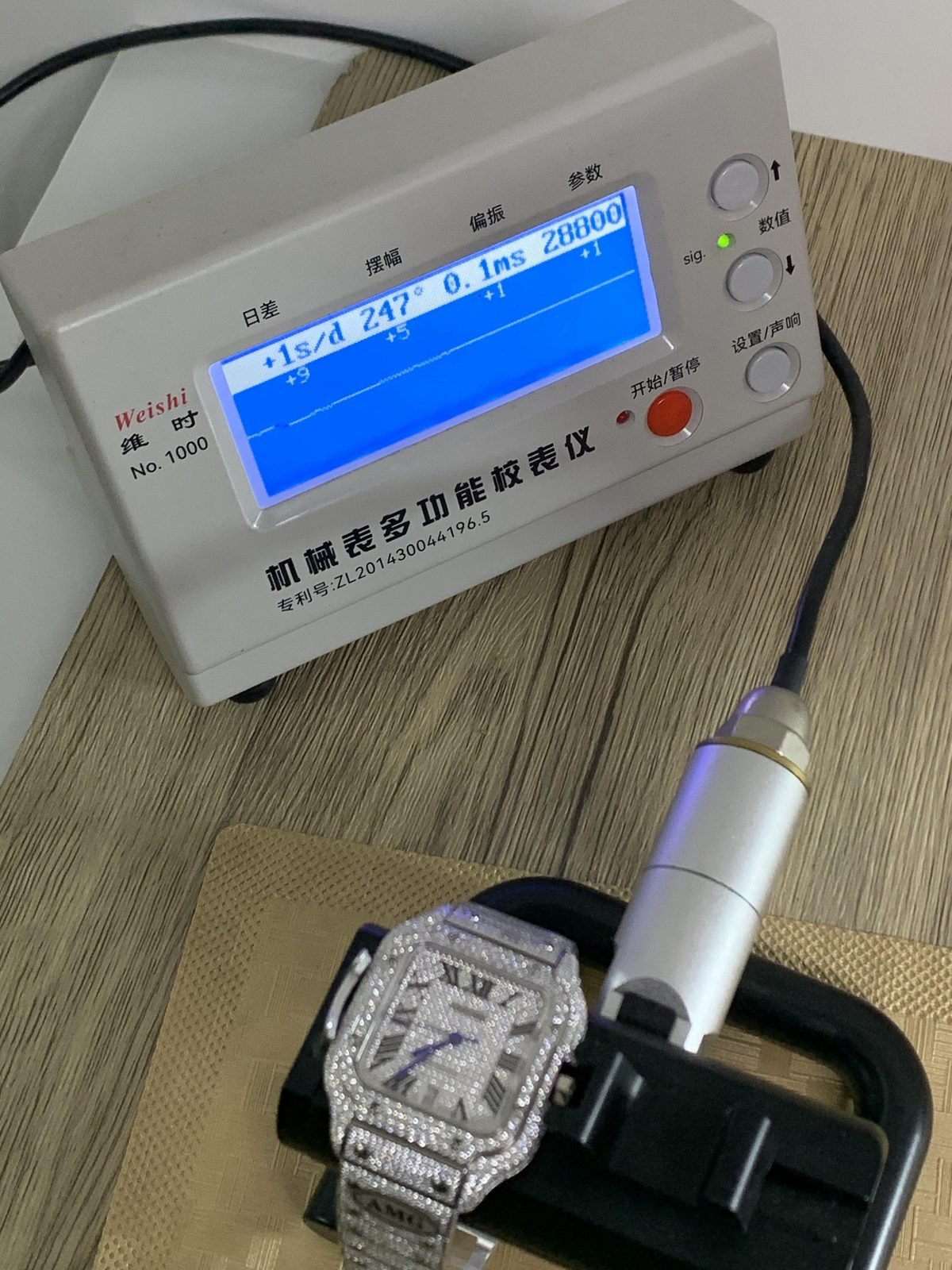
A timegrapher reading can help, but it needs context. Request a continuous video that identifies the sample, shows its wind state and position, and keeps amplitude, beat error, rate, and lift-angle setting visible. One reading can reveal an obvious problem. It cannot establish the movement’s origin, performance in every position, power reserve, shock resistance, or behavior after months of wear.
Difference 4: Manufacturer testing covers a system; replica QC covers one sample
Original brands publish model-level performance claims and use repeatable procedures to support them. ISO 22810 sets requirements and test methods for watches marked as water resistant. The ISO summary makes clear that water resistance is a tested property with authorized marking, not a conclusion drawn from a screwed crown or diver-style bezel.
TUDOR’s official service procedure describes vacuum, pressure, and condensation tests after seals are replaced. Rolex’s world service process separates movement, case, and bracelet work, replaces seals, then checks performance before the watch is returned. These are controlled procedures inside official service systems.
Replica QC is useful for a different purpose. It can help you reject a crooked marker, damaged bracelet, poor date alignment, non-working chronograph, or unacceptable timegrapher result on the photographed sample. A current pressure test can add evidence about that sample under the stated test conditions. It does not prove that every watch from a seller is the same or that the seals will remain effective after shipping, an impact, aging, or a case opening.
If you are searching for a waterproof replica watch, ask for the test method, pressure, duration, date, and sample identifier. Decide what you will actually do with the watch, then use a qualified local tester before swimming. A product page claim by itself is not a safe plan.
Difference 5: Warranty, service, and resale belong to different systems
The price of a watch buys more than the object in the box. An original purchased through the proper channel may include a manufacturer guarantee, trained service network, original parts policy, service records, and brand-supported documents. TUDOR’s five-year guarantee terms require sale by an official retailer, a completed guarantee card, and presentation through the official network. TAG Heuer’s international warranty also ties coverage to an activated card and authorized service.
Long-term support can extend beyond the initial warranty. Rolex says its service system provides parts and labor for at least 35 years after a model leaves the catalogue, followed by restoration options when appropriate. That does not mean every repair is free. It means the brand has a defined infrastructure for the products it made.
A replica does not receive the original brand’s guarantee or official service entitlement. Your remedy usually depends on the seller’s written terms, payment method, shipping arrangement, and willingness to help. Some independent watchmakers will not service counterfeit-branded watches, while others may be unable to source a compatible part. Ask before purchase rather than discovering the limit after a failure.
Resale is different too. An original can be assessed through reference, condition, service history, documentation, and market demand. A replica has no authorized-brand provenance and may face platform bans, trademark rules, customs risk, or local restrictions. The OECD’s study of counterfeit trade notes that fake watches appear in both deceptive and knowingly purchased markets. You should never present a replica as genuine.
What the QC images in this guide can show
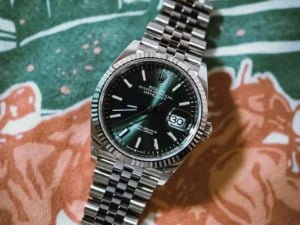
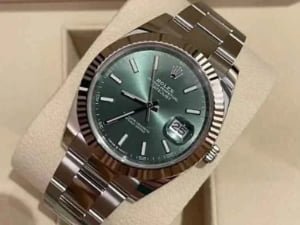
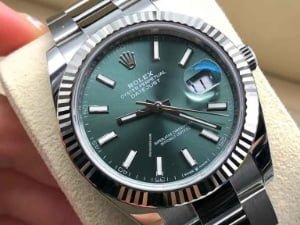
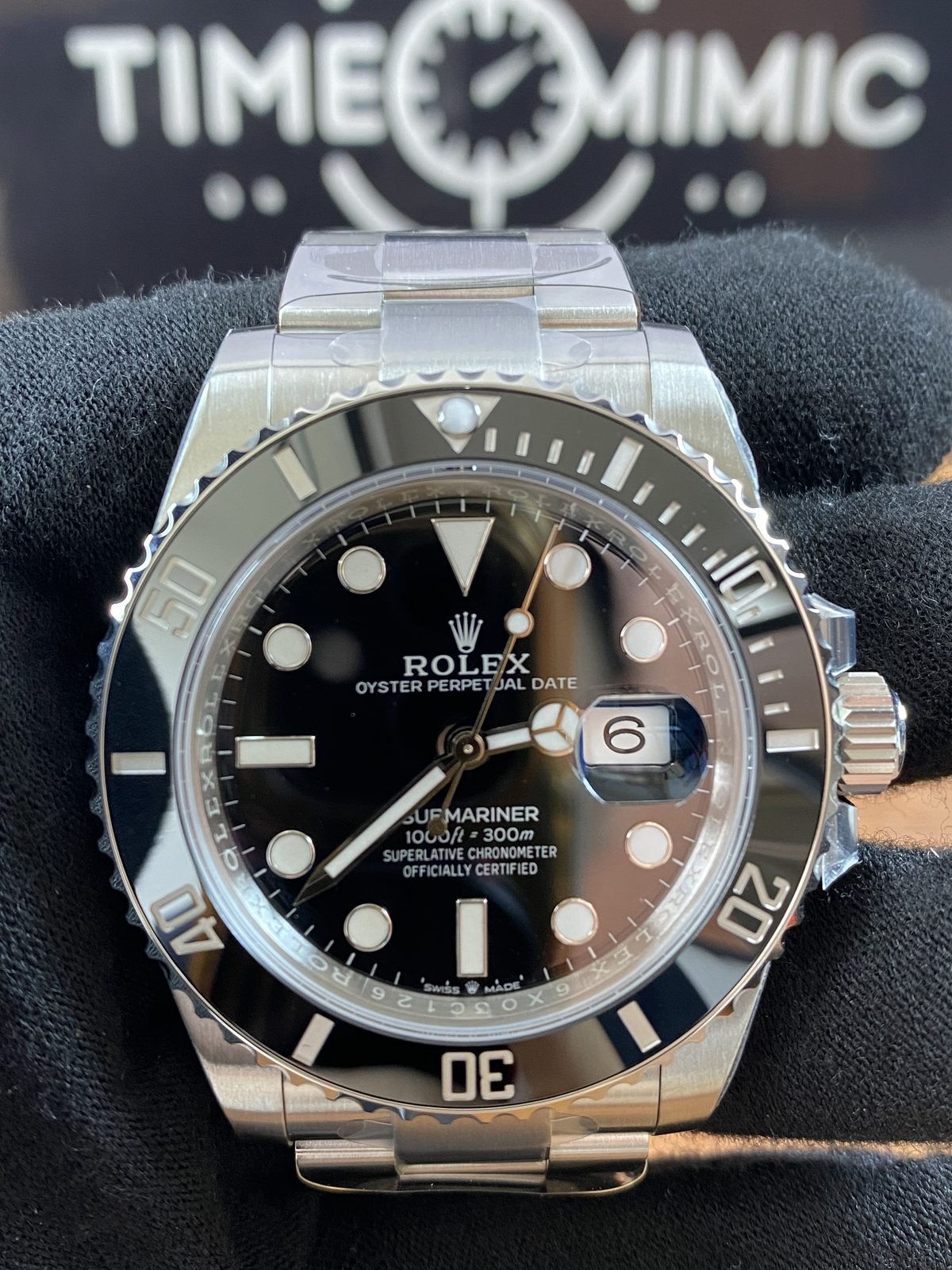
The front-view QC image below can help you inspect the photographed sample’s visible alignment, finish, bezel, date window, bracelet fit, and surface condition. It cannot establish authenticity, metal grade, crystal composition, movement identity, water resistance, or long-term performance.
The timegrapher image records one reading under one setup. You can use it to ask whether the rate, amplitude, and beat error were readable and whether the seller identifies the sample and test position. It is not equivalent to COSC, METAS, ISO testing, or a manufacturer guarantee.
A practical comparison checklist before you pay
| Ask for | What a useful answer contains | What should make you pause |
|---|---|---|
| Exact-sample proof | One continuous walk-around video plus matching multi-angle photos | Stock images, changing stickers, dates, backgrounds, or watches |
| Dimensions and weight | Readable caliper and scale views tied to the sample | Typed figures with no measurement view |
| Movement evidence | Clear movement view, function video, and limited wording about origin | “Swiss” or “1:1” with no verifiable detail |
| Timing and pressure results | Current sample ID, setup, values, and test conditions | Cropped screens, no sample link, or a universal waterproof promise |
| Written remedy | Return window, defect process, shipping responsibility, and service limits | Verbal promises, unclear return address, or payment with no dispute path |
You can send the seller one short message: “Please show the exact watch in one continuous video, measure its dimensions and weight, demonstrate every function, provide the movement and test evidence you rely on, and confirm the written return and defect terms before I pay.” The answer will tell you more than another page of sales adjectives.
Frequently asked questions
Can a super clone look identical to an original in photos?
It can look very close at the photographed angle, distance, light, and resolution. That does not establish identical materials, movement architecture, testing, provenance, warranty, or condition outside the frame. The phrase exact replica watches describes buyer intent, not a measurable certification.
Is a heavier replica automatically better?
No. Weight may help you detect a large mismatch when you compare the same reference and bracelet configuration. It does not identify the alloy, coating, movement quality, or internal construction. Use weight as one data point alongside dimensions and sample-specific evidence.
Does a good timegrapher result make the movement equal to the original?
No. It describes the tested sample at that moment and under that setup. Manufacturer certification can involve multiple positions, temperatures, power levels, magnetic exposure, waterproofness, and other controlled tests. Movement origin and serviceability also require separate evidence.
Do original brand specifications apply to a replica of the same model?
No. Use the original page to identify the target design and specification. Then verify the replica separately. Do not transfer the original’s material, calibre, power reserve, water rating, or warranty to an untested sample.
Which option is right for you?
Choose an original if brand provenance, official warranty, authorized service, documented materials, and resale pathways are central to your purchase. Consider a replica only if you understand that you are buying a visually similar but fundamentally different product, accept the legal and service limits, and can evaluate the exact sample without relying on borrowed claims.
Final answer
The five differences are identity, material evidence, movement and testing, quality-control scope, and the ownership system after the sale. A super clone may copy much of what you can see. An original includes manufacturer authorization, records, defined specifications, controlled testing, warranty, and service support that a replica does not inherit.
Compare the exact watch, not the seller’s grade. Keep original specifications on one side and sample-specific evidence on the other. If a critical claim cannot cross that evidence gap, treat it as unverified before you pay.
Looking for a Top-Tier Clone or Custom Build?
Direct access to VS, ZF, 3KF, Clean & BTF factory stock. We provide detailed multi-angle QC photo & video approval prior to final payment.