Super Clone Watches vs. Original: Can You Spot the Difference?
Verified Reddit Watch Specialist (RepTime / RepGuild)

You may spot differences between super clone watches and an original when you compare the exact reference, inspect the watch from several angles, operate every function, and check the movement and paperwork. You may also miss them in a single photograph. Modern copies can reproduce obvious visual details well enough that appearance alone is not a dependable authentication method.
The practical answer is to separate two questions. The first is whether you can see visible differences. The second is whether you can prove that a watch is authentic. Visible clues can help you reject a poor copy. Authentication requires provenance, reference knowledge, internal inspection, and expertise appropriate to the brand and model.
Super clone watches are easiest to assess when you combine those visible clues with records, measurements, operation, internal construction, and current test evidence.
Your goal is not to win a guessing game from one photo. You need a repeatable process that tells you which observations are useful, what each observation cannot prove, and when to stop and ask an authorized or qualified specialist.
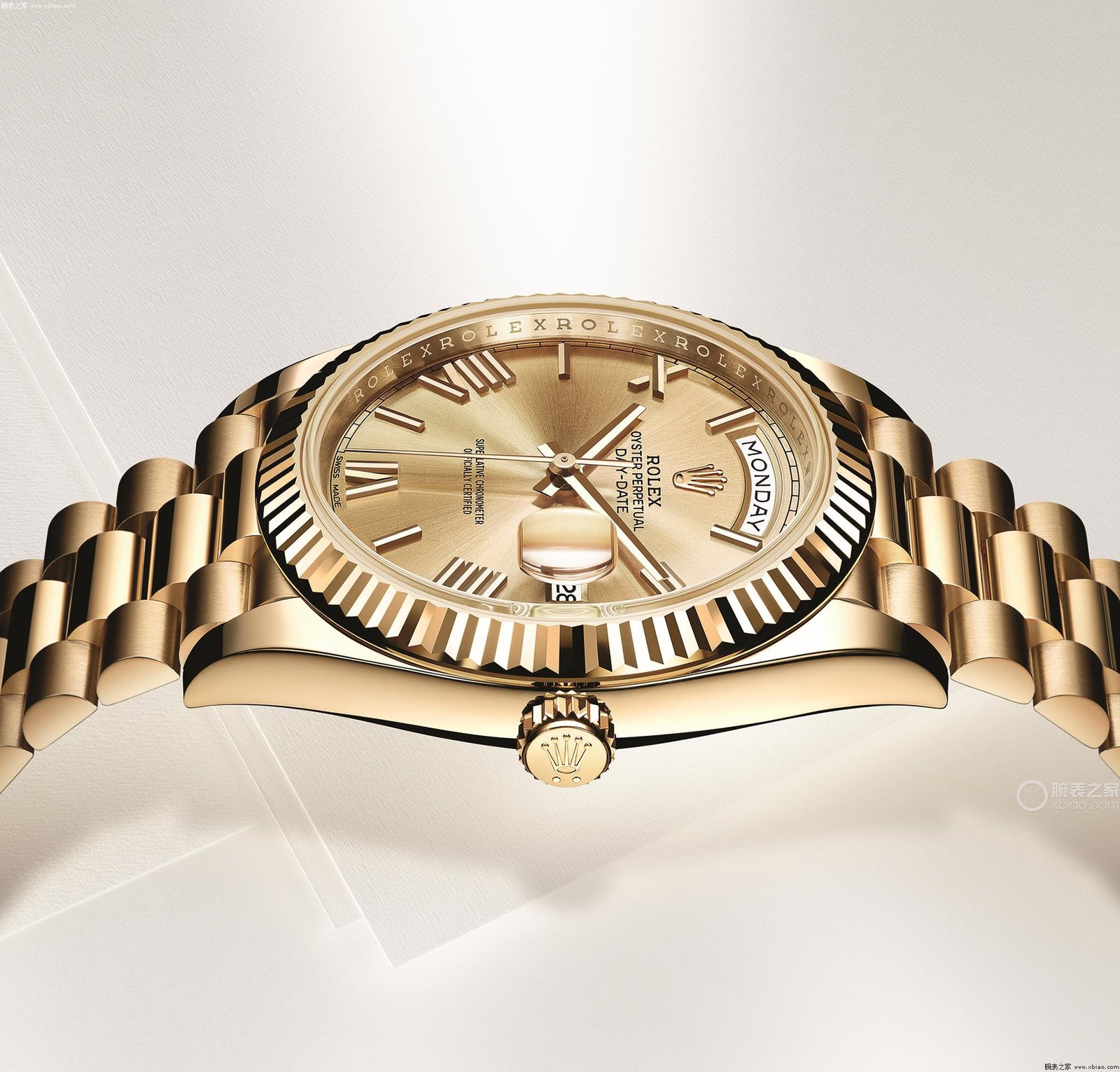
Start with the evidence hierarchy
| Area to compare | What you can observe yourself | What needs outside proof |
|---|---|---|
| Identity and history | Reference, serial layout, seller records, included documents | Brand records, authorized authentication, lawful ownership history |
| Exterior construction | Proportions, finishing transitions, printing, alignment, bracelet and clasp action | Exact alloy, crystal composition, coating, gem quality, production origin |
| Movement and functions | Architecture visible through an open back, crown feel, setting sequence, function behavior | Movement identity, component origin, modification history, long-term durability |
| Performance | Rate, amplitude, beat error, power-reserve observation, pressure-test result | Factory certification, performance in every position, future water resistance |
| Ownership support | Seller return terms, local repair access, included warranty | Original-brand warranty, official parts, authorized service, certified resale history |
The closer a clue gets to verifiable records and expert inspection, the stronger it becomes. A logo, weight, ticking sound, or smooth hand motion can support an observation, but none of those is a complete authentication system.
1. Provenance is a bigger difference than appearance
An original watch has a traceable relationship to its manufacturer. Depending on the brand and purchase route, that can include an authorized retailer, a correctly completed warranty card, service records, reference and serial information, and access to an official service network.
Rolex states that its Certified Pre-Owned process returns eligible watches to brand workshops, verifies the original configuration, services and tests the watch, and supplies official papers plus a two-year guarantee. The brand also says that only Rolex can confirm the authenticity of a Rolex watch. That is a useful reminder: a copied card, seal, serial, QR code, or box may look convincing without creating a brand record.
Patek Philippe describes a service process that checks a watch against historical archives and records its serial number before diagnosis. Its service FAQ directs owners to authorized retailers and service centers. These systems connect the physical watch to records, trained people, and controlled parts.
When you compare a super clone vs original watch, ask for the history before studying the dial:
- Who sold the watch, and are they listed by the brand as authorized?
- Does the reference match the case, dial, bracelet, movement, and production period?
- Can service records be confirmed rather than photographed only?
- Do serial and document details stay consistent across every item?
- Will the seller allow inspection by an appropriate specialist before the return period ends?
A replica can copy the appearance of documentation. It cannot create an official manufacturer history. Provenance is often the first dependable difference, even when the watch face looks close.
2. Case shape and finishing reveal consistency, not authenticity by themselves
Start with geometry. Compare the exact reference, because a genuine feature on one year or configuration can be wrong on another. Look at case diameter, thickness, lug profile, crown-guard shape, bezel height, crystal position, bracelet taper, clasp dimensions, and the way the watch sits on the wrist.
Then follow the finishing from one surface to the next. On a carefully finished watch, polished and brushed areas should meet in deliberate boundaries. Chamfers should remain consistent. Lugs should have matching shapes. Bracelet links should articulate without obvious sharp edges, uneven gaps, or loose end-link fit.
With super clone watches, consistency across all of those areas is more informative than one impressive close-up.
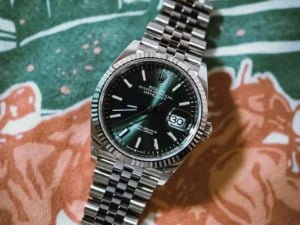
High quality replica watch sellers may show attractive macro photographs, but lighting can hide soft edges, uneven brushing, dust, scratches, and plating differences. Ask for the reserved sample under diffused light, hard side light, and ordinary indoor light. Request straight-on and side-profile views at a useful distance. An extreme macro image can make a tiny defect look serious, while a distant image can hide a major proportion error.
Weight is weak evidence. Two watches can weigh similarly while using different materials, internal construction, bracelet sizing, or added mass. Surface color is also unreliable across cameras and screens. If a material matters, you need documentation or appropriate testing rather than a visual promise.
3. Dial, hands, date, and operation offer several small clues
The dial gives you many comparison points, but you must examine them as a system. Check printing density, letter shapes, spacing, minute-track placement, applied-marker alignment, luminous fill, hand length, hand-stack order, date position, magnification, and the gap between the dial and rehaut.
Use one exact official reference image as your baseline. Avoid mixing product generations, regional configurations, service dials, or aftermarket parts. A detail that looks wrong may be correct for another reference, and an apparently perfect detail may have been copied from a promotional photograph.
Operate the watch slowly:
- Unscrew or pull the crown and note each position.
- Set the hands across midnight and observe the date-change behavior.
- Test quick-set date, GMT, chronograph, day, moon-phase, or other functions that should exist on that reference.
- Check whether the hands align with their markers and whether a chronograph resets cleanly.
- Listen for scraping, skipping, or a rotor that moves unusually when the crown is turned.
Function behavior can expose a basic copy, but a working display still does not identify the movement or prove durability. Smooth operation is a reason to continue the inspection, not a certificate of authenticity.
4. The movement can expose major differences, if you know what belongs inside
Opening the case can reveal architecture, bridge layout, rotor design, jewel placement, regulation system, finishing, and markings. This is usually more informative than looking through the crystal. It also requires care. The wrong tool can scratch the case or damage a gasket, and opening the watch may affect a seller warranty or water resistance.
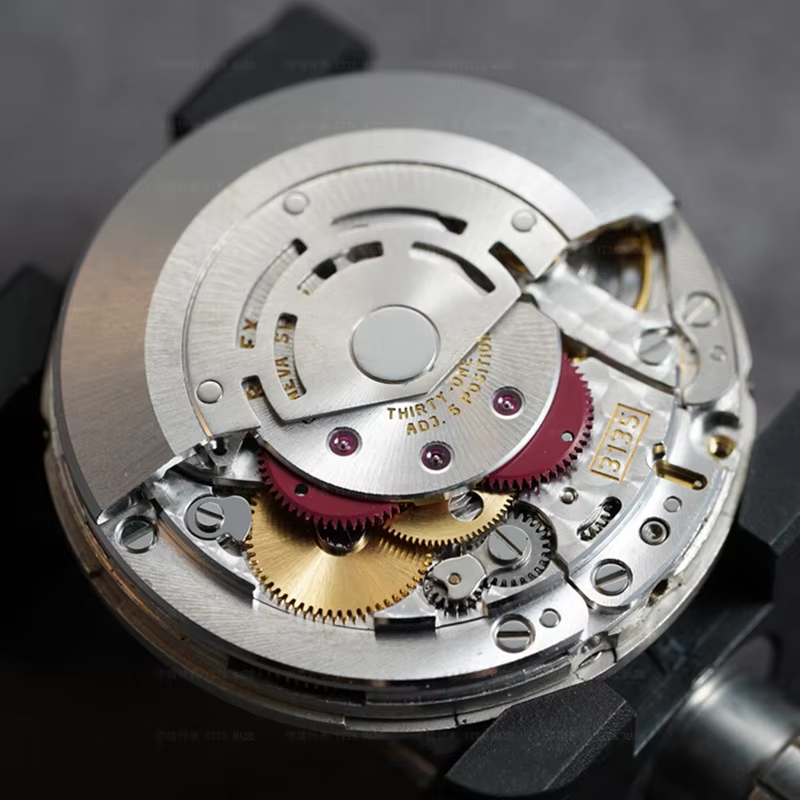
The supplied movement close-up below is an illustration of why internal inspection needs reference knowledge. Decorative plates, engraving, colored screws, or a rotor can be designed to resemble an original movement while concealing a different mechanism below. A photograph of the back is helpful only when it is sharp, current, tied to the same sample, and compared with reliable technical information for that exact reference.
Original certification is tied to defined watches and tests. The Swiss Federal Institute of Metrology explains that Master Chronometer certification applies to the complete watch and covers areas such as chronometric performance, water resistance, magnetic resistance, and power reserve. The METAS requirements also include conditions for the movement, test cycles, technical criteria, and ongoing monitoring. A copied phrase on a dial or movement does not place a replica inside that program.
If movement identity affects your decision, ask a watchmaker to compare the architecture and components. Do not rely on a sticker, seller nickname, rotor engraving, or a short clip that never shows the complete movement.
Some super clone watches can mimic the visible bridge layout while retaining differences in the mechanism underneath, which is why a partial view is weak evidence.
5. Performance testing separates a sample result from a factory claim
A watch can look accurate and still perform poorly. A timegrapher helps you observe rate, amplitude, and beat error in one position under one setup. Ask for the lift-angle setting, wind state, position, and test duration. Repeat results in several positions if performance matters to you.
| Evidence source | What it can support | What it cannot establish alone |
|---|---|---|
| Timegrapher result tied to the sample | One movement result at one moment and position | Authenticity, every-position performance, durability after shipping |
| Measured power-reserve observation | Approximate running duration under the stated wind and use | Movement identity or factory certification |
| Current dry or wet pressure test | One sample’s pressure result at that time | Permanent water resistance after impact, aging, opening, or service |
| Original-brand certification record | Brand-defined tests and status for the identified authentic watch | The condition of another watch with copied markings |
| Seller statement or printed dial rating | The claim being made | Actual pressure performance, gasket condition, or test history |
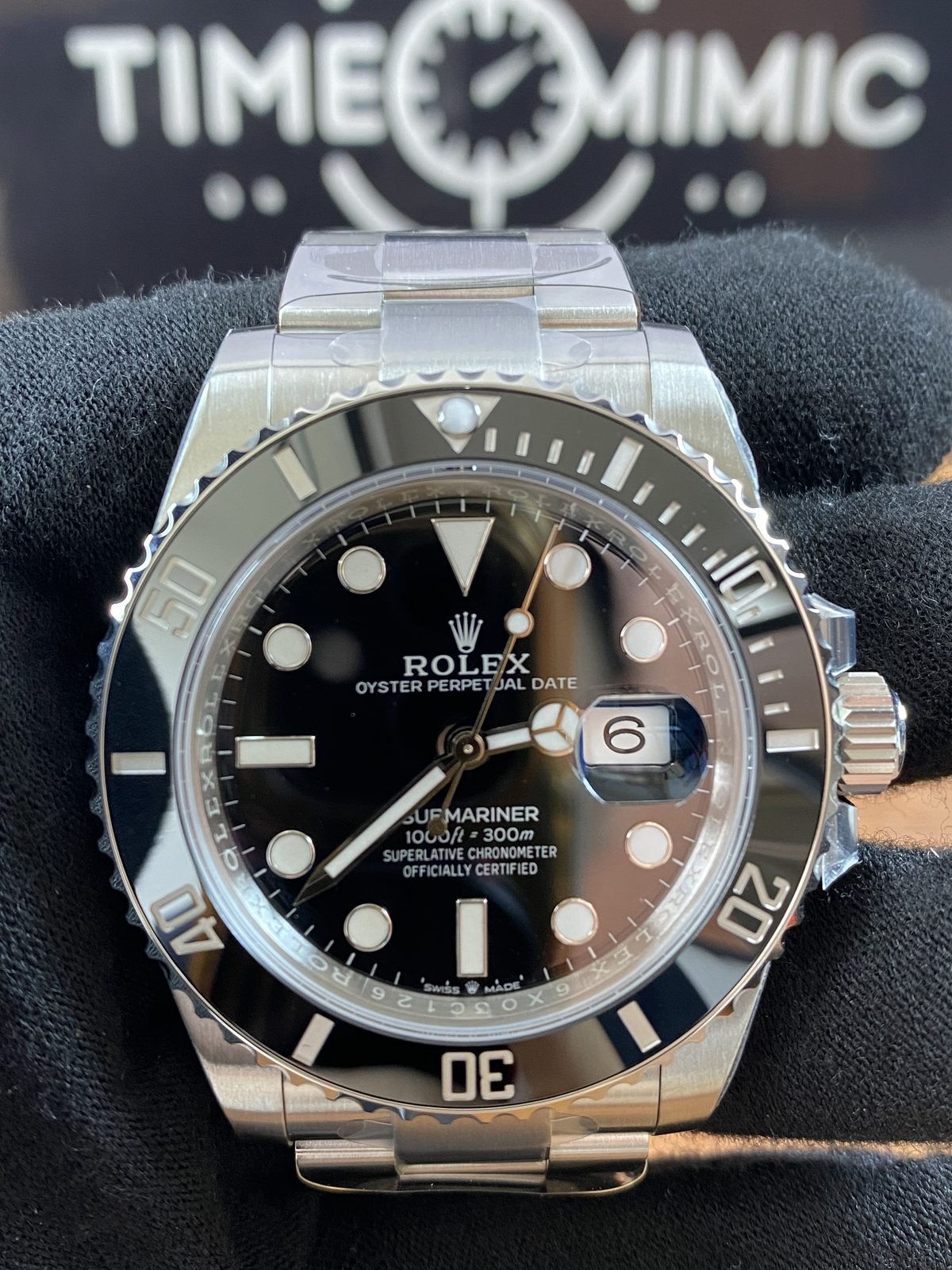
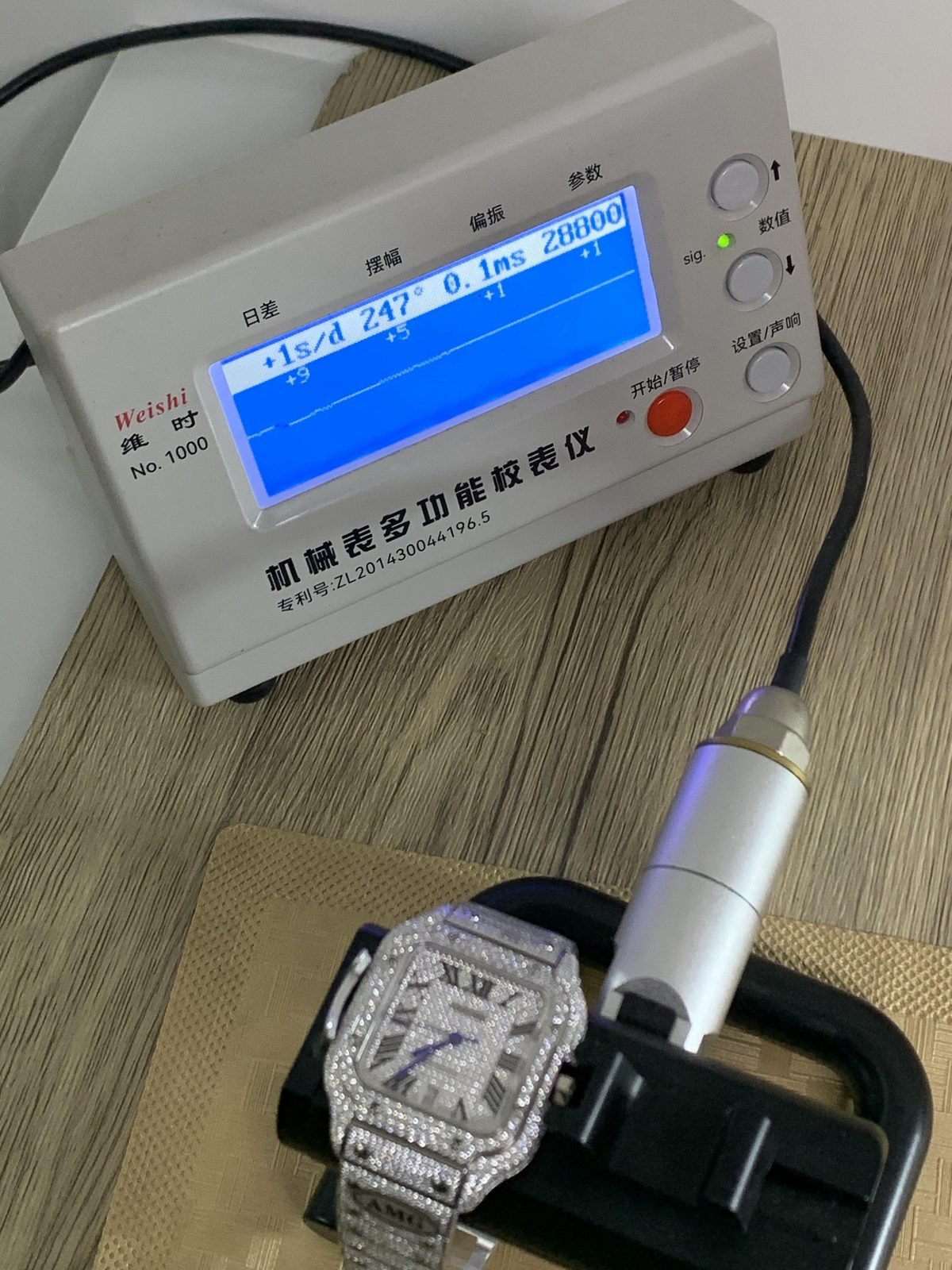
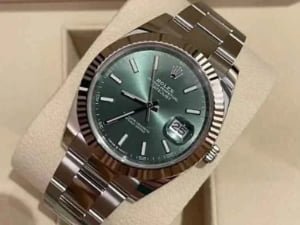
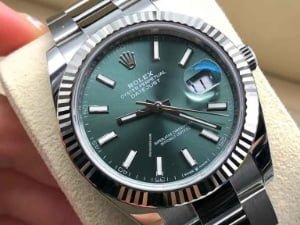
The front-view QC example below shows visible condition and alignment on one photographed sample. The timegrapher example records one setup and one moment. Neither image authenticates a watch or proves the exact materials, movement origin, water resistance, or future performance.
Water resistance is especially easy to overstate. The ISO 22810 overview says the standard establishes requirements and test methods for water-resistant watches. A printed depth rating, screw-down crown, or underwater marketing image is not a current test for the watch in front of you.
Original systems can be much broader than one shop test. An official Omega manual for a Master Chronometer watch describes movement and complete-watch testing across multiple criteria, while Omega’s certification overview connects that process with METAS and a brand warranty. A replica sample may still be regulated or pressure-tested. Those sample results should be described at their true scope.
6. Warranty, service, and resale make the long-term difference clear
An original usually enters a controlled ownership system. Brand warranty terms, authorized service centers, official parts, service documentation, and recognized resale channels can remain important years after the first visual comparison.
Patek Philippe says its service commitment covers maintenance, repair, or restoration of its watches regardless of age through trained and certified specialists. Its restoration page describes preserving original components and maintaining a parts archive. Audemars Piguet’s published service terms define a service warranty and explain how non-authorized work can affect coverage.
A replica owner needs a separate plan. Ask which movement is actually installed, whether an independent watchmaker will accept it, whether replacement parts exist, and what happens when the seller’s return period ends. A low purchase price can lose its advantage when the only repair option is full replacement.
Super clone watches normally depend on seller or independent repair routes rather than the original brand’s controlled service system.
Resale is another dividing line. An authentic watch with verified provenance can enter established dealer, auction, or certified pre-owned channels. A counterfeit watch may face platform removal, customs action, and legal restrictions. EUIPO research reports that many buyers remain uncertain about whether products are genuine. U.S. Customs and Border Protection describes specific restrictions and a narrow traveler personal-use exemption. Check the law for your location and intended use rather than assuming that possession, import, travel, and resale are treated the same.
A 15-minute comparison you can repeat
Use this order when the watch is in front of you:
- Confirm the exact reference and expected configuration.
- Record the seller, provenance, serial information, and return deadline.
- Photograph the front, sides, crown, clasp, end links, and case back under neutral light.
- Measure width, thickness, and key proportions.
- Compare dial printing, markers, hand lengths, date, rehaut, and bezel alignment.
- Operate every crown position and displayed function.
- Inspect the movement only with proper tools and reference knowledge.
- Review current timegrapher, power-reserve, and pressure-test evidence at their true scope.
- Verify warranty, authorized service access, parts, and ownership history.
- If authenticity matters, make the purchase conditional on qualified inspection.
Stop when a seller changes the sample, avoids clear reference information, refuses inspection, supplies inconsistent documents, or uses urgency to replace evidence. One strong red flag can matter more than ten details that look correct.
Frequently asked questions
Can you spot a super clone watch from one photo?
Sometimes, but not reliably. A poor copy may show obvious proportion, printing, alignment, or date problems. A strong photograph of a better copy can hide internal, historical, and performance differences.
Does a smooth seconds hand prove a watch is original?
No. Many mechanical movements produce a visually smooth sweep. Beat rate and hand motion can help identify a movement family, but they do not authenticate the complete watch.
Is the serial number enough?
No. A serial can be copied. It becomes useful when its format, location, reference, documents, ownership history, and brand or expert records remain consistent.
Will a timegrapher reveal a replica?
It can reveal poor regulation or an unexpected beat rate, but it cannot authenticate the case, dial, bracelet, movement components, or provenance. Treat it as one performance check.
What is the most reliable way to authenticate an original luxury watch?
Use the brand’s authorized route when available, or a qualified independent specialist with reference-specific experience, proper tools, and a documented inspection process. Arrange the inspection before the return deadline.
Final answer
Can you spot the difference between super clone watches and an original? You can often find clues by checking provenance, exact proportions, finishing, dial details, function behavior, movement architecture, and current test results. You cannot convert those clues into certainty from one photograph.
Use visible details to decide whether the watch deserves further inspection. Use records, internal examination, authorized service information, and qualified expertise when authenticity matters. That approach protects you from both false confidence and false alarms.
Looking for a Top-Tier Clone or Custom Build?
Direct access to VS, ZF, 3KF, Clean & BTF factory stock. We provide detailed multi-angle QC photo & video approval prior to final payment.