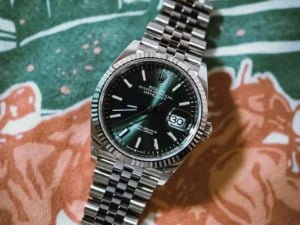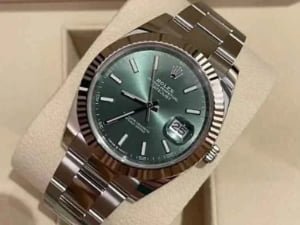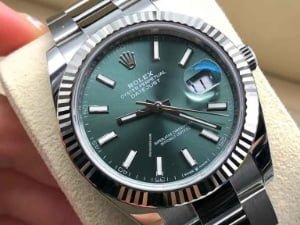
Super Clone Watches vs. Cheap Replicas: What’s the Difference?
Verified Reddit Watch Specialist (RepTime / RepGuild)

Replica watches cover a very wide range. Some are inexpensive fashion pieces designed to resemble a luxury model from a distance. Others are sold as super clone watches and aim for closer proportions, more consistent finishing, and more complete functions. The original article's central point is sound: these two categories can deliver very different ownership experiences.
The category names are marketing terms rather than independent quality standards, so the label alone proves nothing. A buyer still has to inspect the exact watch, confirm important claims, and understand what is included in the price. This guide keeps the original comparison and conclusion while adding a practical way to judge materials, craftsmanship, movement, QC, and long-term value.
At a Glance
| Comparison point | Higher-grade super clone | Cheap replica |
|---|---|---|
| Design goal | Closer dimensions, finishing, and functions | General visual resemblance at low cost |
| Materials | May use better steel, crystal, bezel, and strap components | Often selected mainly to meet a low price |
| Movement | More likely to use an automatic or model-specific layout | Often uses a simple quartz or generic automatic movement |
| QC and support | More room in the price for inspection and after-sales service | Usually limited inspection, documentation, and support |
1. What the two categories are trying to achieve
Super clone watches are intended to reproduce more than the broad appearance of a luxury watch. Better examples try to match case shape, dial layout, bracelet construction, crown placement, thickness, weight distribution, and the operation of visible functions. That extra effort is why a high quality replica watch normally costs more than a basic imitation.
Cheap replicas are usually built around a strict price target. They may capture the colour, logo position, and overall silhouette well enough for casual wear, but dimensions, printing, finishing, and functions can differ noticeably on close inspection. This does not mean every inexpensive watch immediately fails or every expensive listing is good. It means the buyer should expect a different priority: low entry cost rather than close execution.
Because neither label is regulated, sellers can use 'super clone' for very different products. Price, factory names, and promotional language should be treated as leads to investigate, not proof of quality.
2. Materials: claims matter less than verifiable details
The source article contrasts 316L stainless steel, sapphire crystal, and ceramic bezels with lower-grade alloys, plastic, and mineral glass. That is a useful framework: better materials can improve corrosion resistance, scratch resistance, colour stability, and the feel of a case or bracelet.
The specification still has to be verified for the individual watch. A photograph cannot prove a steel grade, sapphire crystal, solid gold, ceramic composition, or coating thickness. Ask what the seller can document and inspect the parts that reveal construction quality: bracelet edges, end-link fit, clasp action, crown threads, crystal seating, bezel play, and the consistency between brushed and polished surfaces.
A cheap replica may use perfectly serviceable components, but the low price leaves less room for careful machining and finishing. Plated surfaces can wear at high-contact points, mineral glass scratches more readily than sapphire, and rough link edges can make a watch uncomfortable even when it looks convincing in a front-facing photo.
3. Craftsmanship is visible in consistency
The biggest practical difference is often consistency rather than a single dramatic feature. On a stronger replica, hour markers should sit evenly, printed text should be sharp, hands should align with their scales, the date should sit correctly in its window, and the bezel should meet the case cleanly. Brushing should run in one direction, polished areas should have crisp boundaries, and the bracelet should articulate without sharp edges or excessive gaps.
Low-cost mass production can leave more variation between samples. Common problems include uneven markers, fuzzy printing, off-centre date wheels, dust under the crystal, rough crowns, loose bezels, inconsistent plating, and clasps that feel thin or insecure. These are exactly the details that exact-sample QC photographs can reveal before shipment.
Side-by-side photographs are helpful, but lighting and camera angle can hide defects or exaggerate colour differences. Request straight-on, side, caseback, clasp, and bracelet views rather than relying on a single promotional image.
4. Movement and functions: do not judge by the label
The original article presents Swiss or Japanese automatic movements as a strength of super clones and basic quartz movements as a weakness of cheap replicas. The more accurate distinction is functional match and execution. Quartz movements can be very accurate and durable. They become an obvious compromise when the original model is mechanical, the seconds display behaves differently, or decorative complications replace working ones.
An automatic replica watch may feel closer to the original, but 'Swiss movement', 'Japanese movement', and 'clone calibre' are not test results. Ask for the exact calibre, a clear movement photo where appropriate, and evidence that winding, time setting, date change, chronograph reset, and other advertised functions work. A timegrapher image can document one reading in one position; it cannot guarantee future performance.
Movement choice also affects serviceability. A common generic calibre may be easier to repair or replace than a specialised clone movement. Buyers comparing replica watches should weigh visual similarity against parts availability, complexity, and access to a competent watchmaker.

5. Weight and seconds-hand motion are not final proof
The source suggests using weight and a sweeping seconds hand to separate better replicas from cheap ones. Both can provide clues, but neither is decisive. Case size, bracelet length, movement type, hollow or solid components, and the use of tungsten or other weighting materials can all change how a watch feels. A heavy watch can still be inaccurate in shape and finishing.
Seconds-hand motion also depends on the movement. Quartz commonly ticks once per second, while mechanical movements advance in several smaller steps. Some quartz systems move differently, and low-beat mechanical movements may not look especially smooth. The safest approach is to compare the exact model's intended functions and inspect the entire watch rather than trusting one shortcut.
6. Value for money and long-term satisfaction
Cheap replicas can appeal to buyers who want a temporary fashion accessory and accept obvious compromises. The risk is that weak clasps, coatings, crystals, straps, or movements may make the watch look tired or become inconvenient to use sooner. At a very low price, repair may cost more than replacement, and seller support may be limited.
A better luxury replica watch costs more because the buyer is paying for closer proportions, more refined parts, additional assembly work, functional detail, QC, and sometimes stronger after-sales support. When those differences are present on the delivered sample, the result can provide better long-term satisfaction and value than repeatedly replacing low-cost watches.
The original conclusion therefore remains: for buyers who care about appearance, feel, function, and durability, a carefully selected super clone is usually the stronger choice. It is still a replica, has no authentic-brand provenance, and should not be presented as an investment or guaranteed to last for years without maintenance.
7. A practical pre-purchase comparison checklist
Before paying, confirm the model reference, case size, thickness, bracelet or strap type, clasp, dial colour, movement description, and every function you expect to use. Ask whether the photographs show the exact watch that will be shipped. Stock photos can explain a design, but they cannot show the condition of your sample.
Review the dial at a straight angle, then check the case sides, crown, bezel, crystal, end links, bracelet, clasp, and caseback. Request a short functional video for the date, bezel, chronograph, moonphase, GMT hand, or other complication when relevant. If water exposure matters, rely only on a pressure test performed on that exact watch, not a printed rating.
Finally, read the return, repair, and warranty terms. Clarify who pays shipping, what evidence is required for a claim, whether parts are available, and how a defect found during QC is handled. Good documentation and support can be worth more than an unverified movement or factory name.
8. Use QC images as evidence, not decoration
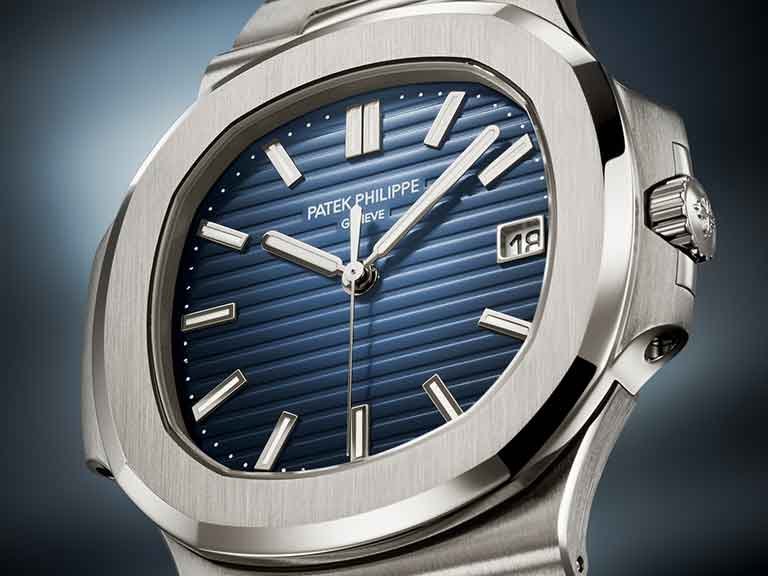
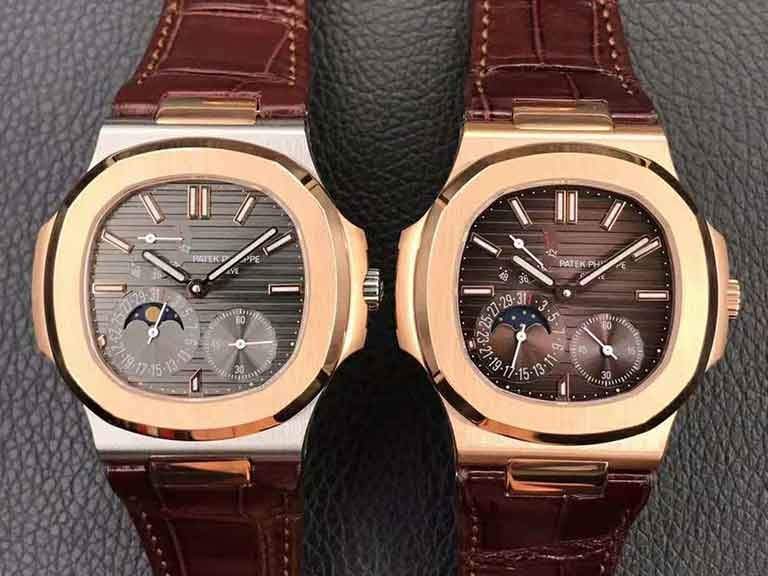
A clear QC set creates a baseline for the delivered watch. The image below records the visible front condition of one Nautilus-style sample. It can support checks for marker placement, hand alignment, dial printing, date position, bezel shape, and exterior finish.
The image cannot establish steel grade, crystal material, movement origin, pressure resistance, factory source, authenticity, or future durability. Those claims need separate evidence. Treating QC this way makes the comparison between a higher-grade replica and a cheap replica more concrete and less dependent on sales language.

Conclusion: why the higher-grade option can be worth it
The gap between super clone watches and cheap replicas is usually found in materials, construction, finishing, functional accuracy, QC, and support. A cheap replica may deliver the broad look for very little money. A well-made super clone aims to provide a more convincing and satisfying watch in daily use.
For someone who wants the luxury-inspired appearance without paying for an authentic watch, the higher-grade option is generally worth considering. The best decision comes from verifying the exact sample and choosing the watch whose evidence, functions, and seller support justify its price.
Looking for a Top-Tier Clone or Custom Build?
Direct access to VS, ZF, 3KF, Clean & BTF factory stock. We provide detailed multi-angle QC photo & video approval prior to final payment.