A Closer Look at the Craftsmanship Behind Super Clone Watches
Verified Reddit Watch Specialist (RepTime / RepGuild)

Craftsmanship is easy to praise and hard to verify. A clean dial photo may tell you that one watch was assembled neatly. It does not tell you who made it, how consistent the batch is, which alloy was used, or how the watch will perform after a year. If you want to judge super clone watches with less guesswork, examine the work in separate stations and ask for evidence that fits each claim.
Quick answer: The craftsmanship you can inspect includes dial alignment, hand clearance, case geometry, finish transitions, bracelet articulation, crown and bezel operation, movement layout, and the condition of assembly. Performance needs separate timing, power-reserve, pressure, and magnetic tests. Brand origin, material composition, factory identity, and long-term reliability need records or testing that an exterior photo cannot provide.
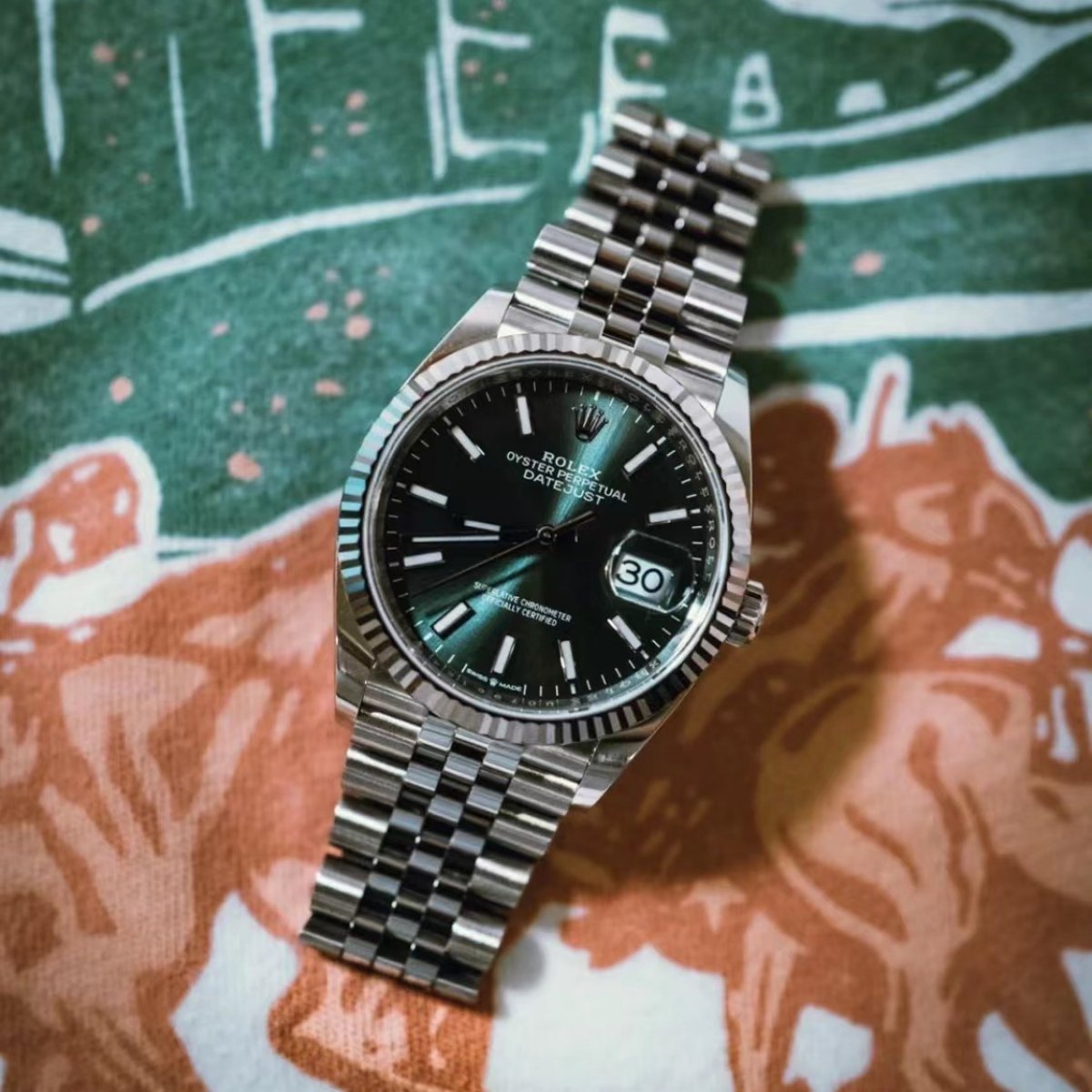
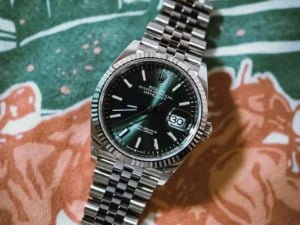
The supplied image below is useful for studying visible details on a green-dial, fluted-bezel watch. It is a reference image, not current QC for a watch reserved for you. Use it to learn where to look, then request the same views of the exact sample you may buy. The same sample-first method works across replica watches with different case shapes, bracelets, and complications.
Craftsmanship is a chain, not a shine
A polished surface is one result of many earlier decisions. Watch production can include design, stamping or machining, deburring, surface preparation, coating, printing, assembly, lubrication, adjustment, and final testing. Each stage can be done well or poorly.
Official manufacture pages help explain why the stages should stay separate. Rolex says a genuine dial can involve about 60 operations on the dial and applied elements at its Chene-Bourg site. Patek Philippe describes softening, beveling, graining, polishing, and sunburst finishing as distinct operations on its hand-finishing page. Audemars Piguet explains how polished and satin-brushed surfaces are deliberately contrasted on cases and bracelets in its decoration guide.
Those descriptions explain genuine production methods. They do not prove that a Rolex super clone or any other replica used the same materials, tolerances, labor, or controls. They do give you a useful inspection principle: look at geometry, transitions, alignment, operation, and measured output one by one.
| Inspection station | What you can examine | Evidence worth requesting | What the evidence does not prove |
|---|---|---|---|
| Dial and hands | Printing, marker placement, hand length, clearance, date position, visible dust | Straight-on macro photos under neutral light and a slow video through a full hand cycle | Dial material, lume formula, genuine origin, or batch consistency |
| Case and bezel | Symmetry, ridge definition, brushing direction, polished reflections, bezel seating | Side, lug, crown, and moving-reflection views of the reserved sample | Alloy grade, hardness, gasket condition, or water resistance |
| Bracelet and clasp | Link gaps, articulation, edge feel, screw seating, clasp alignment | Close video of every link, sizing points, clasp opening, and reference on a wrist | Long-term wear, coating thickness, or replacement-part supply |
| Movement and functions | Visible architecture, rotor motion, winding, setting, date change, complications | Clear movement photo plus one continuous operation video | Manufacturer, originality, lubrication, durability, or service access |
Inspection station 1: dial, markers, hands, and date
Start with a perfectly straight photo. Angled photography can hide spacing errors and create false ones. Draw an imaginary line from 12 to 6 and another from 3 to 9. Check whether the crown, minute track, markers, hands, and date window sit on the intended axes.
Move closer. Printing should have stable edges and even density. Applied markers should share the same orientation and height. Lume should sit inside its intended boundaries. The seconds, minute, and hour hands should clear each other throughout a full cycle. On a date watch, examine numeral centering at several dates rather than approving one favorable number.
The genuine-reference pages are useful for understanding design intent. Rolex's dial information separates coloring, pad printing, applied elements, and luminous material. Patek Philippe's page on the finest timepieces treats cases, bracelets, dials, and movements as related but separately controlled components. When you inspect a high quality replica watch, use that same separation without claiming the replica came from those official processes.
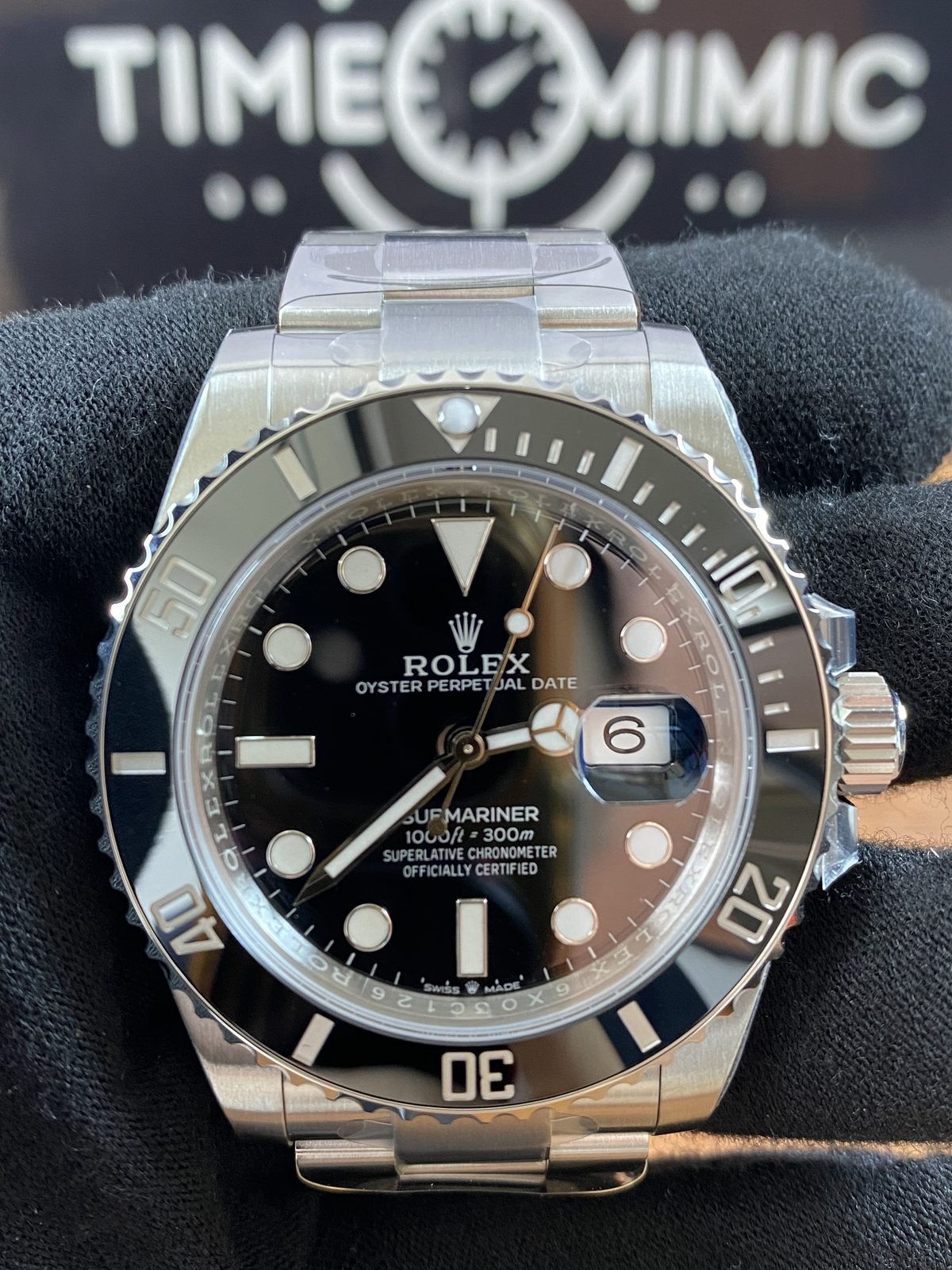
The front-view QC image below is one photographed sample. It can support comments about visible alignment, condition, and finishing in that image. It cannot establish authenticity, exact materials, movement origin, water resistance, or future reliability.
Ask for the reserved sample with an order code in frame. If the seller changes the watch, your approval should reset because craftsmanship belongs to the sample, not to the model name.
Inspection station 2: case geometry and finish transitions
Good case finishing is easier to judge while light moves across the metal. Ask for a slow rotation under one light source. A flat polished plane should reflect without a sudden wave. A brushed plane should have a consistent direction. The border between the two finishes should follow the intended ridge rather than dissolving into a rounded strip.
Grand Seiko explains that Zaratsu work aims for smooth, distortion-free surfaces while preserving sharp ridge lines in its polishing account. Its longer case-production explanation also separates machining or forging from sanding, rough buffing, polishing, and final buffing. These sources describe Grand Seiko, not replica production. Their value here is educational: bright metal alone is not enough. Shape retention matters.
Check both lugs from above and from the side. Compare bevel width, curvature, hole position, and the gap to the first end link. Look around the crown guards, case back, bezel edge, and crystal seat for burrs or inconsistent gaps. Dust and fingerprints can be cleaned; missing metal, softened ridges, deep tool marks, and uneven seating are different issues.
Inspection station 3: bracelet, clasp, crown, and bezel
A bracelet is a moving assembly, so a still photo provides limited evidence. Ask the seller to lift and release it, articulate the end links, open and close the clasp, and show the screws or pins used for sizing. Watch for links that bind, sharp unfinished edges, loose end-link movement, uneven gaps, and a clasp that needs excessive force.
Patek Philippe states that a bracelet should balance appearance, comfort, and ease of operation on its quality page. That is a useful user-level test. You do not need specialized equipment to notice whether a clasp aligns, a crown threads smoothly, or a bezel turns with stable resistance.
Request one uninterrupted video covering winding, time setting, date setting, crown closure, bezel rotation, and each advertised complication. Stop if the video skips the function that matters to you. Smooth operation in one clip supports that observed action on that sample; it does not prove long-term wear resistance.
Inspection station 4: movement architecture and assembly condition
Movement decoration and movement performance are different questions. Stripes, perlage, blued screws, an engraved rotor, or a familiar bridge outline may improve appearance. They do not identify the maker or confirm the condition of every working surface.
Use official movement catalogs as a baseline for named claims. Sellita's 2024-2025 catalog lists its movement families and technical characteristics. Miyota's movement catalog documents product families from the manufacturer. If a seller names a caliber in an automatic replica watch, request a clear movement photo, compare the architecture and function layout, and ask whether replacement parts and local service are available.
In a close photo, look for damaged screw slots, loose debris, fingerprints, corrosion, scratched bridges, poorly seated clamps, or an improvised spacer. Ask for a continuous video that starts with the closed watch, shows the case opening when practical, records the movement, and returns to operation. Edited fragments can mix different samples.
Do not ask a movement photo to prove too much. It cannot establish unseen lubrication, power reserve, water resistance, accuracy on the wrist, or future parts supply. Those need their own checks.
Inspection station 5: measured performance
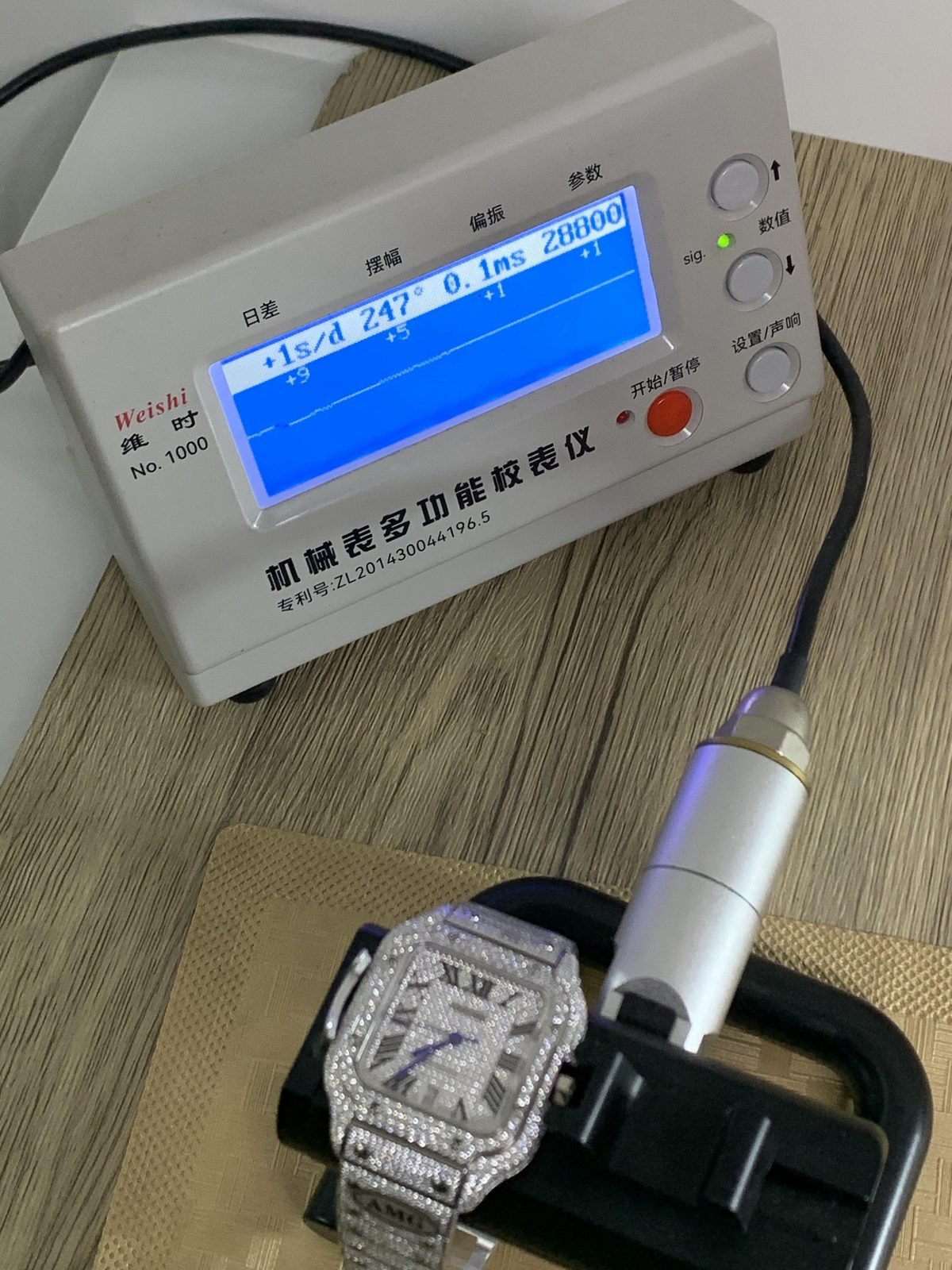
The timing QC image below records one timegrapher setup for one photographed sample. It can document rate, amplitude, and beat error under the shown conditions. It is not a certificate of movement origin, water resistance, durability, or accuracy in every position.
Mechanical accuracy changes with position, temperature, winding level, magnetism, and use. Seiko explains these variables in its mechanical accuracy guide and notes that magnetism can cause a mechanical watch to gain or lose time in its care guidance. A useful timing record names the position, lift-angle setting, winding state, and date of the test. Several positions tell you more than one favorable screen.
Water resistance should remain separate. ISO 22810 defines requirements and test methods for water-resistant watches. A screw-down crown, diver appearance, or seller message is not a pressure result. Ask for a dated test on the completed sample, then have the watch checked by a competent watchmaker before water use and after the case is opened.
Formal certification is broader still. METAS says Master Chronometer certification covers the complete watch and addresses chronometric performance, water resistance, magnetic resistance, and power reserve under defined requirements. A replica QC report should be described only as the test actually performed, not as equivalent to that certification.
Inspection station 6: repeatability, service, and the factory claim
Craftsmanship includes consistency. A seller may display an excellent demonstration piece while your delivered watch comes from another batch or supplier. Factory nicknames are not public certificates, and a name in a message cannot confirm where a watch was made.
Build a sample file instead. Save the order code, configuration, dimensions, front and side photos, operation video, movement evidence, test results, return terms, payment record, and delivery promise. The FTC's marketplace guidance recommends checking actual-item photos, seller and platform policies, safer payment methods, and written records. These steps do not improve the watch, but they make the transaction easier to evaluate.
Ask who will service the movement, which routine parts are available, who pays return shipping, and what happens if the delivered watch differs from approved QC. Treat vague answers as part of the quality result. A beautiful case does not compensate for an unusable return route.
Use this claim-to-proof sheet before approval
| Claim | Evidence that fits | Stop condition |
|---|---|---|
| "The dial is clean and aligned" | Straight macro photos of the reserved sample at several angles and dates | Cropped, blurred, stock, or mixed-sample images |
| "The functions work" | One continuous video of winding, setting, date change, and every advertised function | Cuts appear before the difficult function or the sample code disappears |
| "The finishing is precise" | Moving-light views of both case sides, lugs, bezel, bracelet, and clasp | Only a polished front view or lighting that hides edges |
| "The movement is named and serviceable" | Architecture match, clear photo, function map, parts route, and local service confirmation | Decoration or seller label used as the only identification |
| "The watch passed testing" | Dated, sample-specific result with method, setup, and limit | One screen used to prove accuracy, waterproofing, durability, and origin together |
If one line is missing, mark it unknown. You do not have to reject the whole watch, but you should not pay as though the claim were proved.
A practical 12-minute inspection order
- Two minutes on identity. Match the order code, dial, bezel, bracelet, clasp, size, and promised functions.
- Three minutes on the face. Check axes, printing, markers, lume, hand clearance, date position, and visible dust.
- Two minutes on the case. Move light across polished planes, brushed areas, ridges, lugs, crown guards, and bezel seating.
- Two minutes on operation. Watch one continuous winding, setting, date, crown, bezel, clasp, and complication sequence.
- Two minutes on evidence. Read the timing and pressure records with their method, position, winding state, date, and sample code.
- One minute on remedy. Confirm the return deadline, shipping responsibility, payment protection, and service route in writing.
This order keeps a best replica watch claim from distracting you with one attractive feature. You finish with a record of what the sample actually demonstrated and what remains unknown.
Final answer
The craftsmanship behind super clone watches should be judged as a series of observable and testable steps. You can inspect alignment, geometry, finish transitions, bracelet behavior, operation, movement layout, and assembly condition. You can measure timing, power reserve, and pressure under named conditions. You cannot turn those observations into proof of authenticity, exact material, factory identity, official certification, or long-term reliability without additional evidence.
Look closely, but keep each conclusion narrow. Approve the exact sample only after its photos, video, tests, transaction terms, and service plan agree. That gives you a clearer answer than any grade label, factory nickname, or polished hero image.
Looking for a Top-Tier Clone or Custom Build?
Direct access to VS, ZF, 3KF, Clean & BTF factory stock. We provide detailed multi-angle QC photo & video approval prior to final payment.