5 Myths About Super Clone Watches Debunked
Verified Reddit Watch Specialist (RepTime / RepGuild)
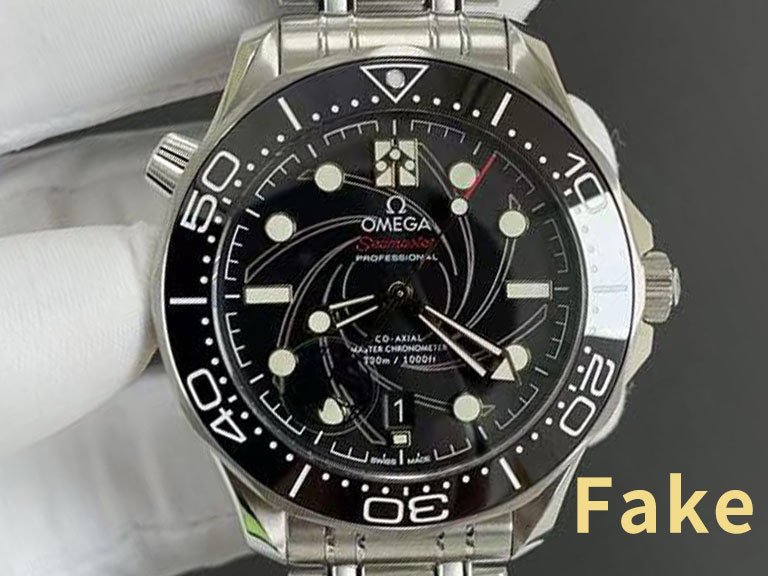
If you are comparing super clone watches, the hardest part is separating a useful product description from a label that only sounds precise. Words such as “AAA,” “1:1,” “Swiss movement,” and “waterproof” can describe what a seller wants you to believe. They do not tell you which parts are inside the exact watch, how it was tested, or what happens if it arrives with a fault.
This guide checks five common myths against watch standards, official certification rules, customs guidance, and sample-specific QC. You will get a practical answer for each myth, followed by the evidence you should request before you make a decision.
Treat every quality label as a question. The useful answer is a coherent set of photos, function videos, measurements, test context, written terms, and a repair plan for the exact sample you will receive.
The five myths at a glance
| Myth | What the evidence says | What you should do |
|---|---|---|
| “Super clone” is a regulated grade | No audited grading standard for that sales term appears in the official standards reviewed here | Ask the seller to define every claim and prove it on your sample |
| A good photo proves an identical watch | A photo can show visible alignment and finish at one moment; it cannot establish origin or internal construction | Request multiple angles, measurements, continuous videos, and independent inspection when needed |
| The materials, movement, and water resistance match the original | Those claims need different forms of proof, and the original reference’s certification does not transfer | Match each claim to a relevant test or document for the exact watch |
| Personal use makes the transaction legal everywhere | Trademark, import, traveler, mail, and resale rules vary by jurisdiction and route | Check current rules where you buy, receive, carry, and may later sell the watch |
| Popular models come with safe sellers, warranty, repair, and resale | Demand does not create buyer protection or official brand support | Read written terms, use protected payment, and budget for independent service |
Myth 1: “Super clone” and “AAA” are regulated quality grades
They are not grades you can verify through a shared public certificate. In the official sources reviewed for this article, there is no industry authority that defines an aaa replica watch, an “exact replica,” or a “super clone” by a mandatory list of tolerances and tests. Sellers may use the same phrase for watches with different cases, movements, finishing, and QC history.
You can see what a real certification structure looks like by reading the METAS Master Chronometer process. It covers the complete watch and defined areas such as chronometric performance, water resistance, magnetic resistance, and power reserve. The detailed METAS N001 requirements explain applicant testing, independent monitoring, audits, and sample checks. A seller’s quality label does not create that system.
This does not mean every watch described as a super clone is poorly made. It means the label cannot do the inspection for you. Two samples offered under one factory name or version can still differ in alignment, function, condition, or assembly.
Ask the seller to translate the label into evidence. What is the case width and thickness? Which functions operate? What movement is claimed? Is there a continuous video of setting and resetting those functions? Has the exact watch been pressure tested? What written return remedy applies if the delivered watch differs from the QC set? If those answers stay vague, the grade is vague too.
Myth 2: A convincing photo proves the watch is identical to the original
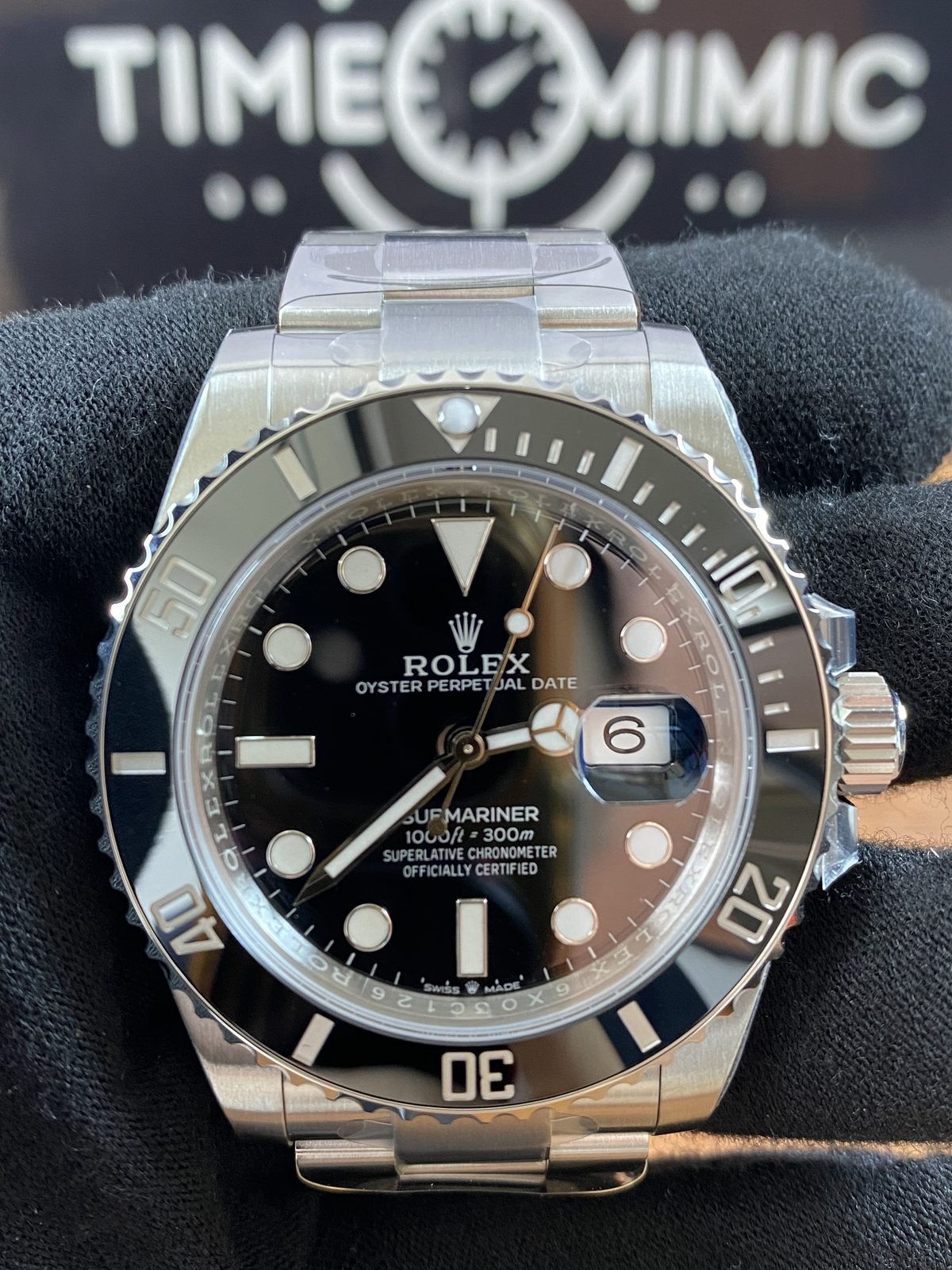
A sharp front photo is useful, but it only shows the visible face under one lens, light, angle, and moment. It cannot prove the steel grade, movement origin, seal condition, service history, or authenticity of a serial number. Even a high quality replica watch can photograph better than it performs.
The European Commission’s guidance on identifying fake goods recommends examining product quality, price, packaging, logos, the supply chain, and manufacturer information. It also notes that something may appear identical at first glance while differences become visible on closer inspection. INTERPOL’s safer-shopping guidance similarly tells buyers to inspect construction, ask where the product came from, check guarantees, use authorized retailers, and review return policies.
Official authentication is a much deeper process. Rolex’s Certified Pre-Owned process describes workshop authentication, configuration checks, servicing, testing, and an official guarantee. Its service FAQ says official jewelers use training, know-how, and specialized equipment to guarantee the authenticity of every part. A listing photo is not equivalent to that work.
For your own QC, request a straight-on dial image, both case sides, the case back, clasp, end links, crown, and a neutral-light video. Compare dates, stickers, protective film, reflections, and background details across the set. Those details help you confirm that the images belong to one sample.
Myth 3: The movement, materials, and water resistance match the original
These are three separate claims. One test cannot prove all of them.
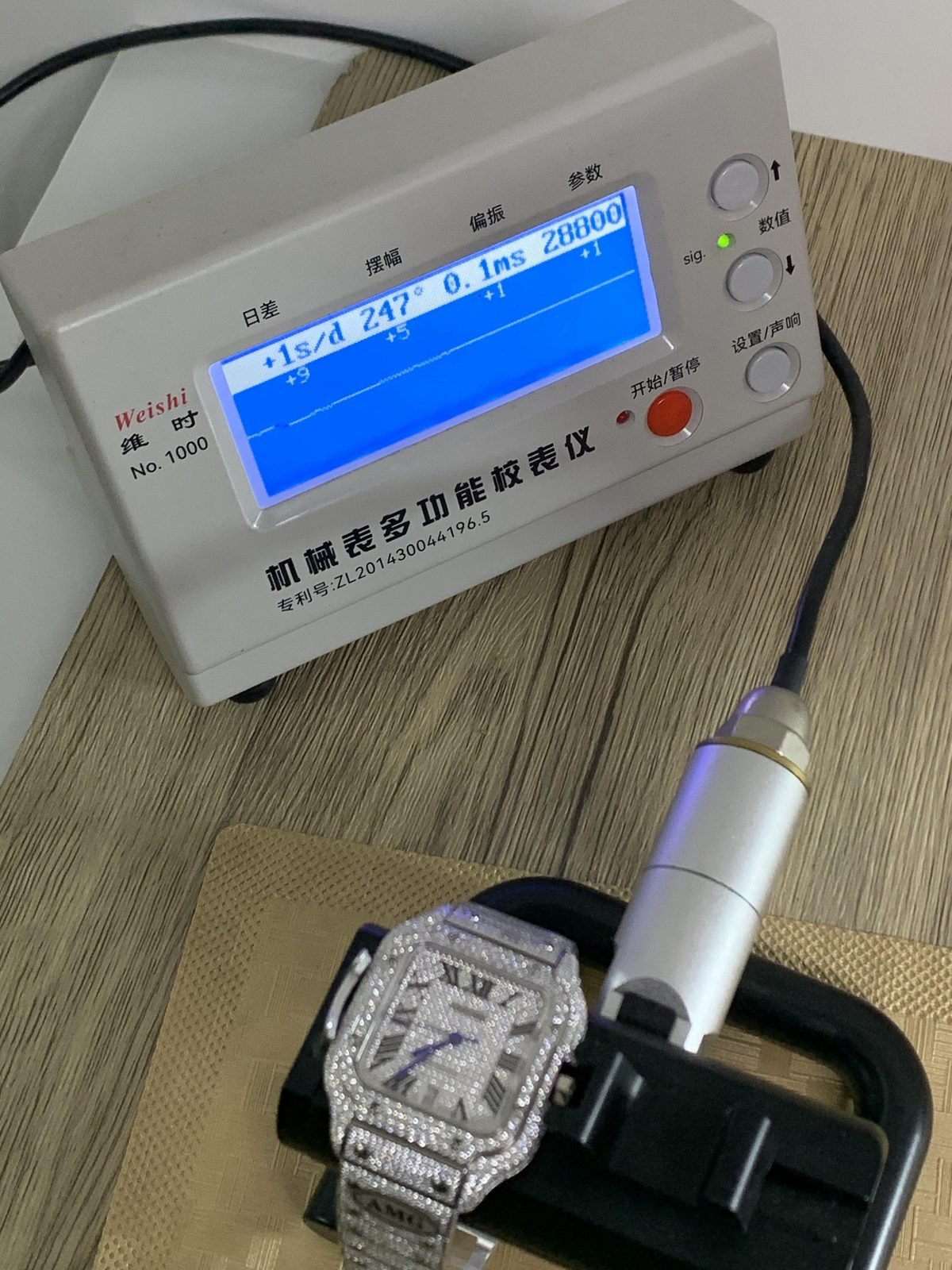
An open case-back photo can help you compare visible bridges, screws, rotor shape, and decoration. It does not establish where the movement was made, what every hidden component is, or how it will perform after weeks of wear. A timegrapher reading records one setup, position, state of wind, and moment. It is useful evidence for that test, not a lifetime guarantee.
Material claims need their own evidence. Color cannot identify an alloy, and a polished surface cannot prove that a case uses the same steel, titanium, ceramic, gold, or coating as the authentic reference. Weight and dimensions can catch obvious inconsistencies, but they do not replace a material analysis.
Water resistance is also test-dependent. ISO 22810 defines requirements, test methods, and marking for watches sold as water-resistant. The original watch’s published rating does not automatically apply to a replica that resembles it. If a listing uses the keyword waterproof replica watch, ask for a current pressure-test result tied to the exact sample, with readable test context. Keep the watch dry when that evidence is missing.
Use a claim-to-proof map instead of accepting a bundle of sales language:
| Seller claim | Useful evidence for your sample | What that evidence still cannot prove |
|---|---|---|
| Correct dimensions | Caliper photos and a scale reference | Internal construction or material grade |
| Claimed movement | Clear movement images plus full function video | Complete provenance, future durability, or parts access |
| Good rate | Timegrapher video with position, state of wind, and readable values | Long-term accuracy in every position |
| Water resistance | Current pressure test with the sample identified | Performance after future knocks, opening, or gasket aging |
| Steel, titanium, ceramic, or gold | Credible material documentation or independent analysis | Authentic brand origin |
| Working chronograph or GMT | One continuous start, set, run, stop, and reset video | Reliability after extended use |
Myth 4: Personal use makes buying and importing legal everywhere
There is no worldwide personal-use rule that clears every purchase, shipment, border crossing, or resale. The legal result can change with the country, whether the item travels with you or arrives by mail, the quantity, the trademark, and whether you intend to sell it. This section is a risk map, not legal advice.
The World Intellectual Property Organization defines trademark counterfeiting as unauthorized use of a sign identical to, or indistinguishable in essential aspects from, a registered trademark on identical goods. That definition explains why a seller’s use of “replica” does not remove the trademark issue.
In the United States, CBP describes a narrow traveler exemption for one article of a type bearing an unauthorized protected trademark. The item must accompany the traveler, be for personal use rather than sale, and meet the timing condition. That is not a blanket promise for an online shipment. CBP’s underlying customs directive explains how excess articles may be seized or forfeited.
The European Commission describes customs enforcement of intellectual-property rights at the EU border. UK guidance requires travelers to declare banned or restricted goods and goods intended for sale or business use. Rules and enforcement can change, so check the current customs and trademark guidance for every place the watch will enter.
There is also a financial risk before any legal argument is resolved. The OECD’s 2025 watch-sector analysis reports that online buyers can bear the loss when a counterfeit shipment is seized after payment.
Myth 5: Popularity guarantees a safe seller, warranty, repair path, and resale value
Popular models attract more listings. They do not make every listing accurate or every seller accountable. The number of versions may increase, which gives you more choices and more weak samples to screen out.
The FTC’s online-marketplace guidance recommends checking actual-item photos, seller history, written return terms, total cost, and safer payment methods. It warns that ratings can be misleading and that moving payment outside a marketplace can remove available protection. The INFORM Consumers Act overview helps buyers understand why seller identity and a way to report suspicious activity matter, but it does not turn every seller into an authorized watch dealer.
Official warranty terms are narrower than many buyers expect. Rolex says its guarantee depends on a sale by an Official Rolex Jeweler, a completed guarantee card, and presentation through the official network. An official OMEGA warranty manual likewise requires a correctly completed certificate from an official dealer and excludes watches altered outside the brand’s control. Those brand guarantees do not transfer to replica watches.
Plan for independent service before you buy. Ask whether a local watchmaker will work on the movement, whether replacement parts are available, and what a basic repair could cost. Do not assume that a popular model will have reliable resale value. A future buyer, platform, payment provider, or customs authority may treat the trademarked item differently from you.
A twelve-minute myth-proof buying check
Use the same order every time so a polished listing does not rush you.
- Confirm the exact reference, color, bracelet, date, and sample identity across every photo.
- Compare dial printing, hands, markers, bezel, date alignment, case edges, and clasp under neutral light.
- Request caliper measurements for width, thickness, and any dimension that matters on your wrist.
- Watch one continuous video showing the crown, time setting, date, GMT, chronograph, bezel, and clasp functions you expect to use.
- Review movement photos and any timegrapher or pressure-test evidence without treating one test as proof of unrelated claims.
- Read the return window, defect remedy, shipping route, payment protection, and who pays when customs or delivery fails.
Stop when the seller changes the sample, sends cropped evidence that hides context, refuses to put terms in writing, or answers a measurable question with another quality label.
What QC can and cannot prove
QC can show visible condition, alignment, and demonstrated functions at one moment. It can also reveal inconsistent sample photos, a poorly centered date, hands that do not reset, a rough clasp, or a test result that belongs to another watch.
QC cannot prove trademark authorization, official brand warranty, exact material composition, complete movement provenance, future reliability, or legality in every jurisdiction. The OECD’s counterfeit-trade analysis distinguishes between buyers who know they are buying fakes and buyers who are deceived, but customs and intellectual-property risks do not disappear because a buyer knew the item was a replica.
Save the listing, QC set, seller messages, test evidence, payment record, and delivery terms together. If the transaction later goes wrong, you will need the complete record rather than a factory name or screenshot of a star rating.
Frequently asked questions
Can a super clone watch be well made?
Yes, a particular sample may show careful exterior finishing and working functions. The phrase “super clone” does not guarantee those qualities. Judge the exact watch through coherent QC, measurements, function videos, test context, and written terms.
Are factory names or version numbers reliable?
Treat them as seller-provided identifiers. They can help organize a discussion, but they do not replace evidence from the watch you will receive. Reused labels, mixed batches, and sample variation are all reasons to verify the item rather than the nickname.
Does a timegrapher photo prove a Swiss movement?
No. It shows timing values from one test setup if the display is genuine and tied to your sample. It does not identify every movement component or prove Swiss origin. Ask for movement images and a continuous video, then keep the conclusion limited to what those records actually show.
Can I swim with a replica advertised as waterproof?
Do not rely on the listing word alone. Ask for a current pressure test for the exact watch and understand the stated test conditions. Seals can change after the case is opened or damaged, so keep the watch dry when the evidence is absent or outdated.
Is buying one for personal use always legal?
No universal answer applies. Ownership, purchase, import, traveler baggage, mail shipment, and resale can be treated differently. Check current local law and customs rules for the countries involved, and get qualified legal advice when the risk matters.
Final answer
The five myths fail for the same reason: a label is not evidence. “Super clone,” “AAA,” “Swiss movement,” “waterproof,” and a familiar factory name may help a seller describe an offer, but none of them proves the exact sample’s construction, testing, legal path, warranty, or future service.
You will make a better decision when you reduce every claim to something you can check. Use photos for visible condition, videos for demonstrated functions, measurements for size, relevant tests for performance claims, written terms for buyer protection, and current official guidance for customs or legal questions. When the proof does not match the promise, leave the promise behind.
Looking for a Top-Tier Clone or Custom Build?
Direct access to VS, ZF, 3KF, Clean & BTF factory stock. We provide detailed multi-angle QC photo & video approval prior to final payment.