Super Clone Watches vs. Genuine: How to Spot the Difference
Verified Reddit Watch Specialist (RepTime / RepGuild)
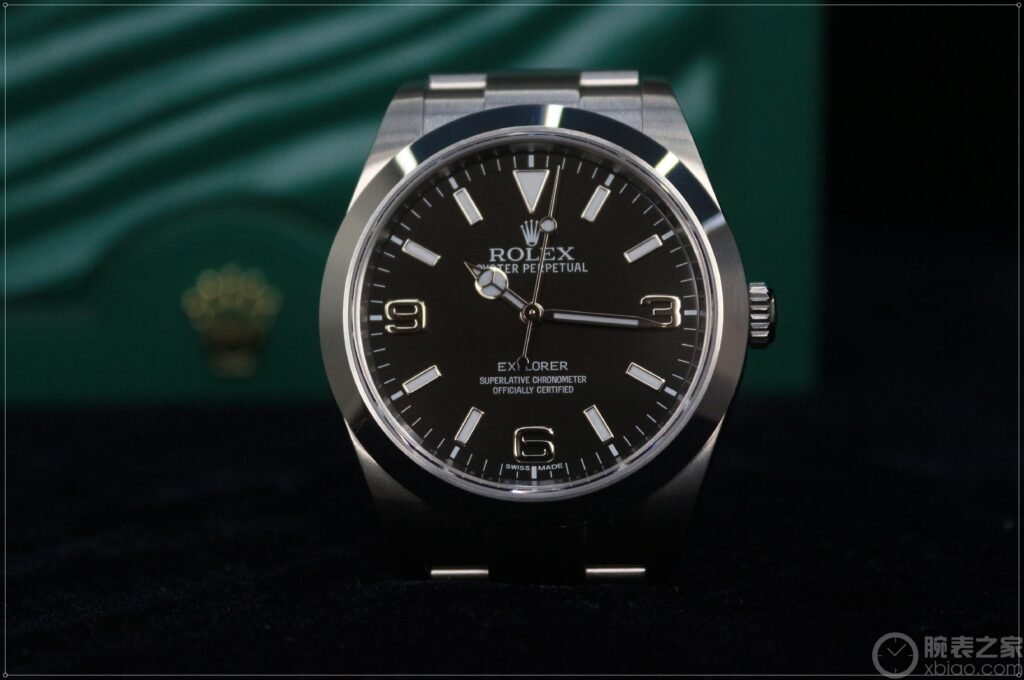
A convincing photograph can answer one question: does this watch look close from this angle? It cannot answer whether the watch was made by the brand, whether the movement belongs to the stated reference, or whether the paperwork connects to the case. That is why a simple list of "fake watch tells" becomes unreliable as reproductions improve.
To spot the difference, move through evidence in order: lock the exact reference, inspect visible relationships, test every function, examine the movement, and verify provenance through the brand or an authorized channel.
You may find a visible mismatch in the first five minutes. You may also find a watch that looks excellent and still cannot be authenticated at home. This guide shows you what each inspection level can establish and when to stop guessing.
First separate similarity from identity
Super clone watches are designed to imitate the appearance and, in some cases, the functions of genuine luxury watches. A good reproduction may copy dial text, serial-style engraving, movement decoration, packaging, and cards. Those features can increase visual similarity. They do not create brand origin.
A genuine watch is connected to a system: an exact reference, manufacturing records, authorized distribution, brand documentation, service access, and parts control. Rolex states that its official jewelers guarantee the authenticity of each part, while its Certified Pre-Owned program returns watches to Rolex workshops for authentication. Patek Philippe distinguishes a Certificate of Origin from an Extract from the Archives and records movement, case, dial, production, and sale information. These are provenance systems, not decorative details.
Searches for exact replica watches often focus on whether one logo, font, or engraving is perfect. A stronger question is: what evidence connects this whole watch to the manufacturer?
This distinction also protects you when inspecting an older genuine watch. A worn dial, service replacement, refinished case, changed bracelet, or missing document may reduce originality without turning the entire watch into a reproduction. Record each component and document separately. If a seller uses "all original," "unpolished," or "full set," ask what supports that statement and who examined the watch.
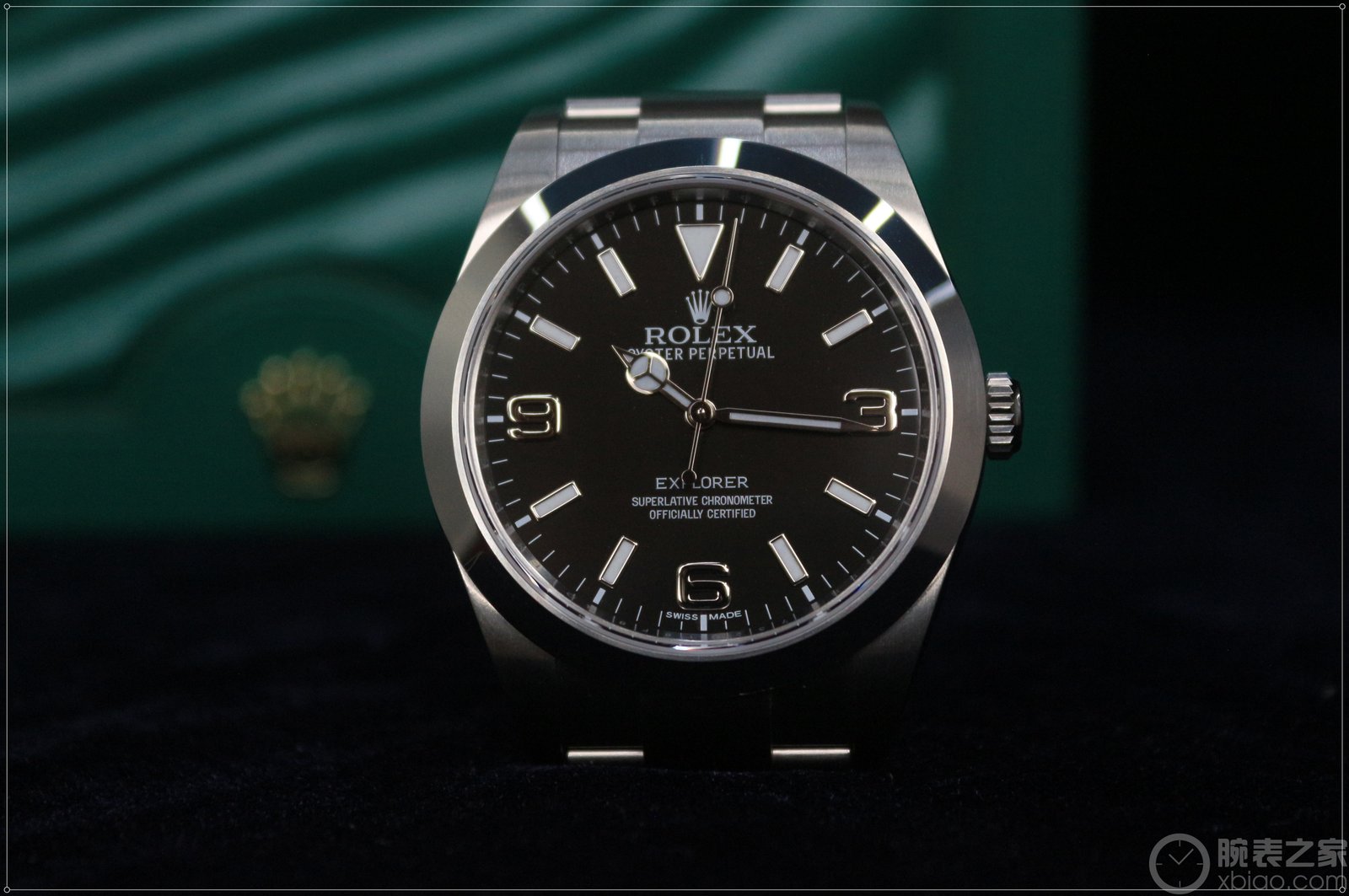
The supplied Explorer-style image below is useful for studying visible relationships. Check the numeral shape, marker placement, hand length, minute track, dial opening, bezel width, case profile, crown, end links, and bracelet. The image is supplied reference material. It does not authenticate the pictured watch or prove its materials, movement, records, water resistance, age, or service history.
Use a six-level difference check
Work from evidence that is easy to obtain toward evidence that is harder to imitate. Do not let a strong result at one level erase a gap at another.
| Observation channel | Genuine baseline | What a super clone may imitate | Best verification |
|---|---|---|---|
| Reference and configuration | A defined model, generation, size, dial, bracelet, movement, and function set | Correct model name and many visible features | Official product page, manual, archive, or period-correct brand record |
| Exterior relationships | Consistent case geometry, dial coordinates, hand lengths, finishing transitions, and bracelet fit | Printing, applied markers, color, polish, brushing, and general proportions | Straight images, measurements, macro views, and comparison with the exact reference |
| Controls and functions | Crown positions, date change, bezel, GMT, chronograph, and other functions behave as specified | Most visible functions, sometimes with different setting logic or hidden corrections | One uncut video or hands-on test of every control and function |
| Movement architecture | Calibre layout, component geometry, finishing, functions, and service parts match the reference | Rotor, bridges, engraving, color, and some architecture | Case-back removal by a qualified professional and comparison with reliable calibre documentation |
| Performance evidence | Defined timing, power-reserve, pressure, magnetic, or other brand claims for the genuine model | An acceptable sample reading or seller test screen | Dated tests tied to the exact watch under stated conditions |
| Provenance and brand system | Authorized sale, matching records, valid documentation, brand-supported authentication or service | Copied cards, numbers, boxes, seals, and receipts | Brand or authorized-channel confirmation and consistent ownership records |
This table explains why a single "tell" is fragile. A copied dial can be visually strong while the setting sequence is wrong. A movement can be decorated convincingly while its bridge layout or function architecture differs. A correct-looking card can carry a number that is unrelated to the watch.
Level 1: lock the exact genuine reference
Do not compare a watch with a family name such as Submariner, Royal Oak, Santos, or Nautilus. Compare it with one exact reference and generation. Models change. Case diameter, lug shape, bracelet taper, dial wording, lume, bezel material, movement, clasp, crown, and water-resistance claims may differ by year or reference.
Use the brand's product page, manual, official archive information, or a trusted brand record. Rolex's current Submariner reference 124060 page, for example, publishes case size, bezel type, crown, crystal, movement, functions, power reserve, bracelet, clasp, dial, and certification. Those specifications describe the genuine reference. They do not prove that another watch shares the materials or performance because it looks similar.
Prepare a small reference sheet before inspection. Include front and side images, published dimensions, expected function behavior, movement calibre, bracelet and clasp, dial text, and any reference-specific features. If the photographed watch does not match the claimed generation, stop there. You do not need a microscope to identify a configuration mismatch.
Level 2: inspect relationships, not isolated details
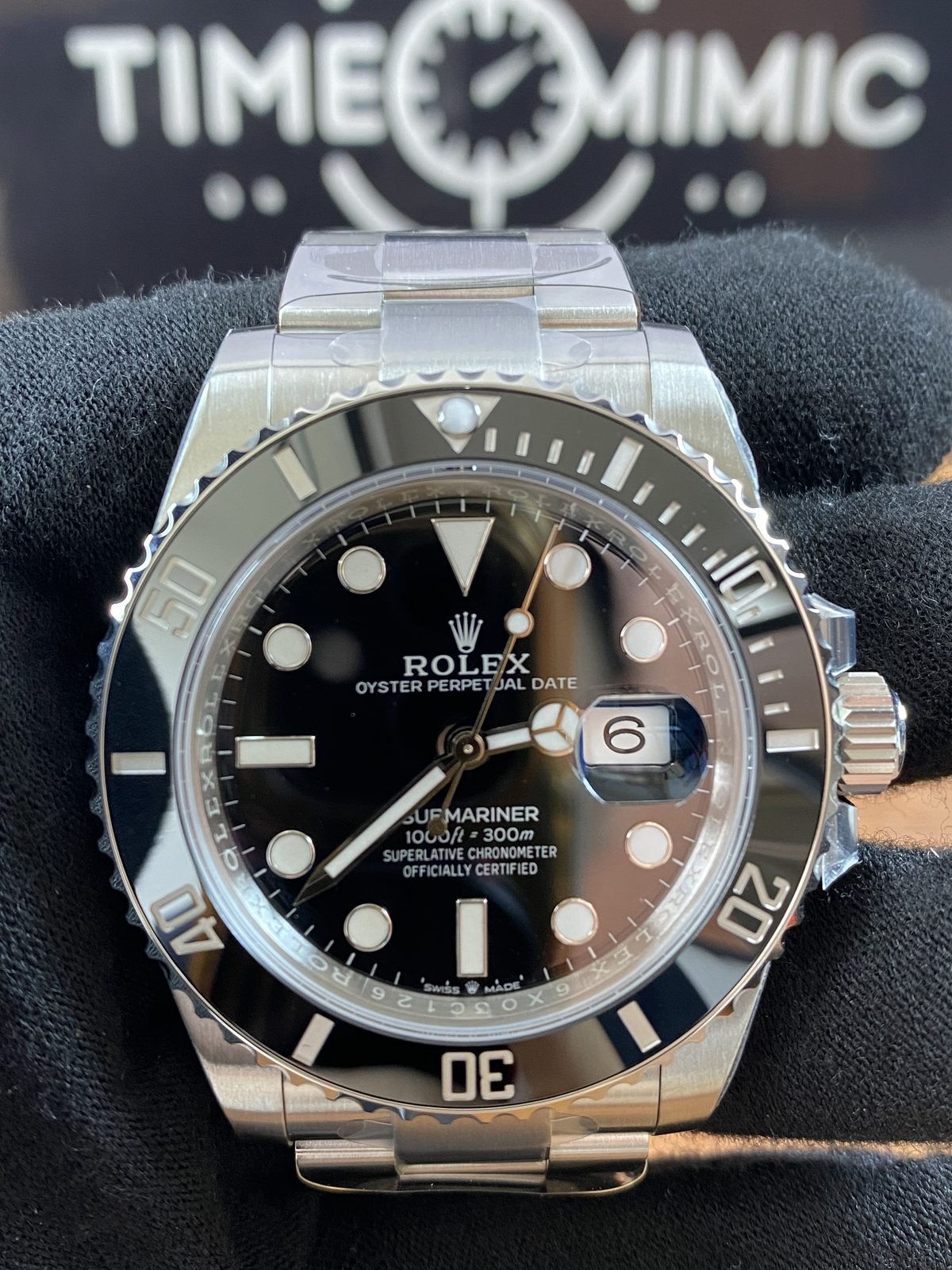
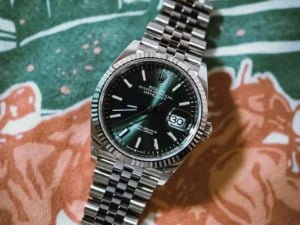
A visible QC front image below is an example of sample-level exterior evidence. Start with the outline. Compare case length, lug angle, bezel width, dial opening, crown position, and bracelet connection. Then treat the dial as a coordinate system. Markers, hands, text blocks, date, subdials, rehaut, and minute track should share the expected center and spacing.
Look at typography last. Fonts are easy to discuss but difficult to judge from compressed photos. Camera sharpening, reflections, focus, and printing scale can make genuine details look strange. A rotated marker, incorrect date position, wrong hand length, or mismatched subdial spacing is usually more reliable than an opinion about one letter.
Finishing works the same way. Audemars Piguet describes the deliberate contrast between polished and satin-brushed surfaces on the Royal Oak. Cartier emphasizes line, shape, proportion, and detail. Use those genuine design principles to study boundaries and reflections. Do not infer that a replica used the same materials or hand-finishing process.
Ask for neutral light and slow movement under the camera. Brushing should follow a consistent direction. Polished areas should reflect without obvious waves. Edges, screws, end links, crown guards, and clasp parts should meet cleanly. This can rank sample quality, but even excellent exterior work cannot authenticate the watch.
Level 3: use the side view and your hands
High quality replica watch comparisons often improve when you leave the straight front view. The side shows thickness, crystal height, bezel stack, crown-tube position, pusher length, case-back depth, lug shape, and how the bracelet meets the case. Measure when dimensions matter; do not estimate a millimeter from a phone image.
In hand, check winding, crown travel, setting positions, hand movement, bezel engagement, pusher return, clasp operation, bracelet articulation, and sharp edges. Weight can reveal a large mismatch, but it is not proof by itself. Different bracelets, links, metals, and scales can change the result.
Sound and feel are supporting evidence. A rotor noise or crown feel may prompt a closer movement inspection, but subjective feel cannot replace documentation. Genuine watches can also be worn, dry, damaged, incorrectly serviced, or fitted with replacement parts.
Level 4: test the complete function sequence
Ask for one uncut video with the watch always in frame. Begin with the running watch. Show manual winding, every crown position, time setting, date setting, midnight behavior, crown re-engagement, bezel, pushers, GMT hand, chronograph, moonphase, or other advertised functions.
The order matters. A still image can show a hand in the right location while hiding how it is adjusted. A decorative subdial can look convincing until the chronograph runs. A GMT display can use a different independently adjustable hand. These differences may identify a function mismatch even when the exterior is strong.
Use the authentic manual as the baseline. Do not assume every genuine generation behaves the same. If the seller skips a function, ask for a new continuous clip instead of accepting an explanation.
Level 5: open the case only with the right help
An automatic replica watch may use a common movement, a modified movement, or an architecture intended to resemble the genuine calibre. Decoration can copy bridge shapes, rotor color, screws, jewels, and engraving. Identification therefore depends on structure and function, not branding alone.
A qualified watchmaker can compare the balance location, bridges, gear train, rotor, regulator, date mechanism, winding system, movement dimensions, and function layout. Miyota publishes catalogues with layouts and specifications for named movements. ISO 3764 standardizes movement types, dimensions, and nomenclature. That is the kind of traceable reference you want.
Patek Philippe warns that case-back removal should be performed by an authorized retailer or service center. This is sensible beyond one brand. An untrained opening can scratch the case, damage a gasket, introduce dust, or compromise water resistance. If the watch is represented as genuine, agree on who may open it before purchase.
Level 6: read performance tests correctly
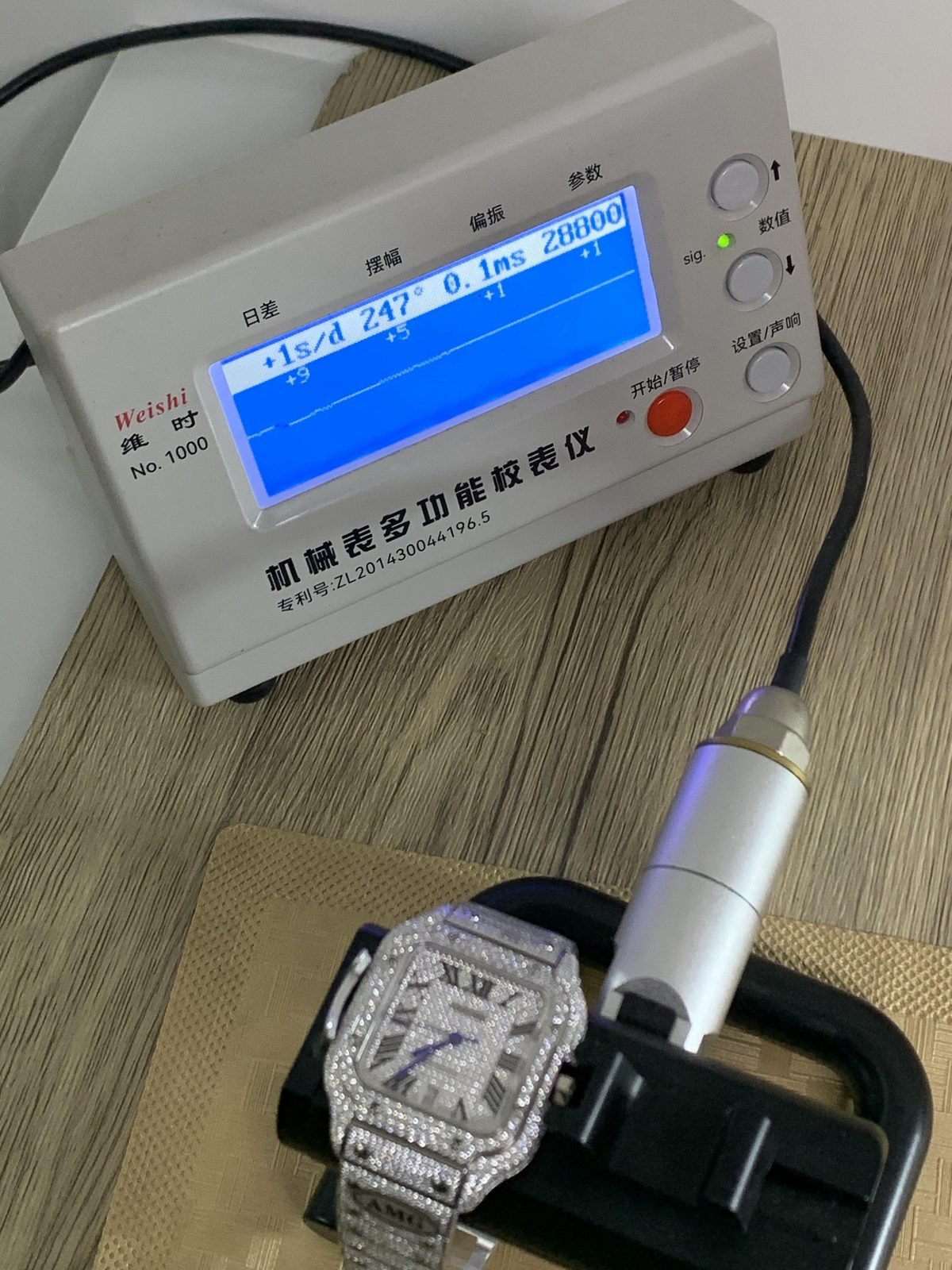
A timing QC image below shows one instrument reading for one sample and setup. It can support a narrow statement about rate, amplitude, and beat error at that moment. It cannot prove the watch is genuine, identify the movement, or predict performance after shipping.
Formal claims require formal evidence. ISO 3159 defines the term chronometer through categories, a test program, and minimum requirements. METAS Master Chronometer certification covers a complete-watch process focused on water resistance, chronometric performance, magnetic resistance, and power reserve. A copied dial inscription or acceptable timegrapher result is not that certification.
Water resistance is also separate from identity. A genuine watch may fail pressure testing after seal wear or poor service. A reproduction may pass one pressure test. The result says something about the tested case at that time, not who manufactured it. If you plan water exposure, request a test tied to the exact watch and repeat it after delivery or case opening.
Provenance is the difference a camera cannot see
Boxes, cards, tags, receipts, serial-style numbers, QR codes, and service papers can all be copied or mismatched. Treat each document as a link that needs to connect with the watch, seller, date, reference, and issuing organization. Check that fonts and dates make sense, but do not stop at appearance. Contact the named retailer, service center, or brand through an independently found channel when verification is available.
For a new genuine watch, the lowest-risk route is the brand's authorized network. For a pre-owned watch, ask for the full ownership and service file and use an appropriate brand or authorized certification process when available. Rolex states that only Rolex can confirm a Rolex watch in its Certified Pre-Owned program. Patek Philippe explains that an archive extract records historical information but is not the same as the original Certificate of Origin. Cartier notes that repair paperwork or a warranty is not necessarily a certificate of authenticity.
These distinctions matter because a genuine case can contain non-genuine parts, and genuine papers can be separated from their original watch. Authentication is a whole-watch and record problem. WIPO defines trademark counterfeiting through unauthorized use of a protected sign, so disclosure that a watch is a replica does not make brand origin genuine or remove every legal issue. Rules differ by jurisdiction; check the law and import route that apply to you.
Classify what you actually found
| Finding | Confidence level | Your next step |
|---|---|---|
| Wrong reference feature, size, function, or movement architecture | Strong evidence of a mismatch with the claimed reference | Stop the transaction or correct the description before any price discussion |
| Exterior detail differs in one photo but changes with angle or light | Low confidence | Request a centered neutral-light retake and measure if relevant |
| All visible details and functions appear consistent | Moderate confidence in visual similarity, not authenticity | Continue to movement, records, and authorized verification |
| Timing or pressure test is acceptable | Confidence only in that sample result and test condition | Save the result and repeat locally if the property matters |
| Serial and papers look consistent | Supporting evidence only | Verify the issuing source and the connection among watch, documents, and seller |
| Brand or authorized process confirms the watch and records | Highest available confidence within that process | Keep the confirmation and full ownership file |
This classification prevents two opposite mistakes. You should not call a genuine watch fake because one compressed image looks odd. You should not call a luxury replica watch genuine because every visible detail looks right.
Use this 12-minute triage before paying
- Write down the exact claimed reference and generation.
- Open the official product page, manual, or brand archive information.
- Compare the case outline, dial coordinates, hand lengths, date, crown, and bracelet.
- Check both sides, the case back, clasp, and end links.
- Request a continuous function video based on the authentic manual.
- Confirm that all photos and videos show the same physical watch.
- Compare movement architecture with reliable calibre documentation.
- Separate timing, pressure, and power-reserve results from authentication.
- Match the reference, numbers, dates, and seller across every document.
- Ask which brand or authorized verification route is available.
- Put the return condition in writing if verification fails.
- Pause if the seller replaces the sample, rushes payment, or refuses independent review.
The practical answer
You can often spot a difference when the configuration, geometry, function sequence, or movement architecture is wrong. You cannot always prove authenticity from appearance. The closer the reproduction, the more important provenance and authorized verification become.
Use visible details to decide whether a watch deserves deeper inspection. Use functions and movement architecture to test the technical story. Use brand-connected records to decide identity. That order protects you from both overconfidence and endless comparison of tiny details that cannot resolve the identity question.
Looking for a Top-Tier Clone or Custom Build?
Direct access to VS, ZF, 3KF, Clean & BTF factory stock. We provide detailed multi-angle QC photo & video approval prior to final payment.