How to Spot a Fake: Tips for Identifying Genuine Super Clone Watches?
Verified Reddit Watch Specialist (RepTime / RepGuild)
Start with one distinction: a super clone is still a replica. The phrase "genuine super clone" can only mean that the delivered watch matches the replica grade and specifications the seller disclosed. It does not mean the watch is an authentic product of the brand on its dial.
You cannot settle that question from a polished photograph, a box, a card, a serial number, or the words "1:1." You need to identify the exact authentic reference being copied, freeze the seller's claims in writing, connect every QC image to the unit you will receive, and test the claims one by one. If the listing presents a replica as an authentic branded watch, the safe answer is simple: walk away.
Use this guide to check whether a disclosed super clone matches its own description. For authentic-brand verification, use the manufacturer, an authorized dealer, or a qualified independent authenticator. Visible QC can reveal mismatches and defects, but it cannot create authenticity or provenance.
Define what you are trying to identify
There are two different questions, and mixing them creates most buying mistakes.
The first is, "Is this an authentic Rolex, Cartier, Patek Philippe, or IWC?" That requires brand records, accepted provenance, expert inspection, and sometimes movement access. Rolex says that only an Official Rolex Jeweler can guarantee the authenticity of a Rolex watch. A seller's card, sticker, or story cannot replace that channel.
The second question is, "Does this disclosed replica match the model, grade, movement, material, functions, and condition I was promised?" You can investigate that with a claim sheet, exact-unit media, measurements, functional demonstrations, and independent tests. Even then, your conclusion applies to that sample rather than every watch sold under the same label.
Keep your language exact. Super clone watches, swiss super clone watches, and high quality replica watch are search or seller terms, not protected technical grades. No universal authority fixes what those labels must contain. A listing can use the strongest phrase and still deliver a different batch, movement, material, or condition.
| Seller claim | Evidence to request before payment | Red flag | What the evidence can establish |
|---|---|---|---|
| Exact reference copy | Reference number, configuration, dimensions, and current unit photos | Seller names only a brand or family | Whether the stated design target is clear |
| Specific movement | Written caliber designation, continuous function video, and movement photos if safely available | "Swiss movement" without an identifier | Whether visible behavior supports the claim |
| 904L steel or precious metal | Written alloy claim and independent composition test | Weight, color, or magnet response offered as proof | Whether the tested sample matches the stated material |
| Water resistance | Current pressure-test record tied to the unit | Seller relies on a depth-rating phrase alone | Performance under that test method and date |
| New, inspected condition | Timestamped exact-unit QC covering all surfaces and functions | Catalog photos replace unit photos | Visible condition before shipment |
Build an exact reference sheet first
Before you examine tiny details, identify the authentic reference and its correct configuration. A genuine model can have several bracelet, dial, bezel, metal, and production-period combinations. Comparing a replica with the wrong variant may make a correct feature look wrong or hide a real mismatch.
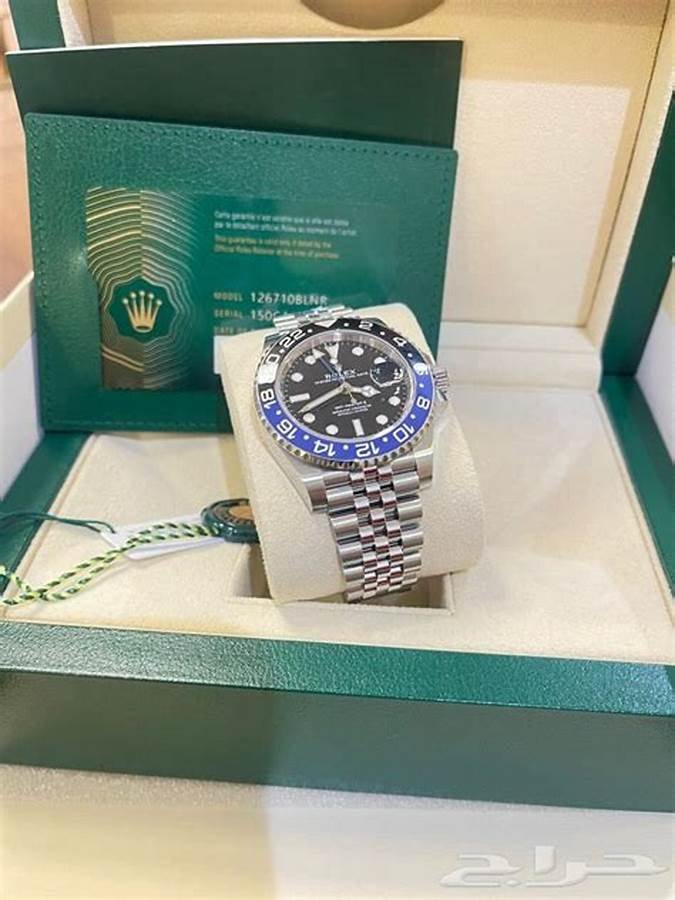
The supplied editorial photograph in this article shows a black-and-blue GMT-style watch on a Jubilee-style bracelet beside branded packaging. It may remind you of a GMT-Master II, but the image alone does not establish its reference, authenticity, source, movement, or ownership history. For comparison, Rolex's page for reference m126710BLNR-0003 specifies a 40 mm Oystersteel case, black dial, blue-and-black ceramic bezel, Oyster bracelet, and calibre 3285. Another BLNR configuration can use a different bracelet. The reference suffix matters.
Save the official page, user guide, and screenshots that were current when you compared the watch. The Rolex GMT-Master II user guide explains the crown positions, independently adjustable hour hand, date setting, and 24-hour display. Those functions give you practical tests. They are more useful than trying to judge authenticity from one font under changing light.
Your one-page reference sheet should record:
- full reference and configuration;
- case diameter, thickness, lug width, and bracelet or strap type;
- dial, bezel, hand, date, crown, clasp, and case-back details;
- expected functions and how the controls should behave;
- movement family claimed by the seller;
- material and test claims that need separate evidence.
Do this for any luxury replica watch, including an exact replica watches listing that claims visual precision. The closer the appearance, the more important it becomes to check identity, function, and sample continuity instead of trusting resemblance.
Make the seller connect every image to your unit
Catalog photography tells you what a seller wants the product to look like. QC photography should show the unit allocated to you. Ask for a temporary code chosen by you, written beside the watch in one continuous video. The video should move from the code to the dial, case sides, case back, bracelet, clasp, crown, and working functions without a cut.
Record every visible identifier, but do not publish it. Ask the seller to repeat the code beside the packed parcel before shipment. Compare the same scratch, protective-film edge, clasp mark, bezel position, and bracelet link count across the photos, video, and arrival recording. If those features change, stop and ask for an explanation before accepting the shipment.
A serial-looking engraving, QR code, card, hang tag, or branded box proves very little by itself. Rolex explains that its five-year international guarantee depends on a watch sold by an Official Rolex Jeweler with the guarantee card completed at purchase. Patek Philippe likewise distinguishes an Extract from the Archives from an original Certificate of Origin. The presence of paper is different from a record recognized by the manufacturer.
Inspect the exterior in a fixed order
Use neutral light, a clean background, and the same viewing angles as your reference images. Begin with overall geometry before magnification. Check whether the bezel, crystal, dial, hands, crown, lugs, end links, and bracelet form one proportionate assembly. A loupe can reveal details, but it can also distract you from a case shape that is visibly wrong at normal distance.
Then work clockwise:
- Center the dial and check hour markers, printed tracks, logo placement, text spacing, and hand alignment.
- Rotate the bezel through a full cycle. Look for even action, correct direction, centered insert printing, and alignment at its reference position.
- View the date straight on and from mild angles. Check centering, changeover behavior, numeral consistency, and lens placement.
- Examine the case sides, crown guards, lug symmetry, brushing direction, polished boundaries, and sharp edges that should not feel unfinished.
- Flex the bracelet gently. Check end-link fit, link articulation, screw condition, clasp action, engraving quality, and unexpected gaps.
- Inspect every surface for dust, fibers, adhesive, chips, dents, or tool marks.
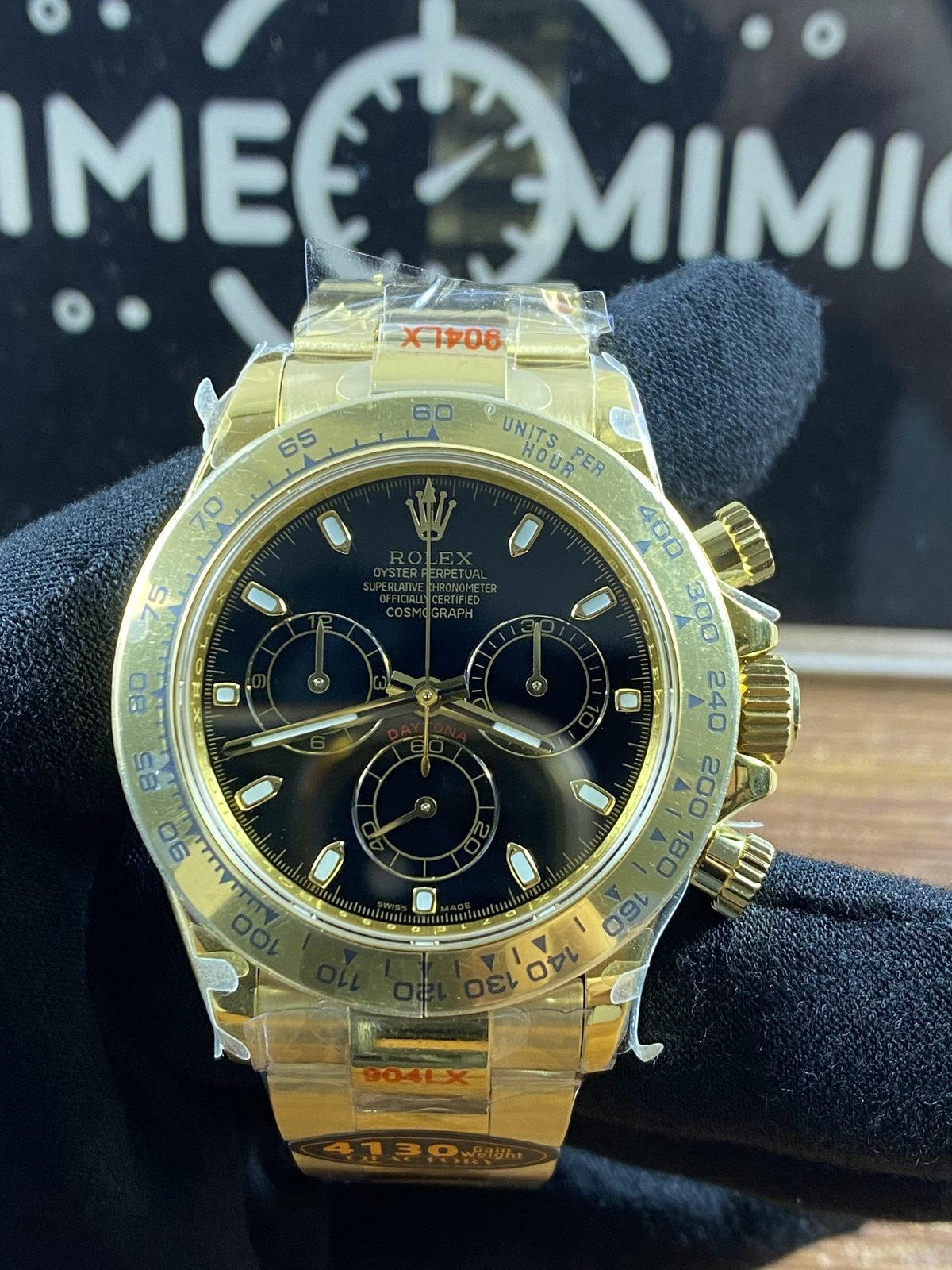
A front-view QC image helps you find visible alignment and condition issues. It does not identify the manufacturer, metal, movement, or water resistance. eBay describes a broader watch-authentication review that can examine the movement, crown, bezel, dial, case, clasp, hands, end links, and serial information. That scope is a useful reminder: one attractive dial photo is never a complete inspection.
| Inspection area | Pass check | Possible mismatch | Next action |
|---|---|---|---|
| Dial and hands | Centered markers, clean printing, correct hand stack, aligned hands | Crooked marker, dust, uneven text, rubbing hands | Request macro video and reject unresolved defects |
| Bezel and crystal | Even rotation, centered insert, clean edge, correct profile | Backplay, chipped edge, misalignment, distorted lens | Ask for full-cycle video and side views |
| Case and crown | Symmetrical geometry, controlled finish, secure crown action | Rough edge, uneven guard, gritty threads, poor seal feel | Stop operating it and request replacement or inspection |
| Bracelet and clasp | Correct fit, smooth articulation, secure closure | Large gaps, damaged screws, sharp links, weak lock | Require repair, replacement, or revised terms in writing |
| Identifiers and package | Consistent with the same photographed unit | Reused code, changing marks, copied documents | Treat provenance as unverified and pause payment |
Test the functions, then test the movement claim
Ask for one continuous video showing winding, time setting, date setting, hand movement, hacking if claimed, and every complication. For a GMT-style watch, confirm how the local hour hand, 24-hour hand, and date interact. For a chronograph, see the start, stop, reset, minute counter, and zero alignment. A working display does not prove the exact caliber, but incorrect behavior can disprove the seller's description.
Movement decoration is also easy to misunderstand. A rotor engraving or bridge shape can imitate the view through a case back while the architecture, dimensions, service parts, or function layout differ. If opening the case is safe and permitted, request clear movement photographs and have a watchmaker compare the layout with the written designation. Do not open a watch merely to satisfy curiosity if it could damage seals or affect a return.
An automatic replica watch needs basic ownership checks too. Ask who can regulate or service that movement, whether replacement parts are available, and what happens if a keyless-work, date, or automatic-winding component fails. IWC's description of its complete service process shows how many separate operations and tests a mechanical watch may require. A replica has no right to that brand service, so you need an independent route.
Service access is also part of identity. Rolex World Service describes a network trained to work to the manufacturer's procedures and return serviced watches with a service guarantee. Cartier's watch warranty likewise sets formal conditions and exclusions. These systems apply to eligible authentic products; copied paperwork or a seller's promise does not provide the same relationship. Before buying a replica, get a local watchmaker's answer about inspection, parts, labor, and movements they will refuse.
Separate appearance, material, accuracy, and water claims
Four good results are still four separate results. Clean finishing does not prove alloy. Correct weight does not prove a particular steel or gold content. A stable rate in one position does not prove daily accuracy. A pressure result does not prove impact or magnetic resistance.
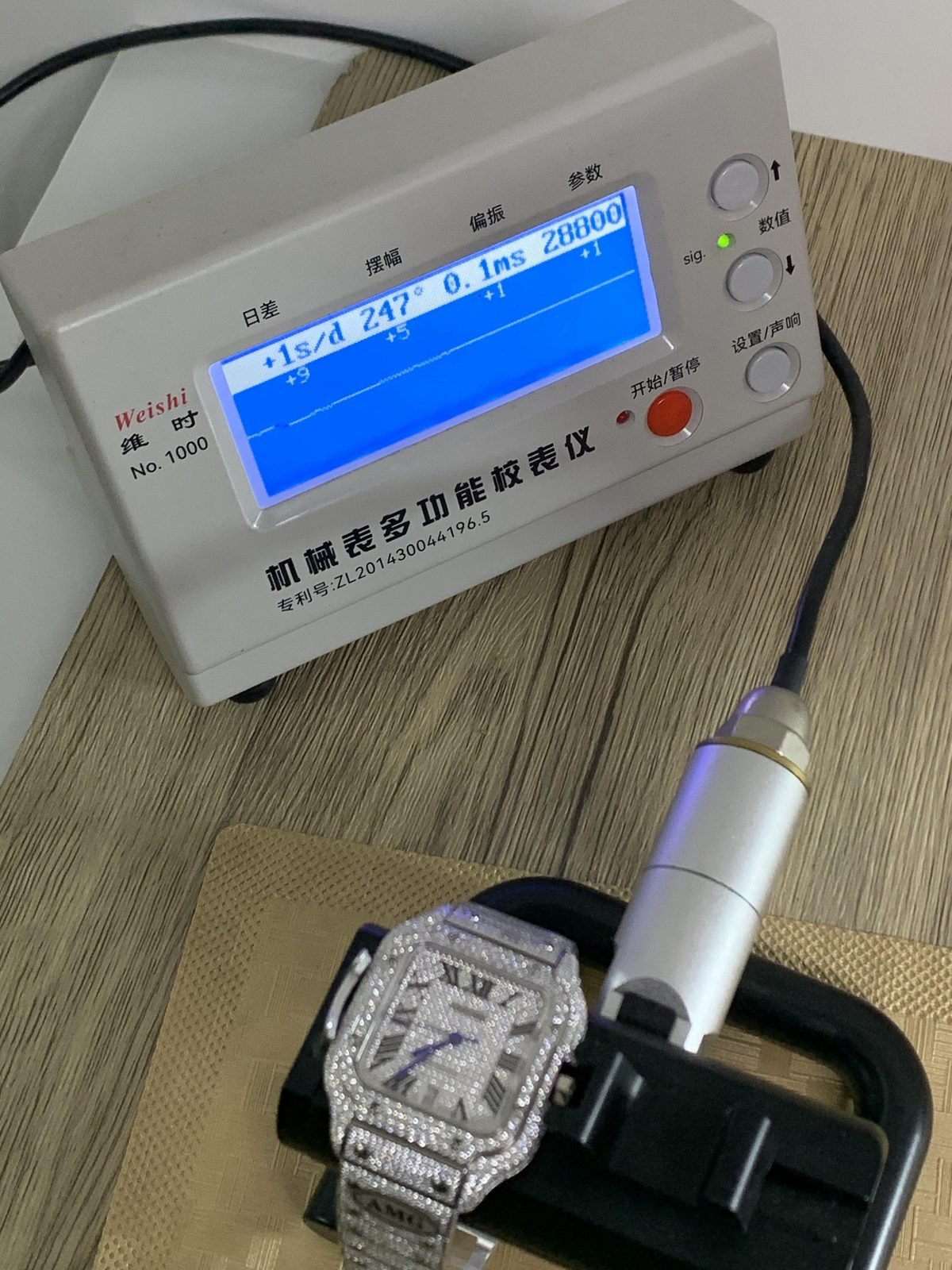
A timegrapher screenshot records rate, amplitude, and beat error for one setup, position, state of wind, and moment. Ask for the machine settings, lift angle used, several positions, and results near full wind and later in the power reserve. COSC publishes separate chronometer certification rules, while METAS describes tests for Master Chronometer certification. A seller's timegrapher photo is not either certificate.
The same separation applies to other performance claims. ISO 764 covers the minimum requirements and test methods for magnetic-resistant watches, while ISO 1413 covers shock-resistant watches. A magnet test cannot stand in for a shock test, and neither result tells you whether the case is water resistant. Ask for the test that matches the claim you care about.
Treat waterproof replica watch wording with extra caution. ISO 22810 sets requirements and test methods for water-resistant watches, but a depth number in a listing is not a test report for your sample. If you plan to expose the watch to water, have a competent local watchmaker perform an appropriate pressure test after delivery and after the case has been opened. Keep it dry until it passes.
Material testing also needs the right instrument and access point. Request an independent composition test when alloy matters. Avoid improvised scratch, flame, chemical, or destructive "sapphire" tests. They can harm the watch and still produce an ambiguous answer.
Check the seller and payment route as carefully as the watch
Save the listing, seller identity, invoice, chat, claim sheet, return address, return deadline, and refund terms before paying. Search the seller's domain and contact details independently. Be cautious if the seller moves you off a platform, changes the recipient, asks for an irreversible method, or refuses to put specifications in writing.
The FTC recommends checking sellers, reading delivery and refund terms, and paying by credit card when possible for online purchases. PayPal's buyer protection terms set eligibility, evidence, timing, and exclusion rules; the logo alone is not a refund promise. Read the current terms for your country and transaction before relying on them.
Marketplace authentication does not convert a replica into an authentic watch. eBay's counterfeit-item policy prohibits items bearing a brand trademark when they were not made by that brand. Chrono24 states in its Buyer Protection information that dealers may list only authentic watches. These rules also tell you why future resale should never be your safety plan.
Counterfeiting can carry legal and customs risk that varies by jurisdiction. The U.S. Government Accountability Office documented economic, consumer-safety, and enforcement concerns in its report on counterfeit goods, and the U.S. Postal Inspection Service advises consumers to consider price, packaging, and seller legitimacy when avoiding counterfeit goods. Check the rules that apply where you buy, import, possess, and later dispose of the item.
Inspect the delivered watch before the return window closes
Record one continuous unboxing video showing the sealed parcel label, all sides of the package, the opening, and the watch. Compare the delivered unit with your saved QC file before removing films, sizing the bracelet, opening the case, or wearing it. Check the temporary code, visible marks, bracelet links, accessories, functions, and exterior condition.
Then ask a local watchmaker for the tests relevant to your use: rate in several positions, power reserve, pressure test, function check, and movement identification if appropriate. Keep every result tied to the unit and date. A failed result should be compared with the seller's written promise, not with a vague expectation created by advertising.
If you bought the item as an authentic branded watch, stop using it when doubts appear and seek qualified authentication. Do not resell it as authentic or pass uncertain paperwork to another buyer. A watch that fails authentication is not made acceptable by lowering the price.
Your final decision rule
You have enough evidence for a disclosed replica only when the exact unit matches the exact reference target and the seller's written claims across identity, visible condition, functions, movement, material, performance, and delivery. Missing proof stays missing. A photo cannot fill it, and a promise cannot become a test result.
If you want an authentic luxury watch, buy through a channel that can establish authenticity and provenance. If you are comparing replica watches, judge each unit as an unverified product until its claims are checked. The most convincing high-resolution image can help you inspect a sample, but it cannot turn that sample into a genuine product of the brand on the dial.
Looking for a Top-Tier Clone or Custom Build?
Direct access to VS, ZF, 3KF, Clean & BTF factory stock. We provide detailed multi-angle QC photo & video approval prior to final payment.