How Can You Identify the Best Replica Rolex on the Market?
Verified Reddit Watch Specialist (RepTime / RepGuild)
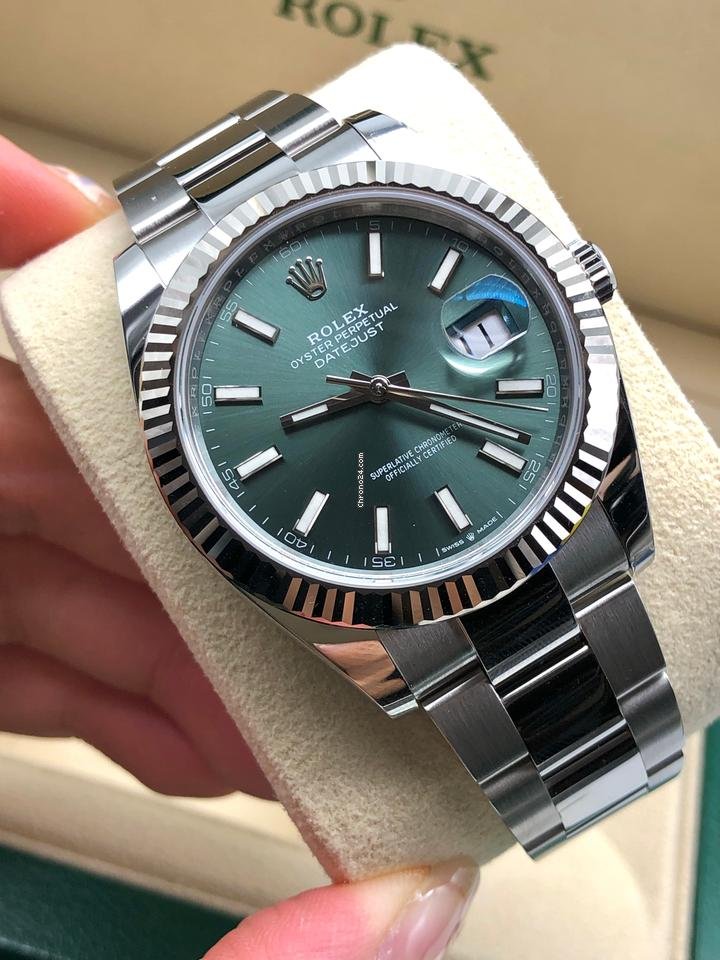
Buyers comparing a Rolex super clone usually want familiar design, solid construction, and a price far below an authentic watch. Nine checks matter most: materials, movement, detailing, date magnifier, caseback, water resistance, price, customer reviews, and seller reputation. Each point becomes more useful when it is tied to evidence a buyer can request.
There is no universal best replica Rolex. Model, factory claim, movement, materials, assembly, QC, and after-sales support vary, even when two listings use the same tier name. The strongest option is the exact sample whose specifications and condition are documented and whose trade-offs match the buyer's budget and intended use.
At a Glance
| Check | Useful evidence | Common mistake |
|---|---|---|
| Materials | Written case, bracelet, crystal, bezel, and coating specifications | Assuming steel grade or sapphire from appearance alone |
| Movement | Exact designation, functions, setting guide, test data, and service path | Treating country labels or a smooth seconds hand as proof of quality |
| Design detail | Exact-sample front, side, back, crown, bracelet, and clasp images | Relying on catalogue photos or one dramatic angle |
| Water resistance | A current pressure-test method and result tied to the sample | Believing dial text, a screw-down crown, or the word waterproof |
1. Check high-quality material claims
Listings may mention 904L-family stainless steel, sapphire crystal, substantial weight, and a durable strap or bracelet. Those can be useful specifications, but they cannot be confirmed from a photograph or weight alone. Ask the seller to state the case, bracelet, crystal, bezel, coating, and strap materials in writing.
Exact-sample QC can document finish and condition. Review brushing, polishing, colour consistency, crystal edges, bezel teeth, crown, end links, bracelet articulation, clasp operation, screws, pins, and spring bars. Sharp edges, lifting colour, loose parts, or deep scratches deserve resolution before shipment.
Weight needs context. Case size, movement, bracelet type, and the number of fitted links all change the result. A scale image should show the whole configuration and units; it does not identify the alloy.

2. Look at the movement and its service path
The movement is central to timekeeping and function. Automatic, quartz, Swiss, and Japanese are common descriptions, but a country label does not establish quality and a smooth-looking seconds hand does not identify the calibre. Ask for the exact movement designation, supported functions, setting instructions, expected power reserve or battery type, and available parts.
For a mechanical sample, a current timegrapher reading can add rate, amplitude, beat error, beat frequency, and test-position context. It is one diagnostic snapshot rather than a guarantee. Confirm winding, time setting, date change, and any chronograph or travel-time functions without forcing the crown or pushers.
Serviceability often matters more than decorative similarity to an authentic movement. A visually convincing movement that no local repairer will accept can create higher long-term cost than a simpler calibre with known parts and support.
3. Examine craftsmanship and detailing
Inspect the dial text, coronet, markers, hands, minute track, bezel, rehaut, crown, case transitions, bracelet, and clasp straight on and from both sides in clear, unfiltered photographs.
Look for even printing, secure markers, correct hand length, clean lume application, aligned date, consistent bezel geometry, controlled brushing, polished edges, and seated bracelet parts. Logos and engravings can be copied; their presence does not prove provenance or official manufacture.
Compare the exact reference and configuration being imitated. A clone Rolex Submariner, a Rolex Datejust replica, and a GMT-style watch use different cases, bezels, bracelets, dials, and functions. A generic checklist should not replace model-specific reference research.
4. Assess the date magnifier in context
Many Rolex-style date watches use a magnifying lens over the date. A figure around 2.5x is a familiar benchmark, yet perceived magnification depends on the reference, lens, crystal, printing, viewing angle, and camera distance. A single oblique photograph can be misleading.
Ask for a straight-on close view. The date should appear centered, legible, evenly printed, and appropriately sized within the window. Check that the magnifier is positioned over the date and that reflections or adhesive do not distort the view.
A strong magnifier does not prove the rest of the watch is well made. It belongs in the same evidence set as dial alignment, movement function, case dimensions, bracelet fit, and seller terms.
5. Inspect the caseback without using a single rule
Many Rolex designs use a smooth, restrained caseback, so excessive decoration deserves scrutiny. Vintage and reference-specific exceptions exist, and the correct comparison is the particular model and production style being imitated.
QC should show the caseback, its edge, protective film, engravings if appropriate, and the connection to the bracelet. Check for damage, poor seating, rough tool marks, or gaps. The exterior cannot confirm gasket condition or internal assembly.
Do not ask the seller to open a sealed watch merely for a photograph unless the benefit outweighs the risk. Opening can introduce dust or disturb a gasket and may require a new pressure test.
6. Verify water resistance with a current test
Verify every waterproof claim. A 100-metre label, dial text, screw-down crown, or seller tier is not a test result. Resistance depends on the case, crystal, crown, pushers, caseback, gaskets, assembly, and current condition.
Ask for the pressure-test method, pressure, date, and result for the exact sample. Confirm what activities the seller supports in writing. Splash resistance, swimming, showering, and diving expose a watch to different pressure, heat, soap, movement, and seal demands.
Keep the watch dry when evidence is missing. If fog or droplets appear under the crystal, stop wearing it, dry the exterior, and arrange prompt inspection rather than using direct heat.
QC examples: condition, profile, and dimensions
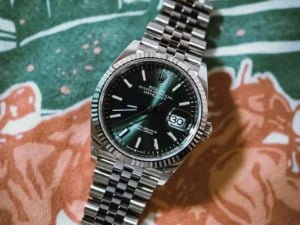
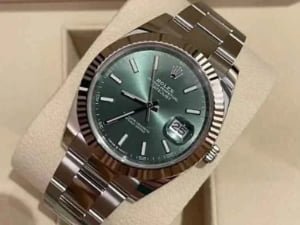
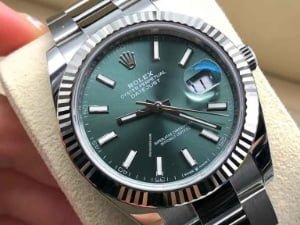
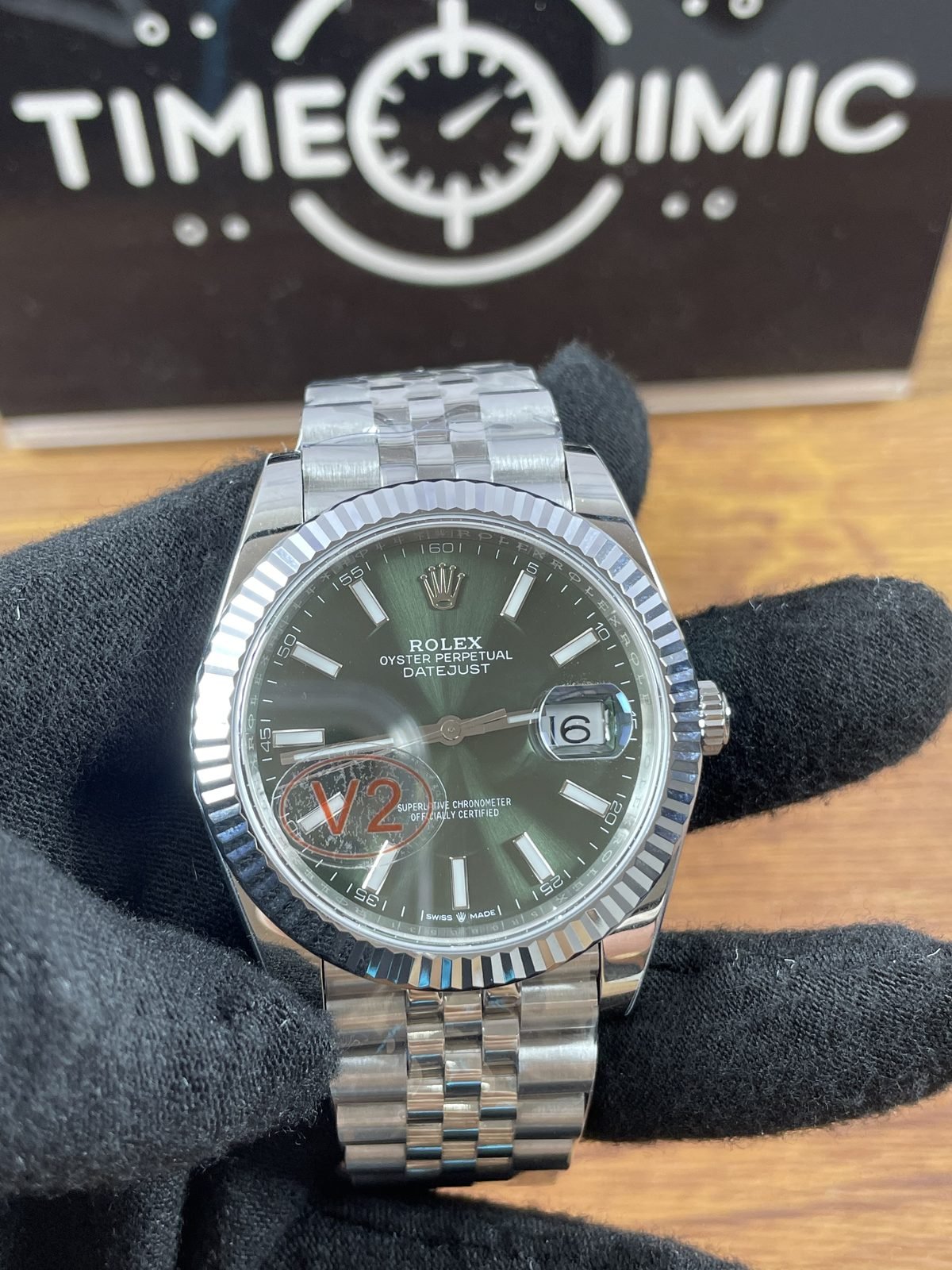
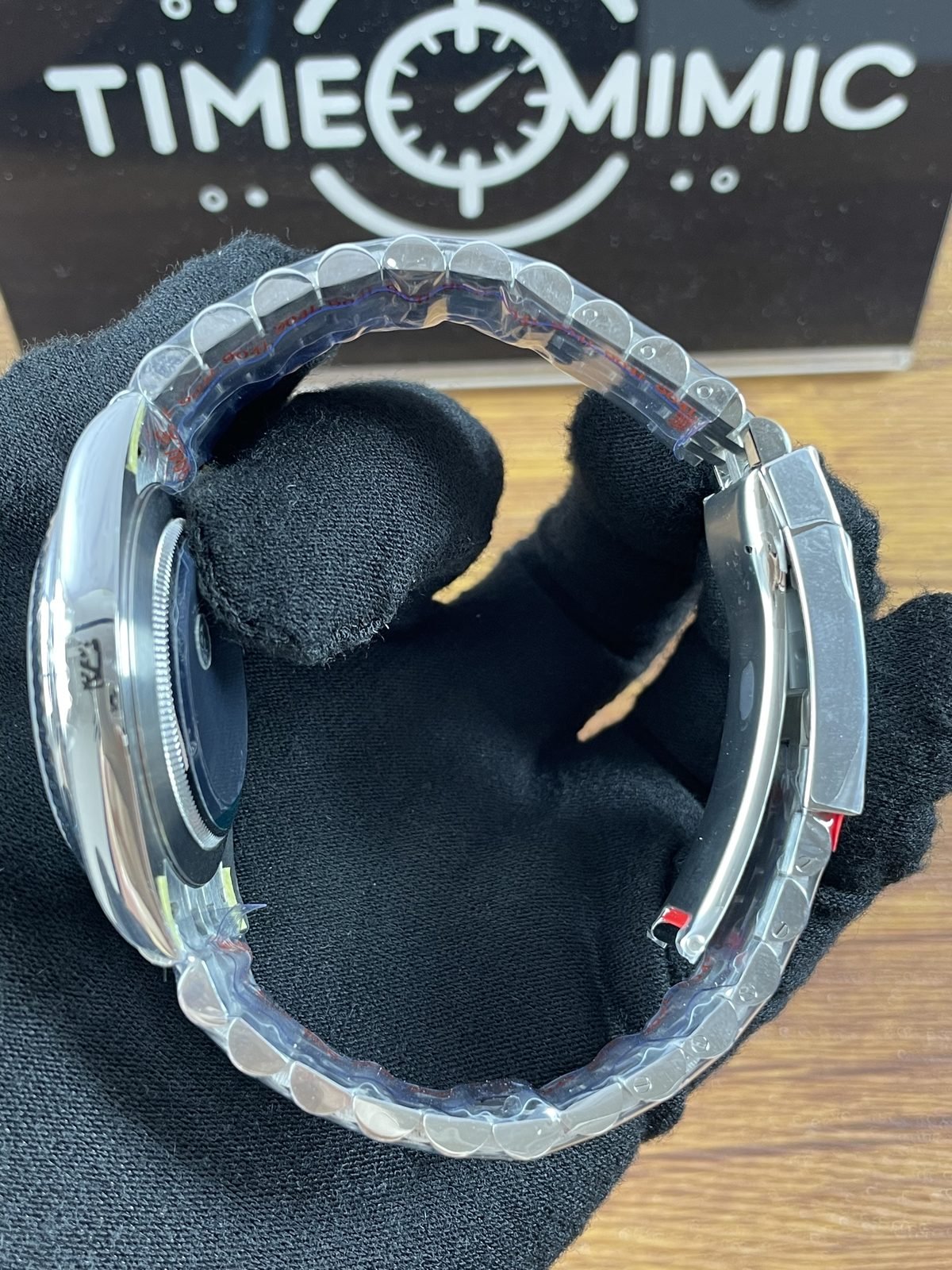
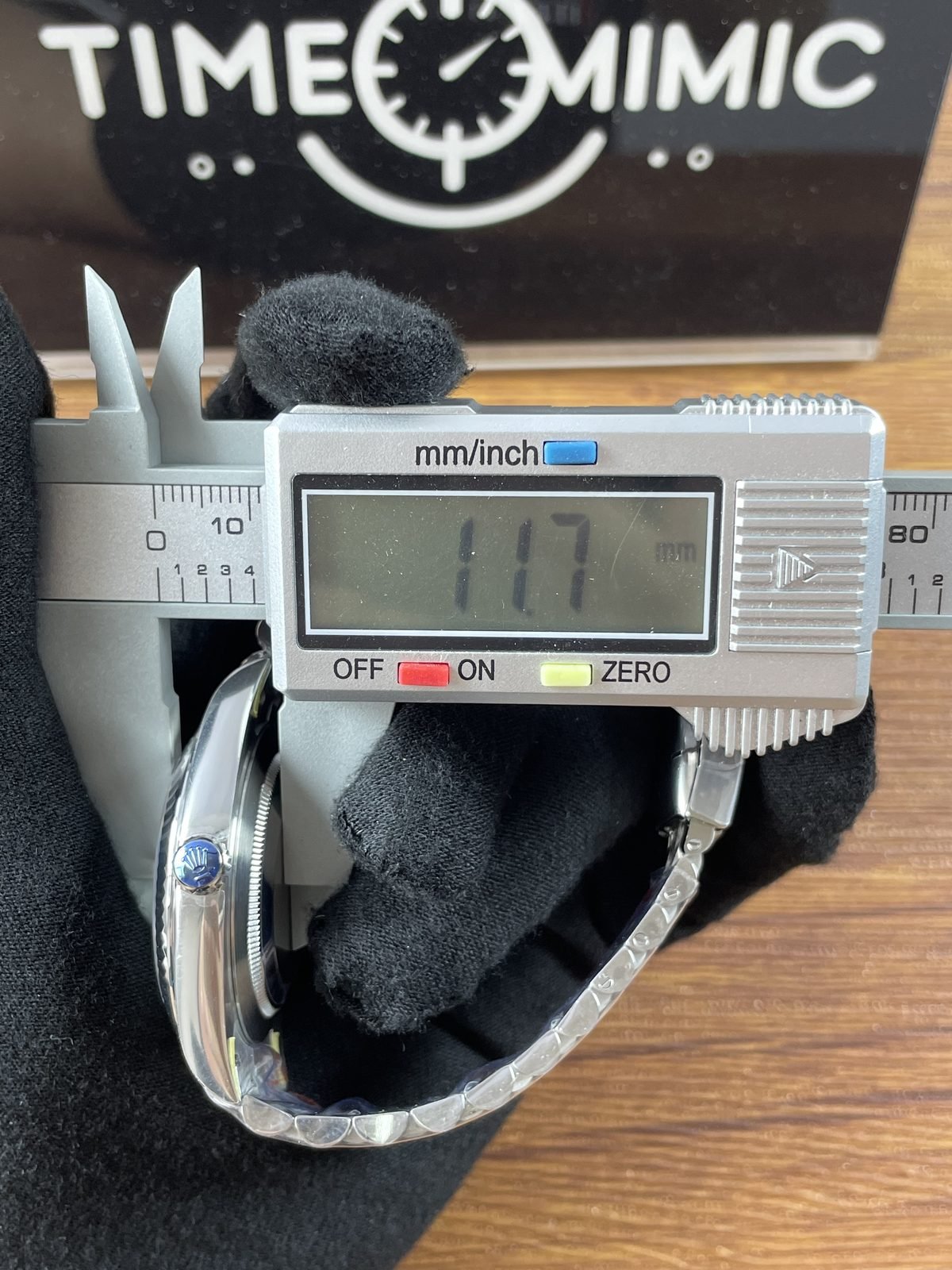
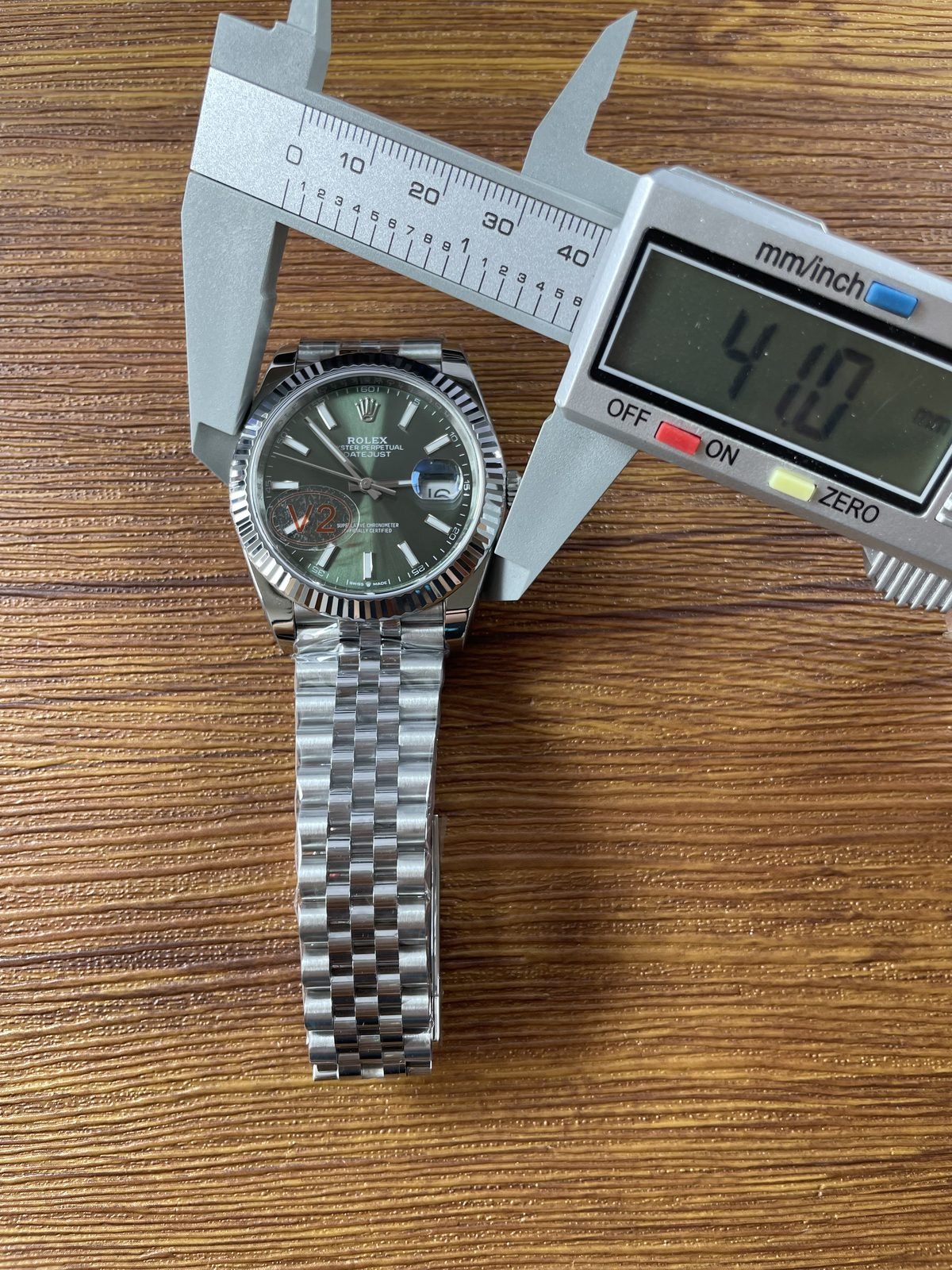
The media-library images below show four visible checks for one green-dial Datejust-style sample. The front view documents dial, date, bezel, crown, case, and bracelet. The side view records case profile and clasp. The caseback view shows exterior condition, and the calliper image displays one measured dimension.
These photographs do not independently verify material grade, crystal, movement identity, timing, pressure resistance, calibration, factory source, or authenticity. Their authority comes from showing the exact sample clearly and from stating what remains unknown.
7. Price does not prove quality
A higher price can include a different movement, better finishing, clearer QC, current testing, stronger return terms, or more useful after-sales support. It can also reflect marketing. Compare delivered cost only after the specifications and seller obligations are matched.
Include shipping, payment fees, taxes or duties, bracelet sizing, pressure testing, return shipping, service, and replacement parts. The best value is the documented watch whose total ownership cost and risk fit the buyer, not automatically the cheapest or most expensive listing.
8. Read customer reviews for patterns
Reviews are more useful when they identify the model, movement, purchase date, wear conditions, ownership time, problem, and seller response. First-day praise says little about durability. Repeated issues across comparable samples deserve more attention than a single vague complaint.
Distinguish the product from the transaction. Shipping damage, inaccurate specifications, failed functions, poor communication, and warranty refusal are different problems, and each calls for different seller evidence.
9. Buy from a seller with clear terms and original QC
A trusted seller should provide original exact-sample images, consistent written specifications, a realistic delivery process, and clear return and warranty terms. Confirm what happens if the watch arrives damaged, differs materially from the approved QC, or develops a fault within the stated period.
Ask who pays return shipping, whether a local repair is allowed, what evidence is required, and how quickly a claim must be opened. Save the listing, invoice, messages, QC approval, and terms. Avoid pressure to pay before unresolved details are recorded.
Replica status should remain explicit. A high quality Rolex replica is not manufactured, warranted, or authenticated by Rolex. Buyers should also review applicable purchase, import, resale, and trademark rules in their location.
Conclusion: the best sample is the best-documented sample
Materials, movement, craftsmanship, date magnifier, caseback, water testing, price, reviews, and seller reputation are nine useful decision points. Together they help buyers compare style and quality without relying on the promise that a replica is indistinguishable from an authentic watch.
A replica can offer a similar visual direction at a fraction of the authentic price, while provenance, brand warranty, verified specifications, and collector value remain different. Time-Mimic can support an informed choice with written details, sample-specific QC, and clear after-sales terms for the watch being supplied.
Looking for a Top-Tier Clone or Custom Build?
Direct access to VS, ZF, 3KF, Clean & BTF factory stock. We provide detailed multi-angle QC photo & video approval prior to final payment.