How Super Clone Watches Replicate Luxury Brands with Precision
Verified Reddit Watch Specialist (RepTime / RepGuild)
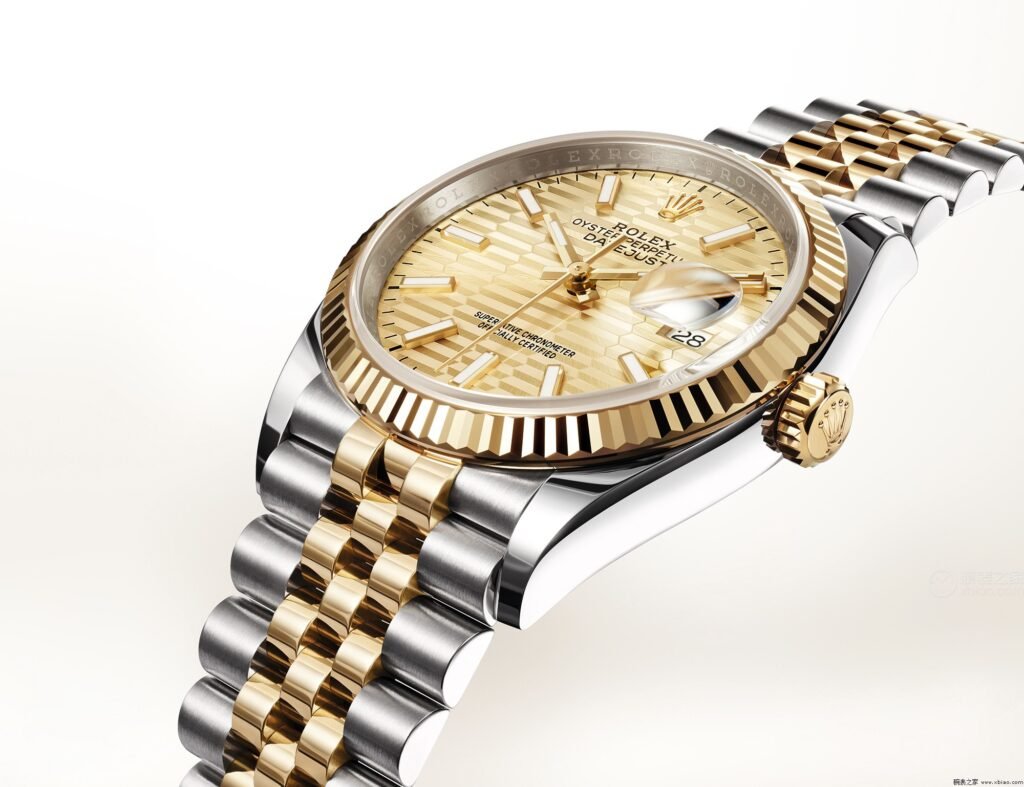
Super clone watches can look precise because they copy many connected details at the same time: case geometry, dial layout, hand proportions, bezel scale, crystal height, bracelet taper, clasp shape, and the behavior of visible functions. The closer those relationships stay to the target reference, the more convincing the watch appears.
That precision is visual and sample-specific. It does not turn a replica into an original product or prove the movement, alloy, coating, water resistance, factory, performance, or durability. Original luxury brands combine design, controlled manufacturing, testing, records, warranty, and service. A copy can imitate visible results without belonging to that system.
Precision is not one perfect logo. It is the consistency of dozens of proportions, surfaces, functions, and tolerances when you inspect the same watch from every angle.
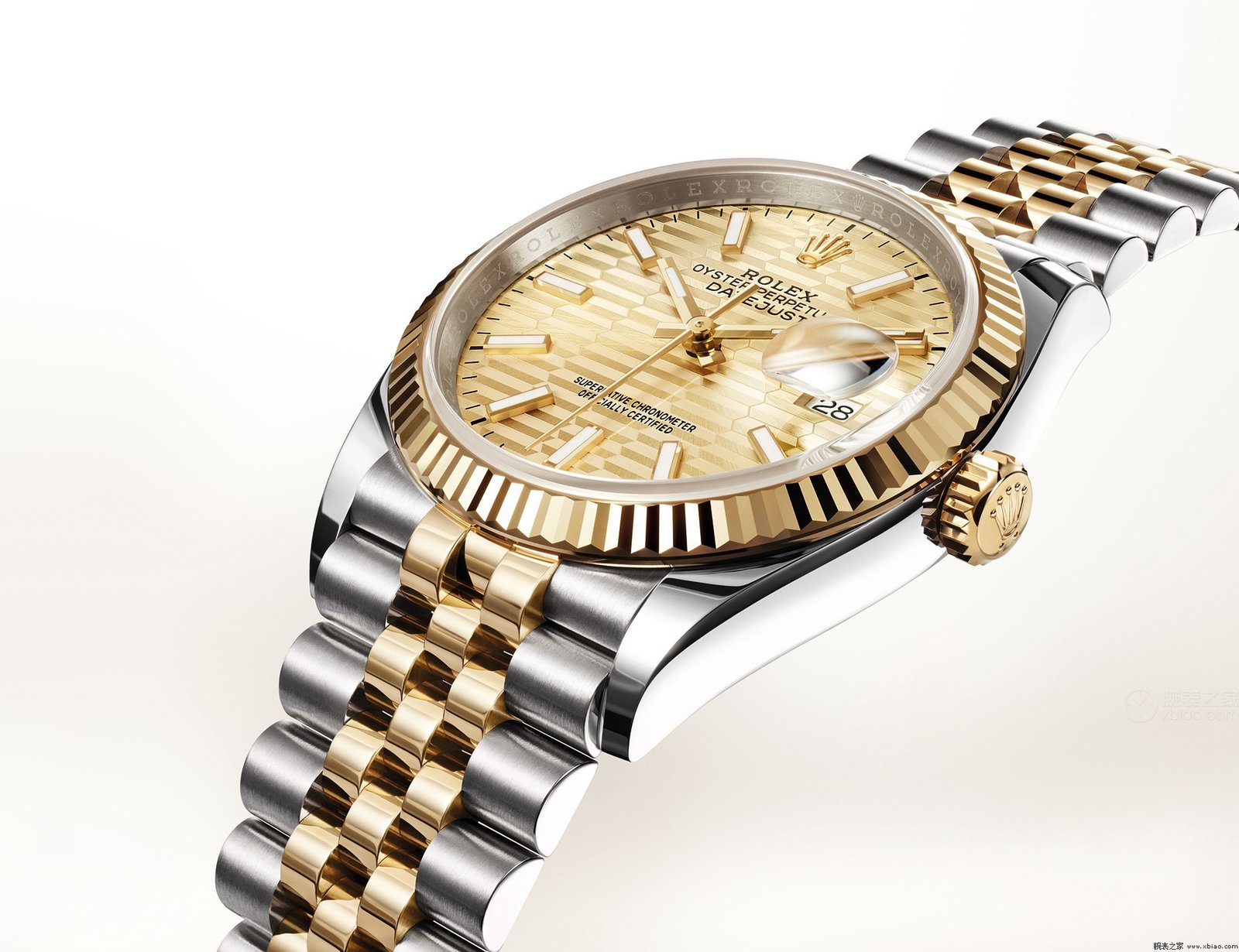
Replication starts with the exact reference
Luxury watch families change over time. Case sizes, bezel profiles, dial fonts, hand stacks, date displays, bracelets, clasps, movements, and service parts can differ across generations. A replica that mixes details from two references may look impressive in isolation and still be wrong as a complete watch.
The first requirement for close replication is a fixed target. That means one reference, configuration, and production period. Useful comparison material includes straight-on images, side profiles, macro details, dimensions, function behavior, movement architecture, and service documentation appropriate to that model.
Official product photography helps establish the intended design, but photographs have limits. Perspective changes proportions. Lighting changes metal and dial color. Retouching can remove dust and emphasize edges. A real physical sample or reliable technical measurements reveal relationships that a promotional image can hide.
When you assess a high quality replica watch, begin by confirming which exact original it claims to follow. Do not compare a current copy with a different generation because the colors happen to match.
Seven layers create a precise visual match
The layers below work together. A strong result in one area cannot fully hide a weak result in another.
| Replication layer | What must stay consistent | How you can inspect it | Common limit |
|---|---|---|---|
| Overall geometry | Diameter, thickness, lug shape, bezel height, crystal position, crown guards, and case-back profile | Straight front, side, and three-quarter views plus sample measurements | Published original dimensions do not prove the copy matches |
| Dial system | Printing, minute track, markers, lume, hands, date, subdials, and rehaut relationship | Exact-reference macro comparison under several lights | Camera processing can sharpen, hide, or shift details |
| Surface finishing | Brushing direction, polish, chamfers, transitions, and edge consistency | Hard side light, diffuse light, touch, and repeated angles | Appearance does not identify alloy or coating |
| External components | Bezel action, crown, pushers, crystal, magnifier, bracelet, end links, and clasp | Operation, fit, gap, articulation, and alignment checks | A similar look does not prove the same material or construction |
| Movement and functions | Hand stack, setting sequence, date behavior, complication operation, and visible architecture | Continuous functional video and qualified internal inspection | Decorative parts can conceal a different mechanism |
| Performance | Timekeeping, power reserve, pressure resistance, and function reset | Defined tests tied to the exact sample | One result covers one method, time, and condition |
| Identity and support | Serial presentation, documents, records, warranty, parts, and service | Confirmable manufacturer or authorized records | A replica cannot create original brand identity or official history |
This table explains why a watch can look close on the wrist and separate under a controlled comparison. Precision is cumulative.
Case geometry controls the whole silhouette
The case is the framework for every other part. Diameter alone is not enough. Thickness, lug-to-lug length, lug curvature, bezel width, crystal height, crown position, crown-guard shape, and case-back depth determine how the watch looks and sits.
A small error can spread. A thicker movement may require a deeper case back. A different date-wheel position may change the window or magnifier. A wide rehaut makes the dial appear smaller. A bracelet with a different first-link design changes the effective fit.
Ask for caliper photographs of the exact sample. The measuring points should be visible. Compare the figures with the original reference and with a watch that fits your wrist. Weight is secondary because bracelet sizing, internal construction, and added mass can produce similar readings with different materials.
Precision also appears in symmetry. Compare left and right lugs, crown-guard curves, bezel seating, end-link gaps, and the way the case back centers. Strong replication keeps those parts coherent rather than making one angle look perfect.
Dial precision depends on relationships
The dial attracts attention, so replica watches often concentrate visible effort there. The useful inspection is not a logo check. Read the dial as a coordinate system.
Compare the distance from the center to the minute track, the position of every marker, hand length, lume boundaries, text blocks, date window, magnifier, subdial centers, rehaut height, and the gap under the crystal. Check whether hands reach the intended tracks and whether printed lines meet applied parts cleanly.
Color is difficult to judge from one screen. White balance, exposure, reflections, compression, and display settings can shift a dial or bezel. Request diffuse daylight, hard side light, and ordinary indoor light. A textured dial should show a consistent pattern without using editing to exaggerate depth.
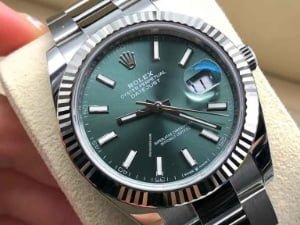
The supplied macro image in this guide is a visual detail example. It helps you study dial layout, bezel facets, crystal position, case transitions, and bracelet finish. It does not establish authenticity, exact materials, manufacturing method, movement origin, water resistance, or performance.
Surface finishing makes geometry readable
Brushing and polishing do more than add shine. They define planes and edges. On a coherent watch, brushed grain follows a controlled direction, polished areas reflect cleanly, and the boundary between finishes stays deliberate around lugs, bezel, case sides, and bracelet links.
High magnification can reveal rounded edges, uneven grain, polishing residue, scratches, coating variation, and inconsistent chamfers. It can also make a harmless speck look severe. Inspect the watch at wrist distance, normal close range, and macro range.
Material and finish are different questions. A steel-colored surface does not prove an alloy. A gold tone does not prove solid gold, plating thickness, or coating durability. ISO’s watch catalogue lists separate standards for gold-alloy coverings, vapor-deposited coatings, hard external parts, wear, scratching, impacts, and watch glass. Each property needs suitable evidence.
Tolerance stack explains why small errors become visible
A watch is an assembly of fitted parts. The dial sits inside the case. The hands sit above the dial and below the crystal. The bezel surrounds the crystal. The crown connects to the movement. The end links meet the lugs. If several parts are each slightly out of position, their combined effect can become obvious even when no single error looks large.
This is called a tolerance stack in manufacturing. You do not need an engineering drawing to see its result. A higher movement position can change the stem and crown relationship. A thicker dial or hand stack can reduce clearance. A crystal or gasket with different dimensions can change crystal height and magnifier focus. Small variations in the case, end link, and spring-bar location can produce a visible gap.
Inspect connected parts together. Check that hands clear each other through a full rotation, the date sits inside its window, the crown aligns with the case tube, the bezel and crystal remain concentric, and both end links meet the lugs evenly. A luxury replica watch that looks strong in a straight photograph may reveal its weakest tolerance relationship when viewed from the side.
This is also why one seller image cannot represent every unit. Tooling may be shared, but assembly and component variation affect the final watch. Sample-specific QC is the practical way to evaluate the result you will receive.
Bracelet and clasp accuracy affect the experience
The bracelet covers a large visual area and directly affects comfort. Close replication involves link shape, taper, first-link spread, screw or pin construction, end-link fit, clasp length, blade shape, adjustment range, safety locks, engraving placement, and finishing transitions.
Handle the exact sample when possible. Links should articulate without obvious binding. End links should meet the case evenly. The clasp should close securely and open without excessive force. Sharp edges, loose fit, and poor adjustment can matter more in daily wear than a minor printing difference.
Ask for the bracelet range and a photo of the watch around a measuring cone or stated wrist size. A copied diameter does not guarantee a copied fit.
Movement architecture sets practical limits
The movement influences thickness, crown position, hand stack, date position, winding feel, rotor sound, timing, power reserve, and complication behavior. When the base movement differs from the original, the replica may use modified parts or decorative layers to align visible features.
Decorative bridges, engravings, colored screws, and rotors can imitate appearance. They do not identify the mechanism below. A clear movement photo is useful only when it belongs to the same sample and is compared with reliable architecture for the claimed caliber.
Real movement makers publish model-specific information. MIYOTA’s 8215 documentation lists dimensions, thickness, functions, frequency, jewels, running time, and an accuracy range. The MIYOTA 9015 specification provides another concrete technical baseline. A generic country claim gives you less evidence.
Ask a qualified independent watchmaker whether the claimed movement can be identified, serviced, or replaced. Precision at purchase has limited value when parts and service are unavailable.
The phrase “super clone movement” needs the same caution as a grade name. It may refer to a movement designed to resemble the original architecture, a common base caliber with decorative parts, or a seller category with no disclosed technical definition. Ask what sits under the visible decoration, which functions are native or modified, and which parts a repairer can obtain.
Function behavior exposes hidden compromises
Operate the crown and every complication. Record each setting position, winding direction, date correction, midnight transition, hand movement, chronograph start-stop-reset, GMT adjustment, and any day or calendar function.
A continuous video tied to the reserved sample is more useful than several short clips. It can reveal whether hands jump, subdials are decorative, the date changes incorrectly, or a chronograph fails to reset.
Correct behavior still does not prove the original movement. It shows that the delivered function behaves as claimed at that moment. Long-term durability remains a separate question.
QC turns precision from a listing claim into sample evidence
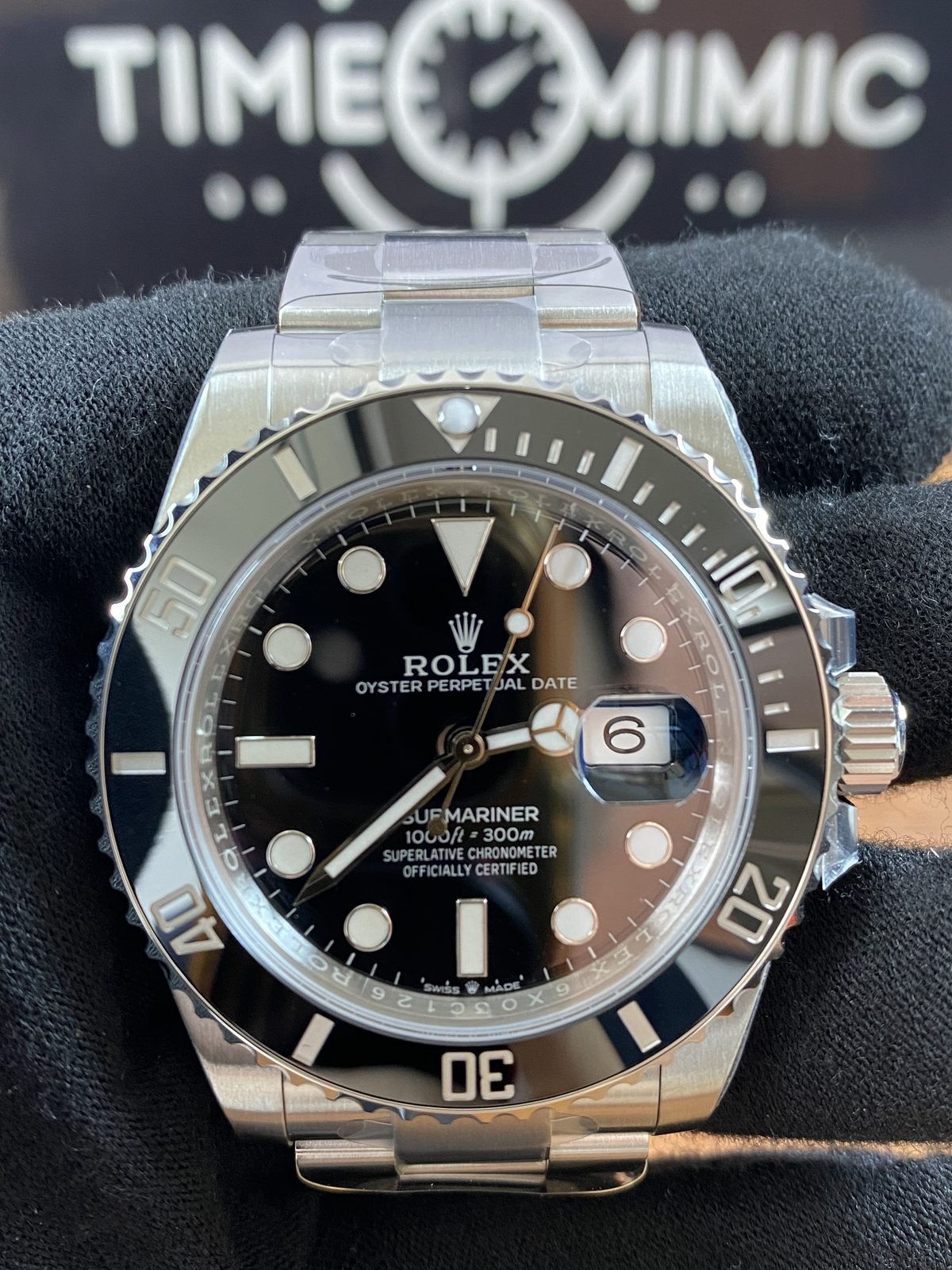
The front-view QC image below shows one photographed sample. You can inspect alignment, visible condition, printing, hands, markers, bezel, and bracelet. You cannot use the image to prove authenticity, exact materials, internal construction, movement origin, water resistance, or long-term durability.
Ask for current front, rear, side, crown, crystal-edge, bracelet, end-link, clasp, and movement views where appropriate. Include an order identifier in the frame. Then compare the sample with your fixed reference and written specification sheet.
| QC observation | What it can support | What you still need |
|---|---|---|
| Straight front photo | Dial, hands, markers, bezel, date, and broad symmetry | Side profile, function video, and records |
| Side and three-quarter photos | Thickness, crystal height, crown, pushers, lugs, and finishing transitions | Measurements and material evidence |
| Bracelet and clasp views | Gaps, articulation, edges, screws, closure, and visible finish | Fit range, security in use, and service options |
| Continuous function video | Sample continuity, crown positions, date behavior, and complication operation | Movement identity and future reliability |
| Movement photo | Visible architecture, condition, decoration, and some component clues | Qualified identification and serviceability |
| Defined test result | One measured property under stated conditions | Other positions, later performance, and unrelated properties |
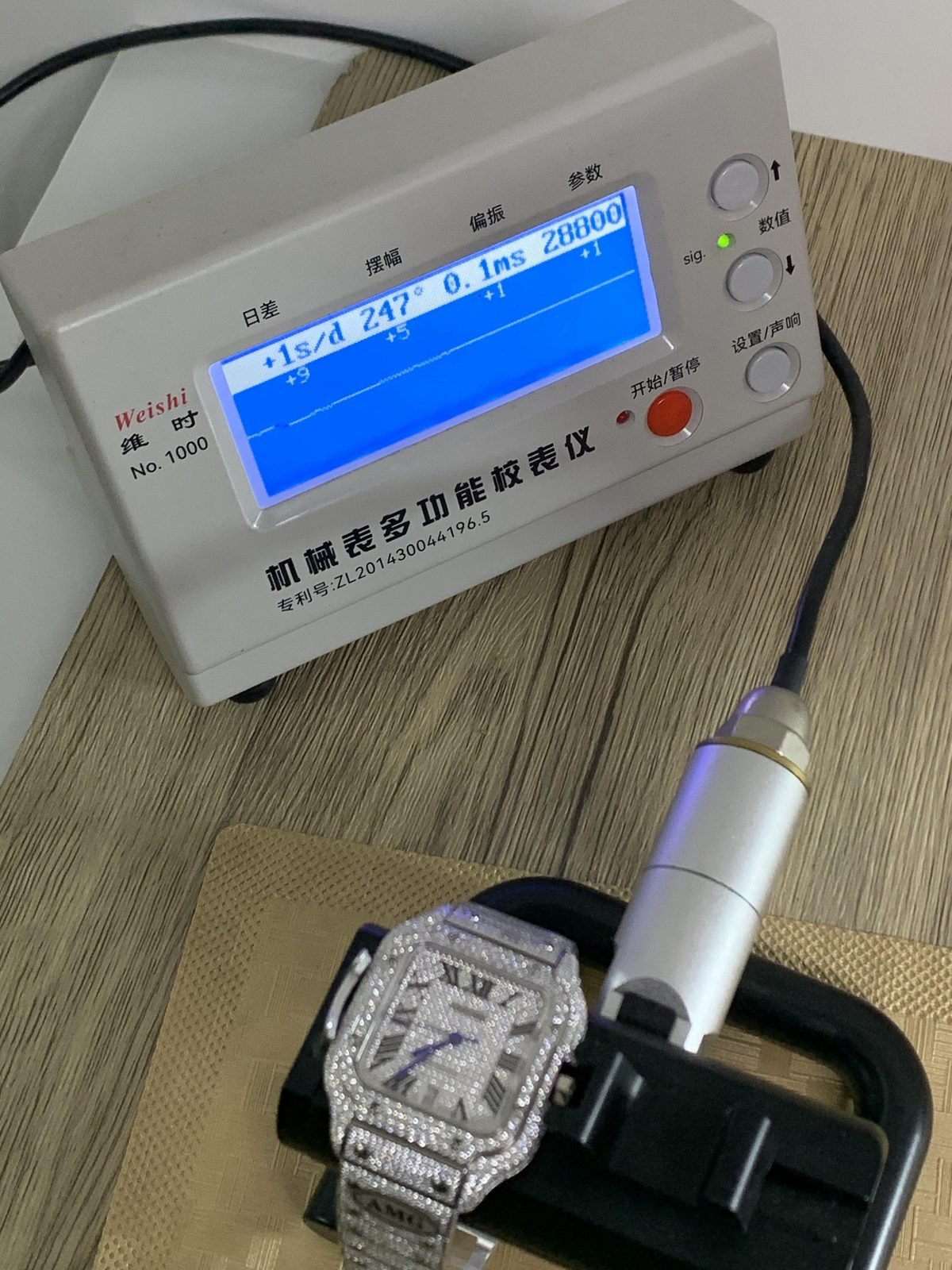
The timegrapher image below is one defined setup for one sample. It can record rate, amplitude, and beat error for that position and state of wind. It cannot authenticate the watch, identify the movement, or guarantee future performance. Ask for the position, lift-angle setting, test duration, and wind state.
Use a simple watch QC guide while reviewing the files. First confirm sample identity and configuration. Then check geometry and fit-related measurements. Move to dial, case, bracelet, and clasp. Operate every function in one continuous video. Finish with movement evidence and defined tests only when they matter to your decision. Record each issue as accepted, rejected, or unresolved.
This order prevents a striking macro detail from distracting you from a wrong case, missing function, or unidentified sample. It also gives the seller a short, specific list to answer.
Testing separates appearance from performance
Original luxury manufacturers connect precision to controlled testing. Rolex describes a finished-watch process that evaluates precision after casing and identifies broader pillars such as water resistance, autonomy, magnetic resistance, reliability, and durability. Patek Philippe describes its seal as covering movement, external components, functions, and rate accuracy.
Those brand programs do not apply to replicas. They illustrate why copying a dial phrase is different from reproducing a verified performance system.
For a replica, keep tests narrow. A timegrapher reading concerns one timing setup. A pressure test concerns the stated pressure method and time. A power-reserve observation concerns that wind state and usage. ISO 22810 defines requirements and methods for water-resistant watches, while separate standards address shock and magnetism.
Keep a delivered watch dry until it passes a trusted local pressure test. Repeat practical timing and function observations after shipping.
Precision can vary from sample to sample
Tooling and design determine potential accuracy. Assembly, alignment, dust control, regulation, lubrication, handling, and inspection determine the individual result. Two watches sold under the same batch or grade may not be identical.
This is why factory nicknames and seller tiers are weak evidence. The exact reserved unit matters. Save the original QC files, record accepted defects, and compare the delivered watch with those files before removing protective film or sizing the bracelet.
Use stop rules. Reject a materially wrong configuration, non-working essential function, cracked crystal, major alignment error, inconsistent sample identity, or refusal to provide agreed evidence. Decide tolerance for small cosmetic details before the close-up photographs arrive.
What precision cannot copy
Even a visually close replica remains outside the original brand’s manufacturing, records, certification, warranty, parts, service, and resale system. Rolex’s Certified Pre-Owned process links eligible watches to brand authentication, service, testing, and an official guarantee. Patek Philippe’s archive service connects watch details to historical records under its program rules.
A copied serial format, card, seal, box, engraving, or QR code cannot create those original records. This is the largest difference between precise resemblance and authentic identity.
Final answer
Super clone watches replicate luxury brands with precision by matching connected systems: reference-specific geometry, dial coordinates, finishing transitions, external components, movement-driven proportions, function behavior, and sample-level assembly. The best visual results come from consistency across the entire watch rather than one impressive detail.
You can judge that consistency with exact-reference comparison, sample measurements, several lighting angles, continuous function video, qualified movement inspection, and defined tests. Keep each conclusion inside the evidence. A precise appearance does not prove materials, origin, performance, durability, factory source, or authenticity.
Treat precision as something you verify on the exact sample. Treat original brand identity as a separate relationship supported by manufacturer records, testing, warranty, and service.
Looking for a Top-Tier Clone or Custom Build?
Direct access to VS, ZF, 3KF, Clean & BTF factory stock. We provide detailed multi-angle QC photo & video approval prior to final payment.