How Super Clone Watches Aim to Maintain Luxury-Watch Precision
Verified Reddit Watch Specialist (RepTime / RepGuild)
Super clone watches attract buyers because they are designed to reproduce the appearance and wearing experience of luxury models. The harder question is whether they can also deliver dependable timekeeping. Their performance is not determined by appearance alone; it depends on the installed movement, component fit, regulation, quality checks, and ongoing care.
No single accuracy standard applies to every replica watch, and seller labels are not independent certification. Even so, the better-built examples generally pursue precision through the same broad areas discussed in the original article: movement selection, controlled assembly, careful component design, protective materials, and regular maintenance.
At a Glance
| Factor | How it can support precision | Important limitation |
|---|---|---|
| Movement | A stable movement that is correctly assembled and regulated can support consistent daily rate. | A Swiss, Japanese, or clone label does not by itself prove origin, condition, or performance. |
| Quality control | Timing checks and functional inspection can identify obvious assembly or regulation problems. | One test result is a snapshot, not a guarantee of accuracy in every position or over many years. |
| Components and assembly | Correct alignment, tolerances, lubrication, and balance help a mechanical movement run consistently. | External similarity does not confirm identical internal construction or parts quality. |
| Maintenance | Cleaning, regulation, and appropriate servicing can help preserve stable performance. | Parts and qualified service may be harder to obtain than for an authentic luxury watch. |
What precision means in daily use
Precision is not one number detached from use. A mechanical watch may gain or lose time at different rates depending on position, state of wind, temperature, magnetism, shock, and the condition of its lubrication. A useful assessment therefore combines a controlled test with several days of ordinary wear rather than relying on a single displayed rate.
Accuracy should also be separated from function. A watch can keep a reasonable daily rate while its calendar changes poorly or a chronograph fails to reset correctly. Conversely, a movement that needs regulation may still have sound functions. Buyers should inspect rate, amplitude, beat error, setting behaviour, power delivery, and advertised complications as related but distinct checks.
1. Advanced watch movements
The movement is the mechanism that controls a watch's timekeeping. Luxury brands may design and manufacture in-house calibers, while super clone watches use a range of third-party, adapted, decorated, or clone-style movements. A well-assembled movement can be regulated to a useful daily rate, but performance varies by model and by individual sample.
Listings often mention Swiss or Japanese movements because both categories include established mechanical and quartz designs. Search terms such as Swiss movement replica watches reflect that buyer interest, but the phrase is not proof of provenance. Buyers should ask for the exact movement family, functions, and a sample-specific timing result rather than assuming that a country label guarantees luxury-brand precision.
2. Quality control and testing
Authentic luxury manufacturers typically apply documented production controls and may test movements or completed watches against defined standards. Replica producers and sellers do not necessarily follow the same procedures. Still, inspection during assembly and before shipment can help catch obvious faults in winding, setting, calendar change, chronograph operation, alignment, or regulation.
For a high quality replica watch, useful QC should relate to the exact sample that will ship. Clear photos, a function check, and a timegrapher image can document its condition at that moment. Claims about water resistance require a separate pressure test; appearance, a screw-down crown, or a timing result cannot establish a safe depth rating.
A stronger QC record identifies the sample, movement family when known, test position, state of wind, and the visible values. Repeating the test in more than one position can reveal variation that a single result hides. Even then, the reading documents a moment in the watch's condition; it does not reproduce a manufacturer's long-term test program.
A visible timing-check example
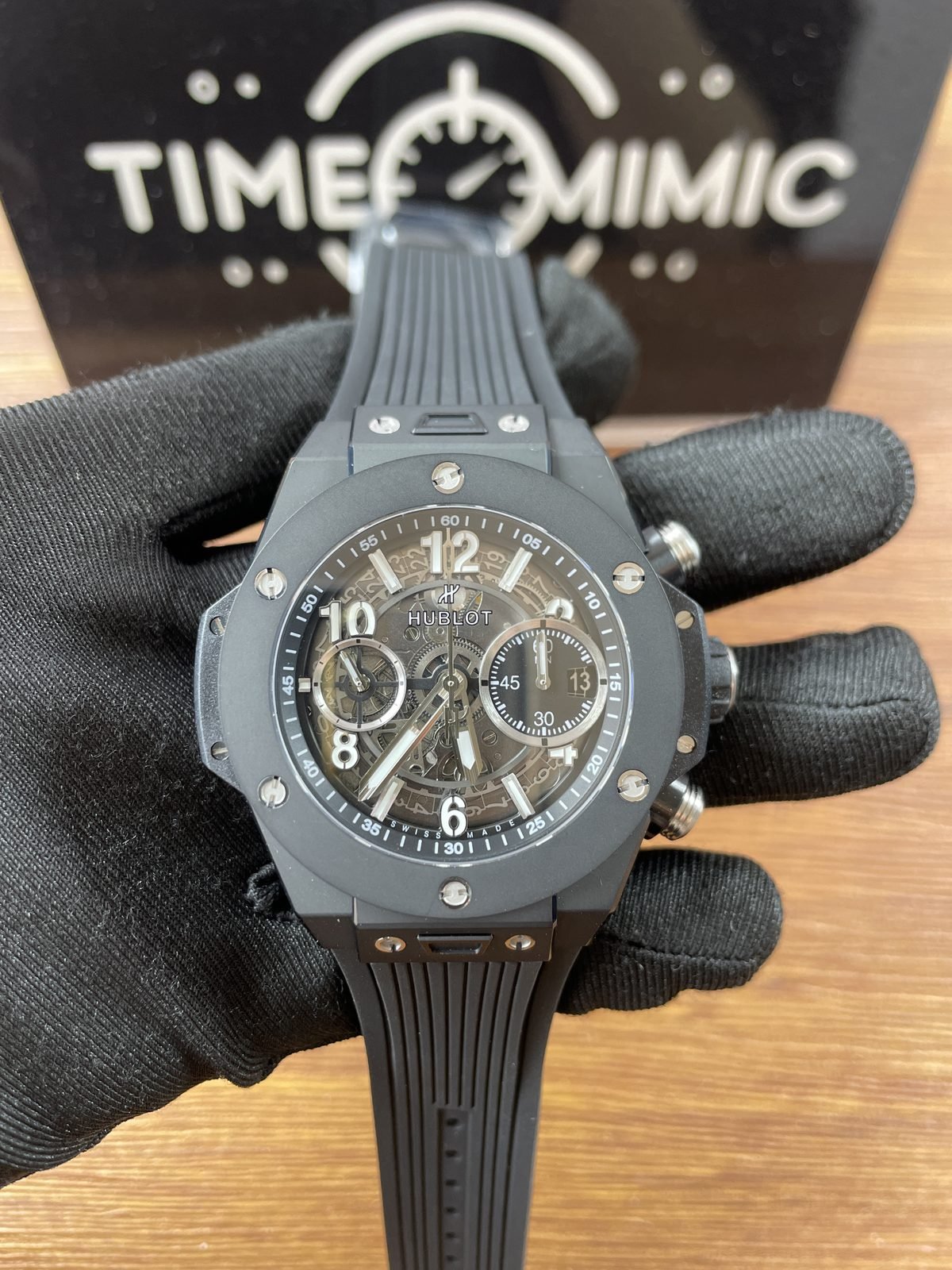
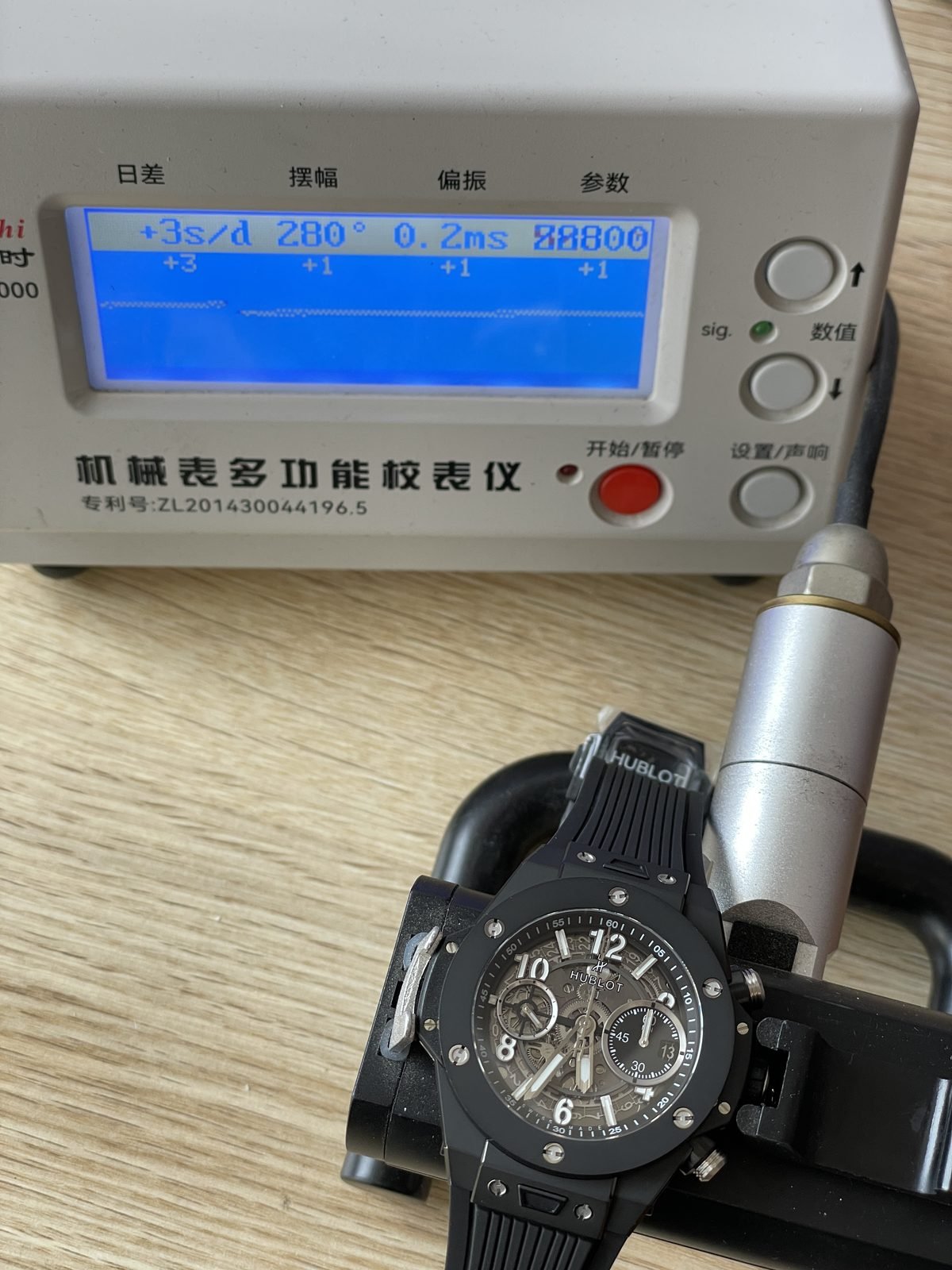
The QC images below document one chronograph-style sample. The front view allows inspection of the dial, hands, indices, subdials, controls, strap, and exterior condition. The timegrapher display shows plus three seconds per day, 280 degrees of amplitude, 0.2 milliseconds of beat error, and a 28,800-beat rate under the pictured setup.
Those values describe that displayed test only. Position, state of wind, lift-angle setting, temperature, handling, and later wear can change a mechanical reading. The photos also do not prove movement origin, factory identity, material composition, water resistance, or future service life.
3. Replicating precision components
Mechanical accuracy depends on a group of interacting parts, including the balance, hairspring, escapement, gear train, mainspring, and automatic winding system. Replica movements may copy the layout or visible decoration of an original caliber, and closer dimensional control during machining and assembly can improve consistency.
However, a similar bridge shape, rotor, or smooth-looking seconds hand does not mean the internal parts are identical to those in an authentic watch. Beat rate affects the visual cadence of the seconds hand, while lubrication, tolerances, poising, and regulation affect actual performance. Precision comes from how the movement works, not simply how closely it resembles another caliber.
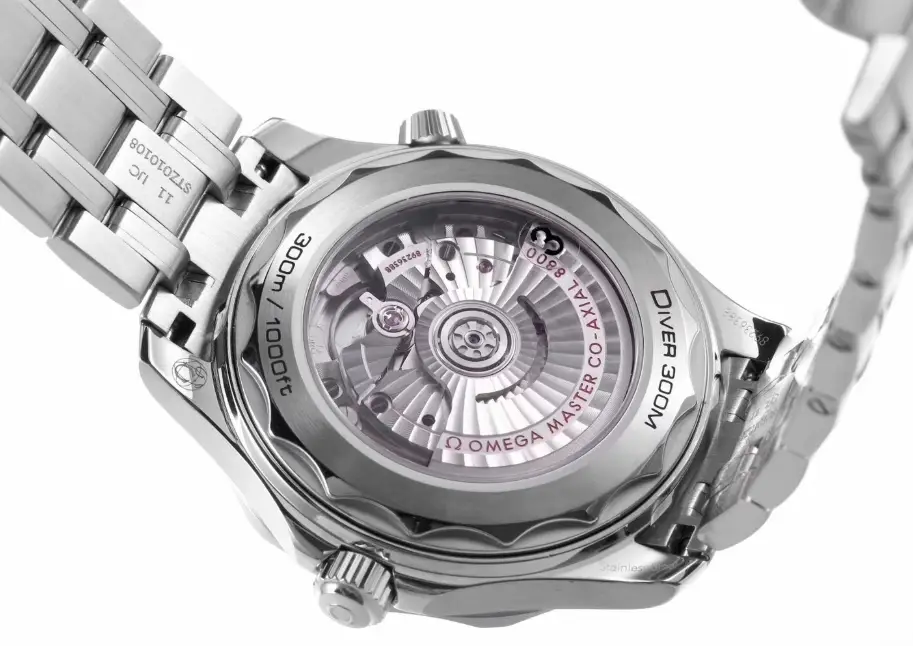
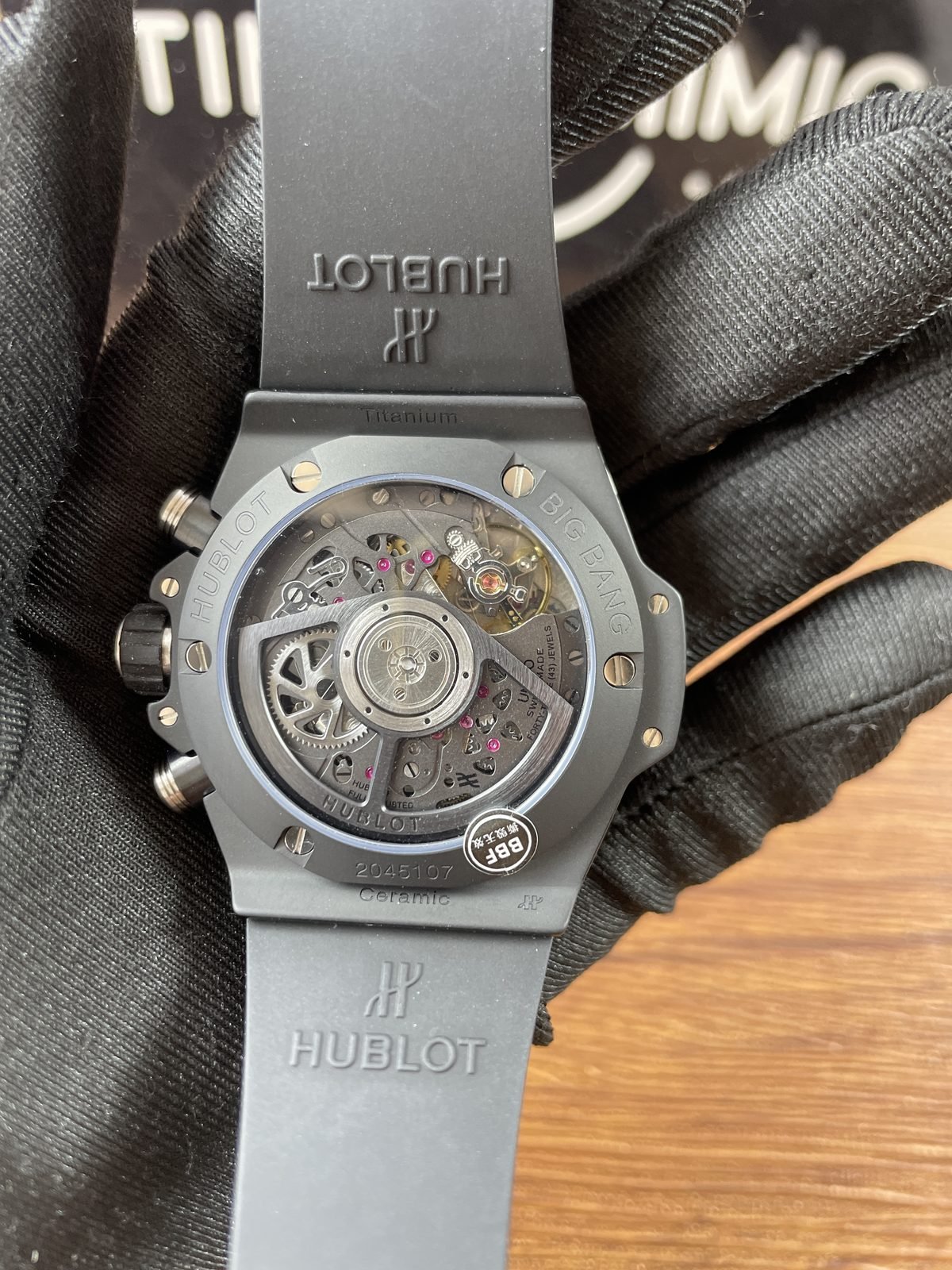
Visible movement photographs are most useful for checking layout, rotor position, screws, obvious contamination, and external condition. They cannot establish metallurgy, hidden tolerances, spring quality, lubrication, or interchangeability of parts. A close visual copy may still behave differently when wound, adjusted, or serviced.
4. Material quality and durability
Case and crystal materials protect the movement from everyday contact, dust, moisture, and impact. Durable case construction, secure seals, and a scratch-resistant crystal can help preserve the watch's condition, but they do not directly regulate its daily rate. The original article's broader point remains useful: a watch that resists damage is more likely to keep performing as intended.
Specific claims such as 904L steel, 316L steel, sapphire crystal, ceramic, or coating thickness should be treated as seller specifications unless independently tested. Photographs cannot verify an alloy or crystal composition. Likewise, a material claim should never be used as evidence of water resistance or movement accuracy.
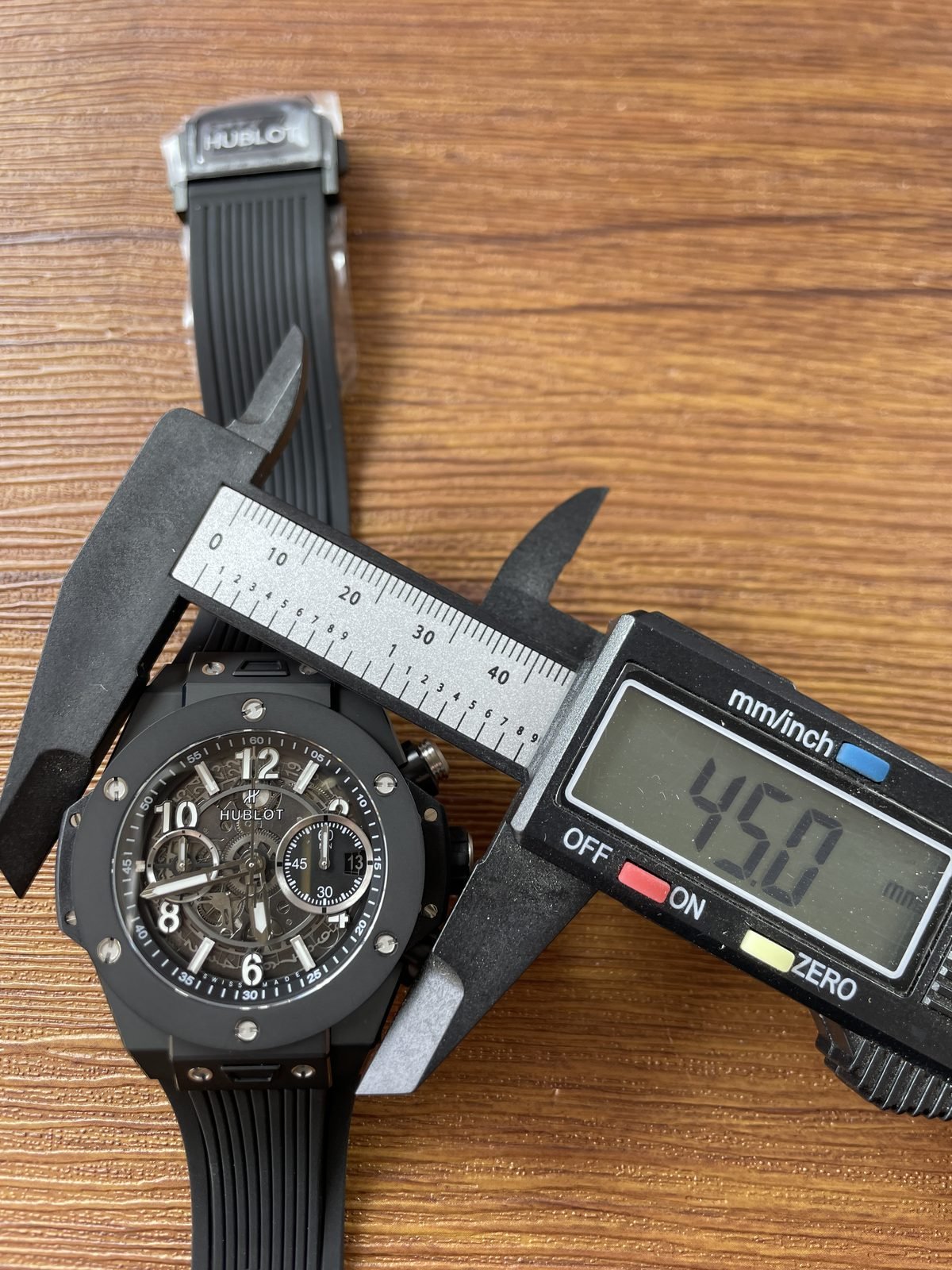
Dimensions also affect protection and wear. Case thickness, width, crown and pusher fit, caseback seating, and strap connection can be documented visually or with measurement tools. One calliper image records one contact point; it does not prove every dimension, instrument calibration, or material grade.
Regulation and repair are different jobs
Regulation adjusts the running rate of a movement that is otherwise healthy. It does not correct worn parts, poor lubrication, contamination, impact damage, or a weak mainspring. If rate, amplitude, or beat error changes sharply, the watch may need diagnosis before an adjustment is attempted.
This distinction matters for replica watches because parts and service information can be limited. Ask whether the seller regulates the actual sample, what happens if the watch arrives far outside the approved reading, and whether a repairer can obtain parts for the named movement. A strong pre-shipment number is useful evidence, but a workable service path is what supports precision over time.
5. Regular maintenance and care
Mechanical watches rely on clean components and appropriate lubrication. Over time, oil can migrate or deteriorate, and shocks, magnetism, contamination, or wear can change the rate. Careful handling, protection from strong magnetic fields and severe impact, and regulation or servicing when performance changes can help maintain accuracy.
Before buying a luxury replica watch, ask whether the installed movement can be serviced locally and whether replacement parts are available. Some watchmakers will not work on replicas, and some decorated or clone-style movements are easier to replace than repair. Maintenance can extend useful life, but it cannot guarantee the longevity of an authentic, well-supported caliber.
6. Limits of long-term precision
A super clone may show a strong short-term timegrapher result and remain consistent in daily use, yet long-term performance depends on parts quality, assembly, shocks, moisture exposure, serviceability, and maintenance history. Authentic luxury movements often benefit from documented specifications, established parts networks, and long-term manufacturer support that a replica may not have.
For that reason, it is safer to judge replica watches sample by sample. Keep the approved QC set, movement description, test image, seller messages, and repair terms. After delivery, compare the watch with a reliable reference time over several days and contact the seller promptly if it stops early, varies sharply, or differs materially from the approved condition.
How super clones pursue accurate timekeeping
Super clone watches aim for precision through movement choice, controlled component manufacturing, careful assembly, regulation, QC testing, durable protection, and later maintenance. These are the same core factors identified in the original article, but none makes every watch equal to an authentic luxury model. The strongest conclusion comes from current evidence for the exact sample, followed by realistic expectations about service and long-term wear.
Looking for a Top-Tier Clone or Custom Build?
Direct access to VS, ZF, 3KF, Clean & BTF factory stock. We provide detailed multi-angle QC photo & video approval prior to final payment.