The Secrets Behind Super Clone Watches: How Are They Made?
Verified Reddit Watch Specialist (RepTime / RepGuild)
Super clone watches attract attention because they aim to reproduce the look and wearing experience of luxury models from brands such as Rolex, Patek Philippe, and Omega at a much lower price. Their resemblance is usually explained as the result of a staged process: studying a reference watch, creating drawings and prototypes, producing components, fitting a movement, finishing the exterior, and checking the assembled sample.
The process is not identical across every maker, and the term super clone is not an independent manufacturing standard. Factory stories can be difficult to verify from outside the supply chain. The best evidence is therefore found in the finished watch, its written specification, current QC images, measured results, and a clear demonstration of its functions.

At a Glance
| Production stage | Typical work | Evidence in the finished sample |
|---|---|---|
| Design | Study layout, dimensions and parts | Proportion and component fit |
| Prototyping | Model, machine and test components | Shape, spacing and operation |
| Assembly | Fit movement, dial, hands, case and bracelet | Alignment and function |
| Quality control | Inspect, measure and test | Photos, readings and videos |
1. What are super clone watches?
Super clone watches are higher-tier replicas made to follow the details of established luxury watches more closely than basic imitations. Producers may focus on case geometry, dial layout, hand shape, date or day displays, bezel construction, bracelet taper, clasp engraving, weight, and movement presentation. Small features matter because several minor differences can make the whole watch look less convincing.
The aim is a luxury replica watch that feels familiar on the wrist and operates in a similar way. That aim does not make the result identical to the authentic model. Different versions may use different movements, materials, coatings, and suppliers, even when listings use the same grade name. Every watch still needs to be judged as an individual sample.
2. Design and engineering: creating the blueprint
The original article begins with close study of the authentic watch. A manufacturer may disassemble or measure a reference piece to understand the relationship between the case, bezel, crystal, dial, crown, bracelet, and internal layout. Case diameter alone is not enough; thickness, lug shape, crown position, bezel width, rehaut depth, and bracelet fit all affect the final silhouette.
Measurements can be translated into computer-aided design models for machining and prototyping. Early components are assembled to expose problems with tolerances, surface transitions, hand clearance, date-window position, or the feel of a crown and clasp. Several revisions may be needed before the parts fit consistently. Claims about reverse engineering or advanced equipment are still claims unless the maker documents them, so buyers should look for the results in the current version.
Dial work presents its own engineering problem. Typography, minute tracks, applied markers, windows, and surface texture must remain correctly spaced after printing and assembly. On models with a magnified date or a curved crystal, the apparent position can change with the camera angle, which is why a straight reference view is more useful than a dramatic product photograph.
3. Materials, machining and surface finishing
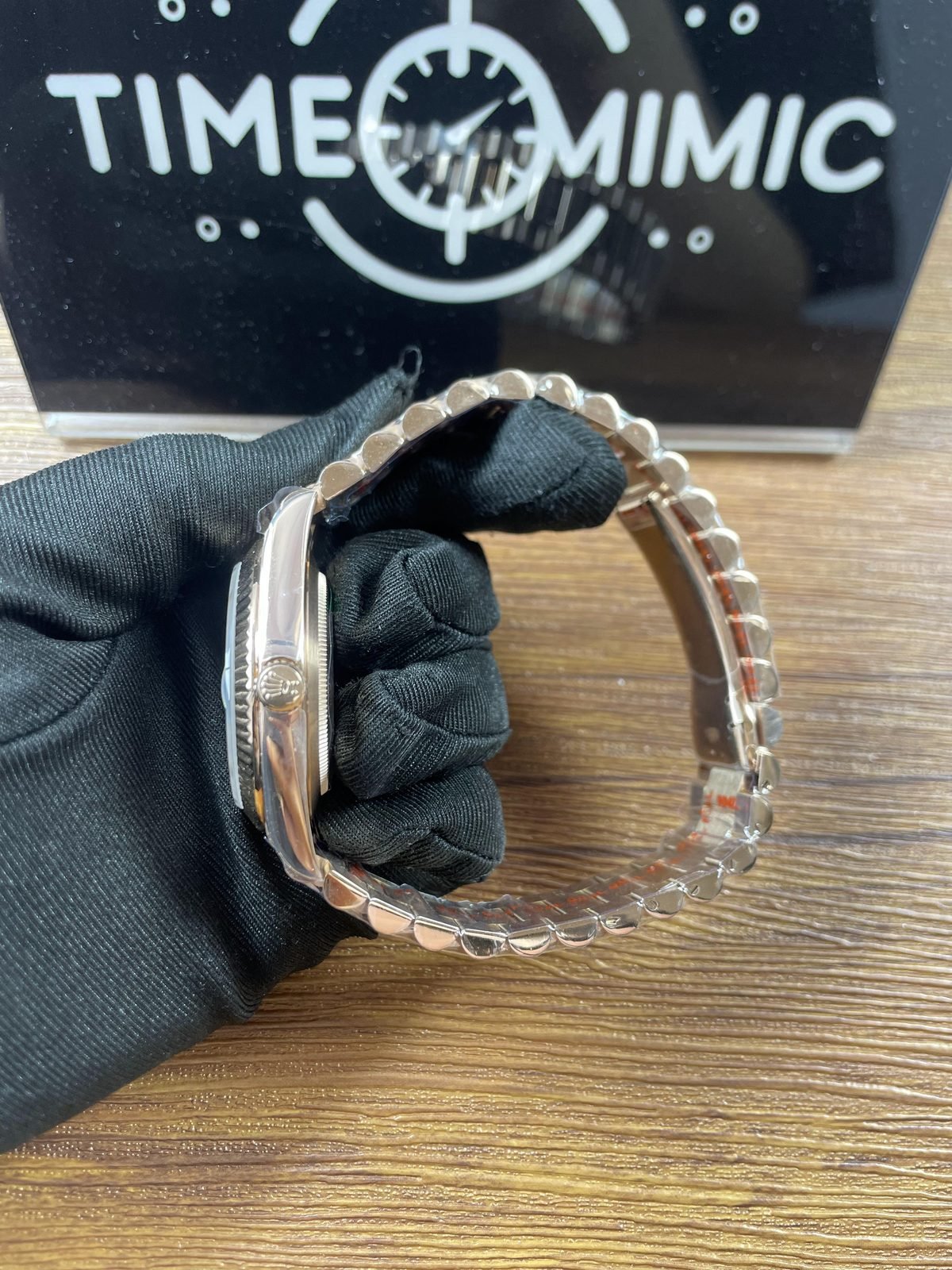
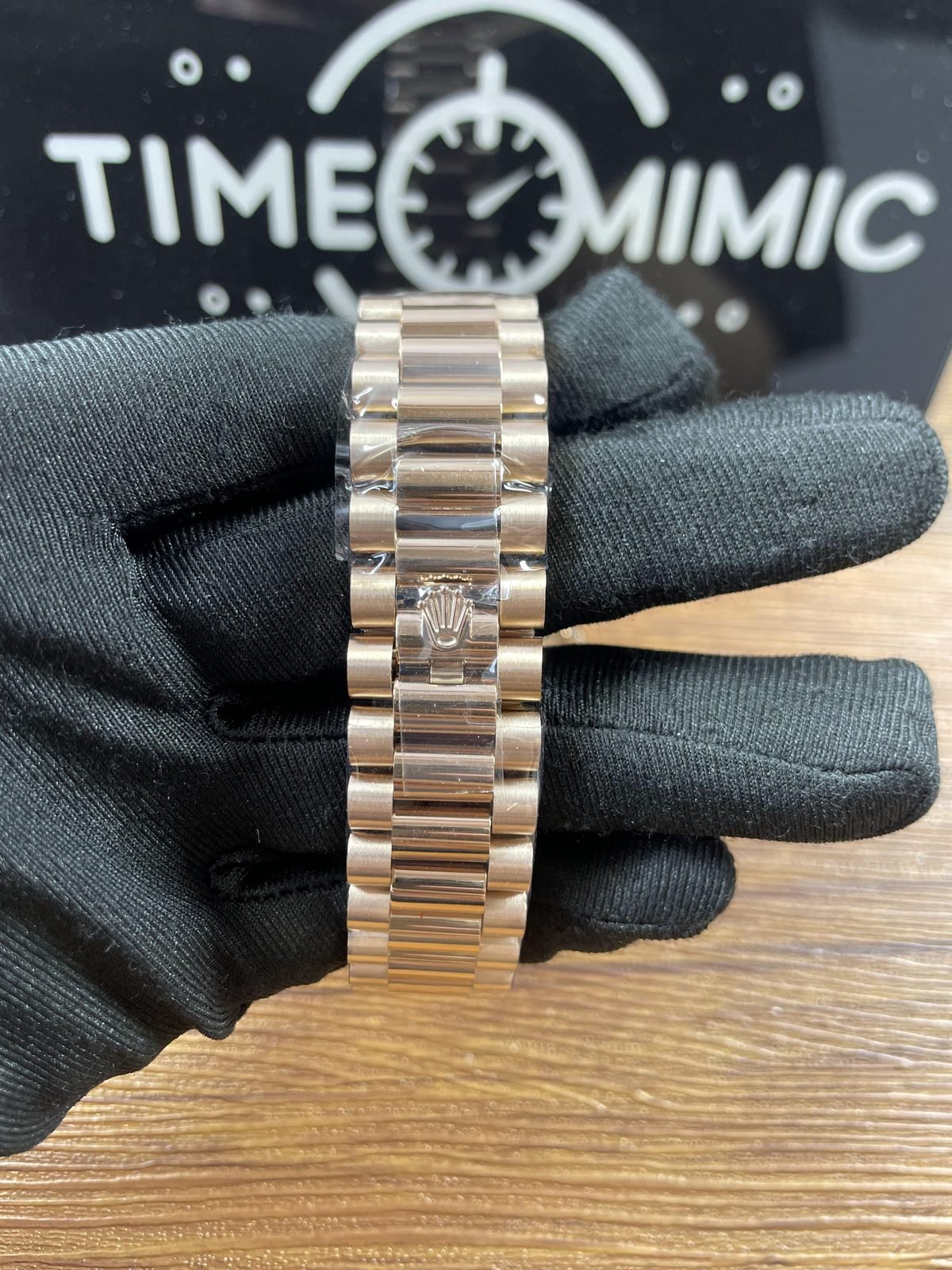
Material choice influences weight, durability, comfort, and appearance. Listings for a high quality replica watch often mention 316L stainless steel, sapphire crystal, ceramic bezel inserts, rubber, or leather. Gold- or platinum-coloured models may use plating or another surface treatment rather than solid precious metal. These descriptions should be confirmed in writing because colour and shine are not reliable proof of composition.
Machining creates the basic forms, while brushing and polishing establish the visible character. Clean edges, even brushing, controlled polishing, consistent gaps, and a bracelet that articulates smoothly suggest better execution. Dial production adds printing, applied markers, windows, and decorative surfaces; hand fitting then requires accurate alignment and enough clearance for the hands to pass without touching.
4. Movement selection and mechanical functions
The movement powers the watch and controls its functions. Replica listings often divide movements into Swiss-labelled and Asian categories, with the former marketed at a higher price. Those labels are too broad to tell a buyer how the watch will perform. The exact movement family, configuration, date-change behaviour, winding direction, service needs, and parts availability are more useful.
Some movements are selected because their hand positions and functions suit the copied design. Others receive decorative plates or rotor finishing to resemble the layout of an original calibre. Decoration does not change the underlying mechanism. A buyer should request timegrapher readings, a winding and setting video, a power-reserve test when available, and proof that each advertised complication actually works.
Day, date, and chronograph displays add assembly and adjustment work. The changeover should be demonstrated through the crown and, where relevant, across midnight. Pushers should start, stop, and reset the intended indicators without hesitation. A rotating bezel should align at its reference point and move with the stated action. These checks reveal function; they still do not prove the movement's origin.
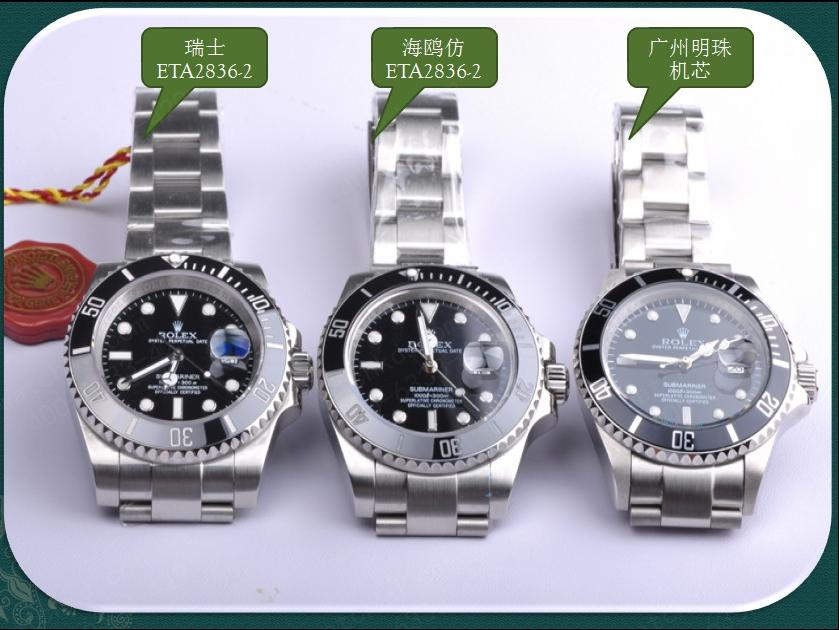
The supplied comparison below places three Submariner-style watches beside different movement descriptions. It captures the marketing comparison in the source material. Similar dials and cases do not reveal what is inside, so the labels need movement-specific evidence.
5. Assembly brings the watch together
During assembly, the dial and hands are fitted to the movement before the unit is secured in the case. The crown and stem must engage cleanly, the crystal and caseback must seat correctly, and the bracelet or strap must meet the case without obvious gaps. Dust, fingerprints, damaged screws, or misaligned hands can enter the process if handling is careless.
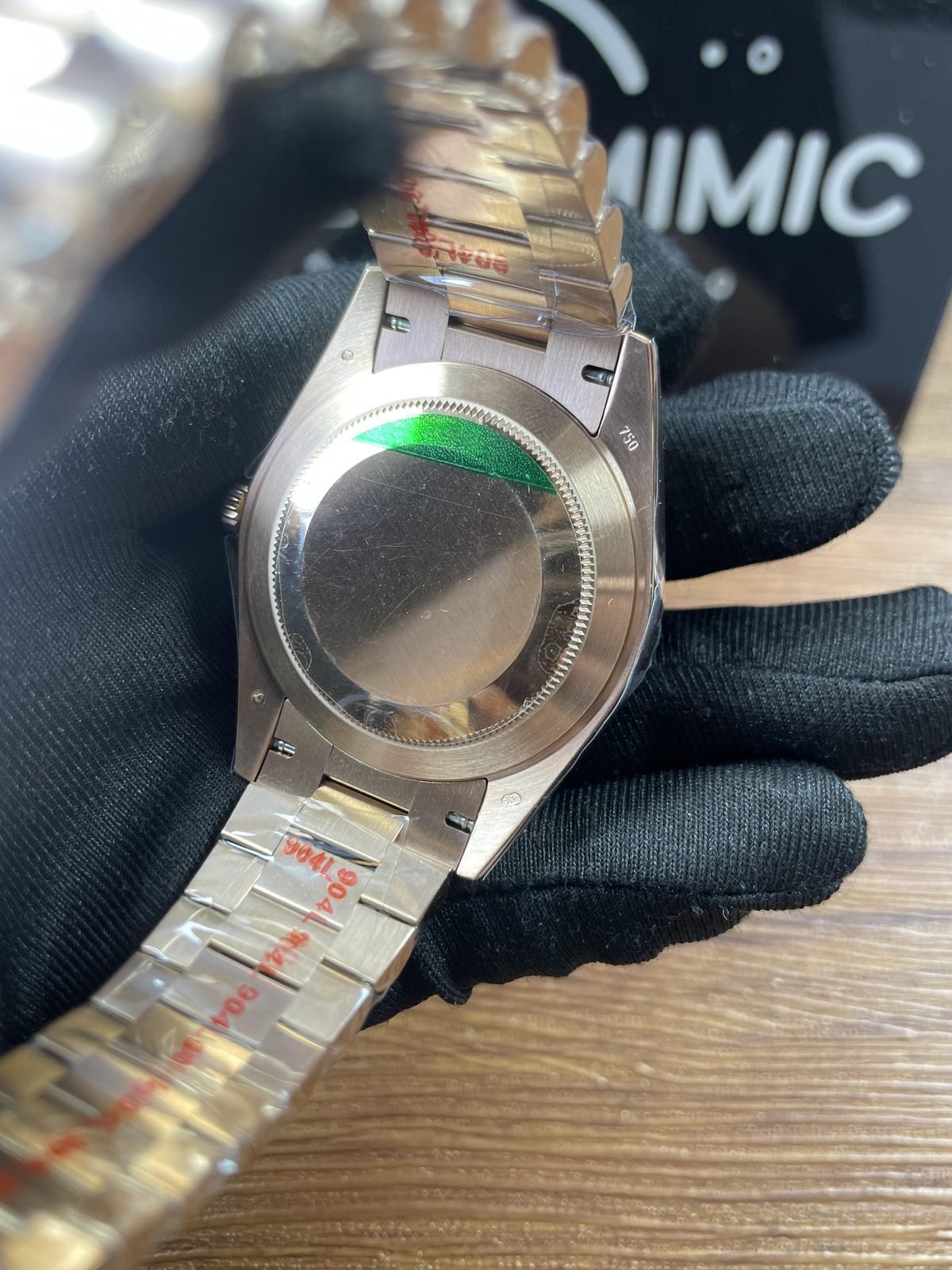
A solid caseback hides the movement, which makes function testing and seller disclosure especially important. Exterior engravings and serial-style markings may be added at this stage or during component production. Their presence improves visual similarity, but it does not create authentic provenance or confirm the mechanism inside.
6. Quality control: inspection and testing
Quality control is meant to catch faults before delivery. A visual inspection covers the dial, markers, hands, logos, day and date displays, bezel, case, crown, bracelet, clasp, and exterior condition. Straight photographs are particularly useful because angled images can hide alignment errors. Measurements of diameter, thickness, lug width, and weight help compare the sample with its written specification.
Mechanical checks should include winding, setting, date change, timing, power reserve, and every advertised function. Water resistance requires a pressure test on the individual watch; a generic rating, screw-down crown, or diver-style appearance is not evidence that a specific sample is safe in water. Test results describe the condition at that moment and do not guarantee future sealing.
QC is a selection checkpoint rather than a lifetime guarantee. The buyer should keep the approved images, readings, and messages, then compare them with the delivered watch before removing films. A small difference in lighting is normal, while a different dial, damaged surface, missing function, or conflicting measurement should be documented promptly under the seller's written policy.
7. Final details, packaging and branding
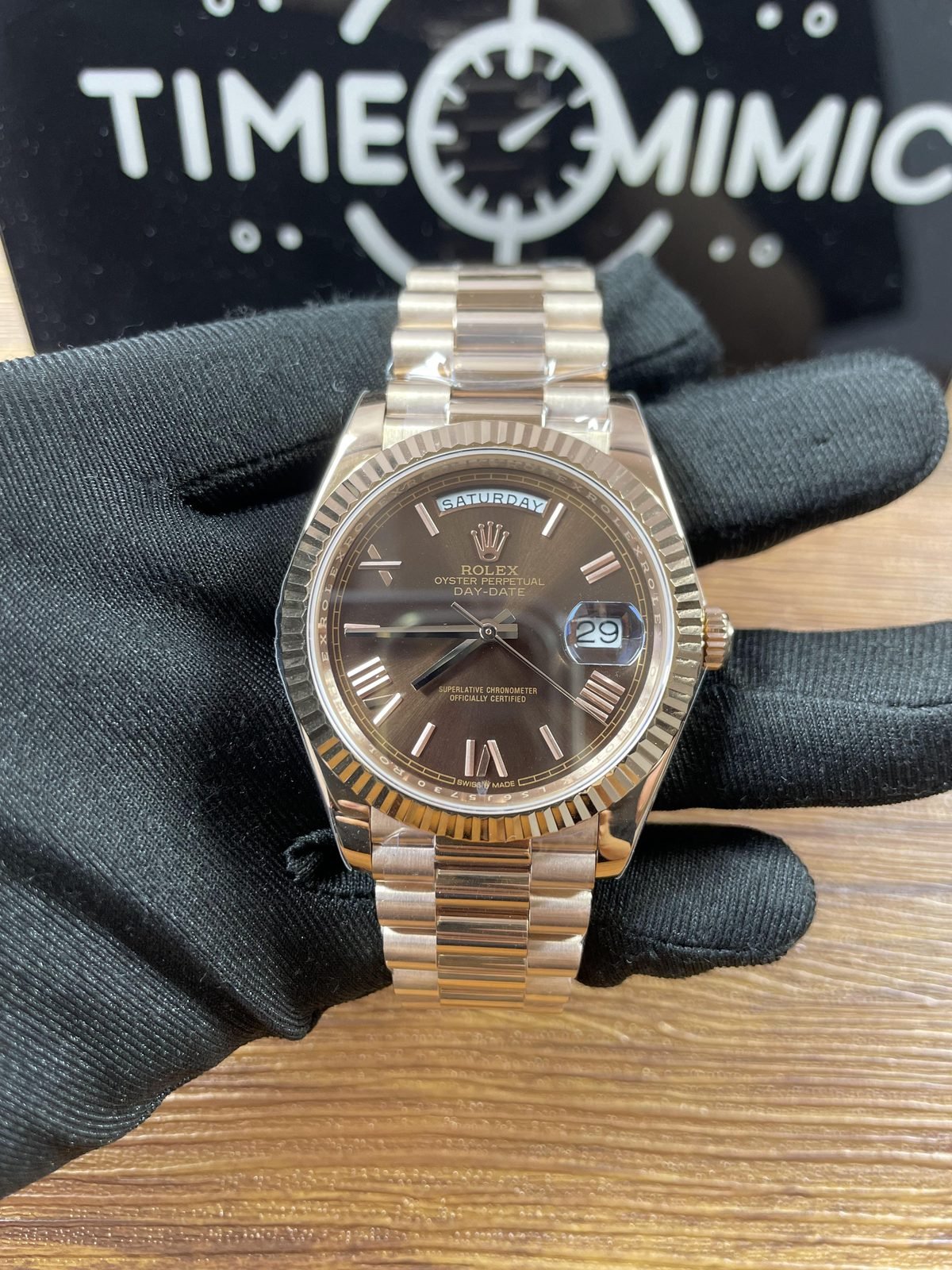
The final presentation may include logos, serial-style markings, clasp or case engravings, protective films, boxes, and paperwork designed to echo the authentic product. These details contribute to the unboxing experience described in the source article, but they are decorative and commercial elements. Replica packaging and papers do not provide brand provenance.
Clear disclosure matters at this stage. A replica and every accompanying item should be represented honestly and must never be sold as genuine. Buyers should also check the laws and customs rules that apply in their location before ordering.
Why people choose super clone watches
The attraction remains the one stated in the original article: access to the design and feel of a luxury watch without paying the authentic price. Better examples can combine recognizable proportions, solid construction, careful finishing, and useful mechanical functions at another price point.
Value depends on the actual watch, not the category name. Movement reliability, accuracy, finish, repairability, seller support, shipping risk, and the cost of future service all shape the ownership experience. Replica watches also have little legitimate resale value and should be treated as wearable products rather than investments.
Maintenance belongs in the budget from the beginning. Regulation, cleaning, lubrication, gasket replacement, or a movement swap can cost more than expected when local watchmakers decline replica work. A lower purchase price remains an advantage, but long-term value is clearer when likely service and replacement costs are included.
Final thoughts
Making super clone watches can involve reference study, CAD work, prototyping, component production, movement fitting, hand assembly, surface finishing, and inspection. Attention at each stage helps explain why stronger examples look and feel more convincing than basic copies.
The safest way to evaluate the finished result is to connect each claim to evidence. Confirm the exact version, written materials and movement, review the current sample from several angles, check measurements and timing, test every function, and understand the seller's remedy if the delivered watch differs from the approved QC set.
Looking for a Top-Tier Clone or Custom Build?
Direct access to VS, ZF, 3KF, Clean & BTF factory stock. We provide detailed multi-angle QC photo & video approval prior to final payment.