Everything You Need to Know About High-Quality Super Clone Watches
Verified Reddit Watch Specialist (RepTime / RepGuild)
A high-quality super clone watch is not defined by a seller’s grade, a factory nickname, or a close-up photo. Quality means that the exact watch offered to you has credible evidence behind its appearance, dimensions, functions, movement, timekeeping, seals, bracelet, and after-sale support. You should be able to see what was checked, understand what was not checked, and decide whether the remaining uncertainty fits your budget.
That definition is more useful than terms such as “AAA,” “1:1,” “Swiss,” or “best version.” Those labels have no shared testing standard. Two sellers can use the same phrase for very different watches, and even two pieces from the same production run can arrive with different alignment, regulation, dust, or handling marks.
Treat “high quality” as a claim that must be broken into separate questions. A good-looking dial cannot prove the movement, a timegrapher screen cannot prove durability, and a pressure test cannot prove authenticity.
What high quality should mean to you
| Quality area | Evidence worth requesting | What the evidence can support | What it cannot prove |
|---|---|---|---|
| Exterior finish | Straight, current photos of the reserved sample in neutral light | Visible alignment, surface condition, finishing transitions, and obvious defects | Metal grade, crystal composition, internal construction, or future wear |
| Dimensions and fit | Caliper and scale photos of the exact watch | Approximate diameter, thickness, lug-to-lug length, bracelet range, and weight | Comfort on your wrist or whether the material claim is true |
| Functions | One continuous video showing crown positions and every advertised function | Whether the functions operate during the recording | Long-term reliability, shock resistance, or performance after shipping |
| Movement and timing | Clear movement photo plus a timegrapher video with position stated | Visible movement layout and one timing result under stated conditions | Factory origin, certification, future accuracy, or parts availability |
| Water resistance | A dated pressure-test result tied to the sample | Performance during that test at that moment | Safe use after shipping, opening, impact, gasket aging, or later service |
| Seller support | Written return, defect, repair, and shipping terms | What the seller promises and the claim deadline | That the seller will remain available or match an original brand’s service network |
You do not need every test for every purchase. You do need evidence for the features that matter to you. If you plan to wear the watch only in dry conditions, a pressure test may be less important than a comfortable bracelet. If you care about a chronograph, a full operation video matters more than a polished case-back photo.
1. Start with the exact sample, not the seller’s best photographs
Catalog images show what a seller wants the model to look like. They may be old, edited, borrowed, or taken from a better sample. Your decision should be based on the watch reserved for your order.
Ask for a dated set of straight photographs: dial, bezel, both case sides, crown, case back, bracelet, end links, clasp, and any engraved areas. Request a short video that starts with the order reference or another agreed identifier and then shows the same watch from every angle. The purpose is not to make the watch look dramatic. It is to remove ambiguity about which piece will be shipped.
Look at relationships rather than isolated details. Is the dial centered inside the rehaut? Do the bezel marks align with the dial? Are the hands parallel and free of visible contact? Do the end links sit evenly? Does the clasp close squarely? Is brushing consistent, and are polished edges free from obvious waves or rounding?
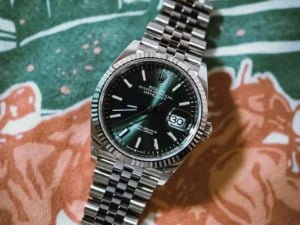
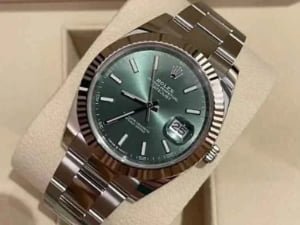
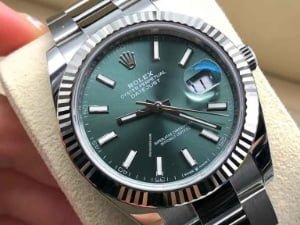
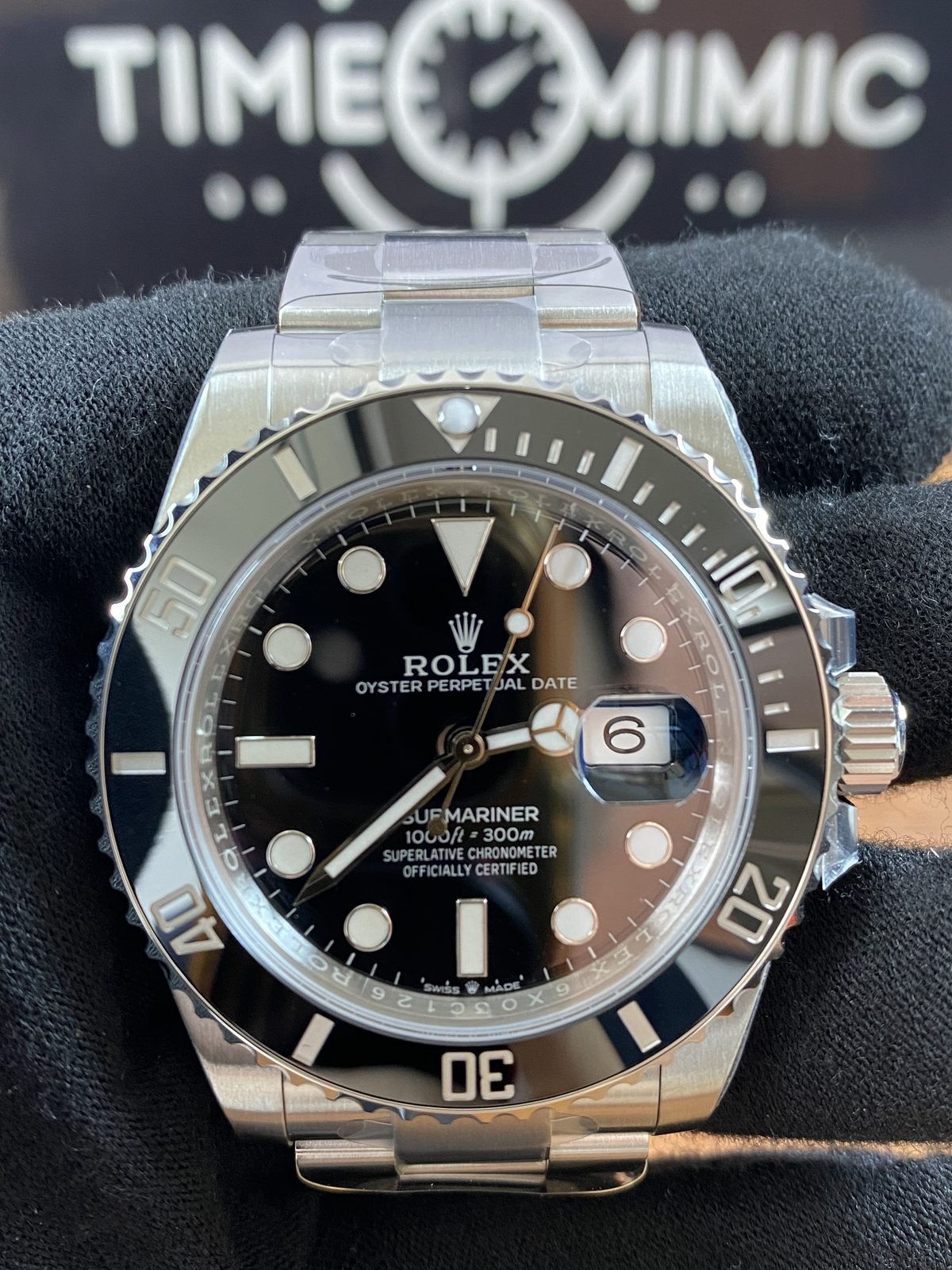
A rolex super clone or omega super clone can look convincing from the front while still having a crooked date, uneven lume, a loose end link, or a damaged screw. High quality replica watch QC begins with ordinary defects because these are the issues you will notice every day. This is true across replica watches, regardless of the seller’s preferred grade name.
2. Measurements tell you more than the phrase “same as original”
The authentic model’s catalog dimensions describe the authentic watch. They do not automatically describe a replica. Case thickness can change when a different movement, crystal, gasket, or case-back structure is used.
Ask the seller to measure the reserved sample with calipers and a scale. Record case diameter, thickness, lug-to-lug length, lug width, bracelet range, clasp length, and total weight. Request a straight side view that includes the crystal and case back. A watch with the right diameter can still wear tall or top-heavy.
Compare the numbers with your wrist and with a watch you already find comfortable. If your current watch is 47 mm lug to lug and nearly fills your wrist, a 51 mm case may overhang even if its advertised diameter sounds familiar. Bracelet taper, first-link articulation, clasp length, and available micro-adjustment also affect fit.
Weight can reveal a mismatch, but it does not identify a material by itself. Two watches made from different alloys can weigh similarly, while bracelet sizing can change the result. Use weight as one data point, not a metallurgy test.
3. Movement quality requires identity, function, and serviceability
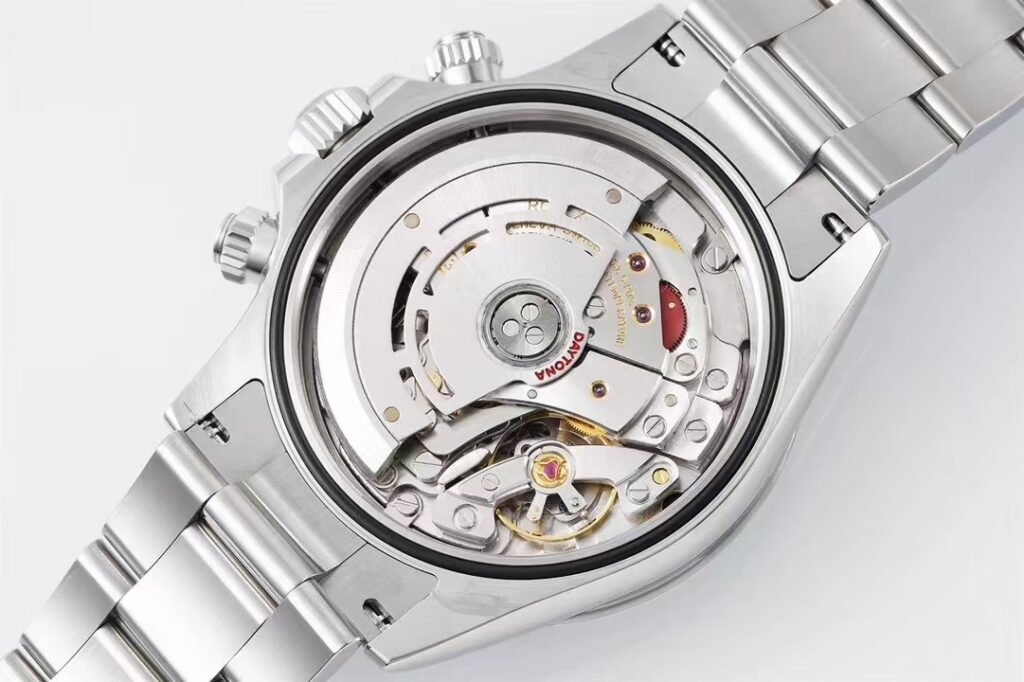
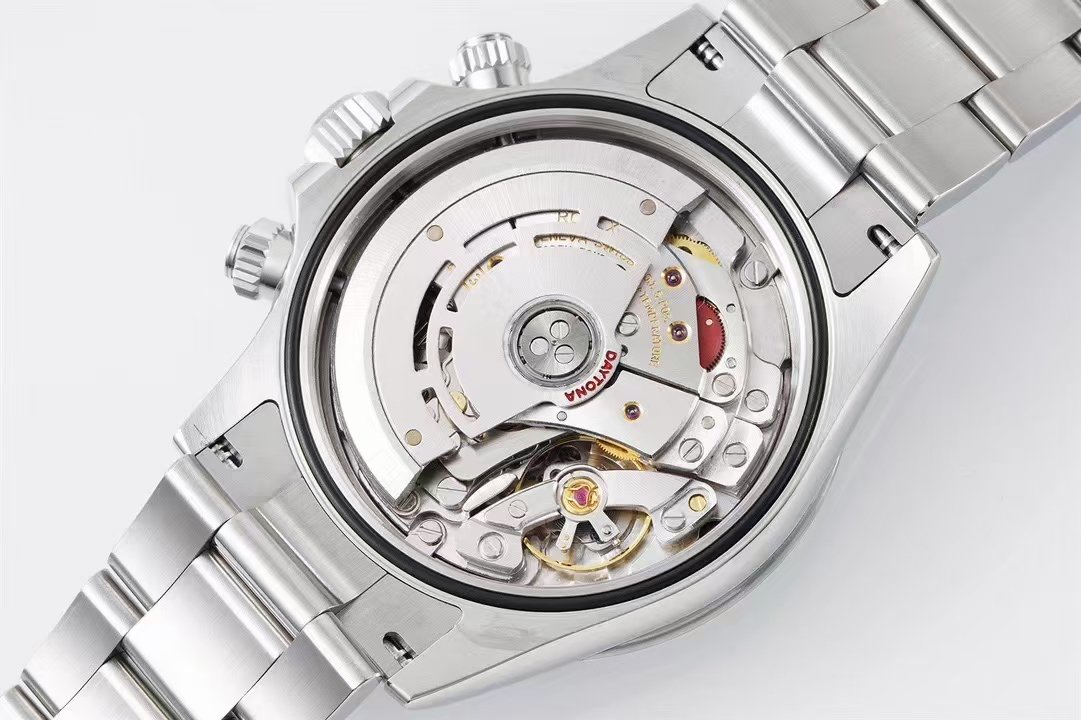
Movement decoration is easy to photograph and easy to overinterpret. A branded rotor or copied bridge shape does not establish where a movement was made, who assembled it, or how easily it can be repaired.
Ask for a clear movement photo before you buy. Then ask a local watchmaker whether the movement is recognizable and whether routine parts are likely to be available. You are trying to answer practical questions: Can the movement be regulated? Can the crown, stem, mainspring, rotor bearing, or reversing system be serviced? Would a repair cost more than replacement?
Published movement specifications help you understand why an exact caliber matters. MIYOTA lists dimensions, functions, and expected accuracy ranges for its movements, while ETA describes distinct mechanical product families and technologies. Those official specifications apply only when the actual movement is correctly identified. A seller’s phrase such as “Japanese movement” or “Swiss movement” is too broad to establish a caliber or performance range.
For a simple three-hand watch, reliable setting, winding, date change, and hand clearance may be more valuable than elaborate decoration. For a chronograph or GMT, ask the seller to demonstrate every function in one continuous recording. Confirm that the hands start, stop, reset, and advance in the way described. A decorative subdial that does not perform the expected function changes the value of the watch.
4. Timegrapher evidence is useful when you read it narrowly
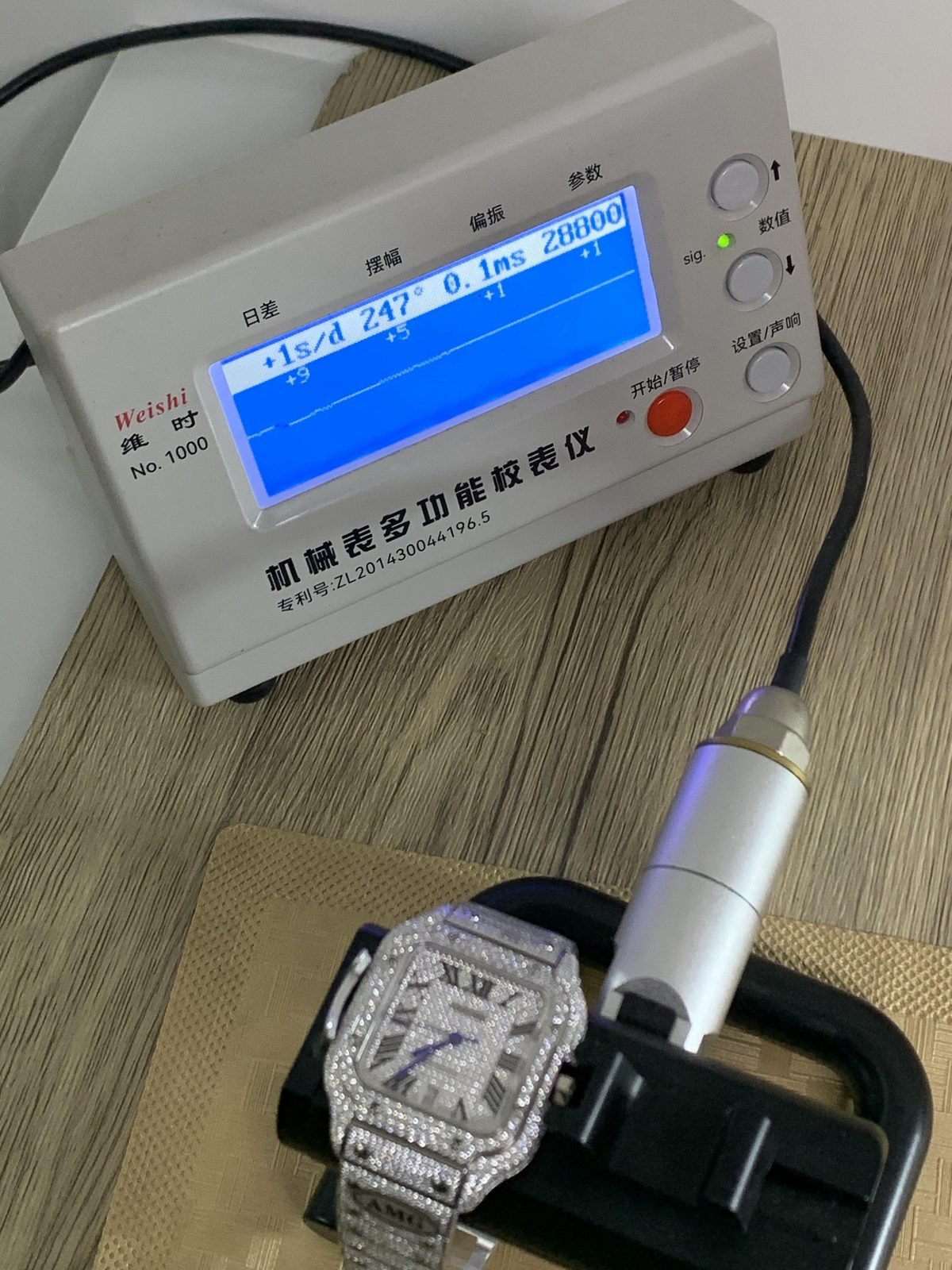
A timegrapher can display rate, amplitude, beat error, and beat rate for a mechanical watch under one test setup. It is a useful screening tool, especially when the video shows the watch being placed on the machine and the result stabilizing.
Ask which position was tested, how fully the watch was wound, how long the reading ran, and which lift angle was entered. A single face-up result cannot tell you how the watch performs crown-up, crown-down, across its power reserve, or during daily wear. Shipping and impact can also change regulation.
Independent certifications use wider procedures. METAS explains that Master Chronometer certification covers the complete watch and includes chronometric performance, magnetic resistance, water resistance, and power reserve. One attractive timegrapher number is not equivalent to that certification.
Your practical goal is consistency, not a magical number. If the watch shows an unstable trace, extreme beat error, or a result that changes sharply during the recording, ask for another test or reject the sample. After delivery, measure real wear over several days before paying for regulation.
5. Materials and crystal claims need separate proof
Terms such as “904L steel,” “sapphire,” “ceramic,” and “solid gold” sound precise because they name real materials. The listing still needs evidence. Appearance alone is weak proof. Lighting, coating, polishing, and image processing can make different materials look alike.
Ask what document or test supports the claim and whether it belongs to the exact product. If material composition affects your health, durability expectations, or price decision, arrange independent inspection. Avoid destructive tests on a new watch without professional guidance.
Watch-glass standards show how specific a technical claim can become. ISO maintains separate standards for mineral and sapphire watch glasses, including qualitative criteria, assembly, and anti-reflective treatment. A seller’s scratch video or water-drop demonstration does not cover all of those properties.
The same caution applies to “Swiss Made.” The Swiss Federal Institute of Intellectual Property describes legal requirements tied to manufacturing costs, movement content, and technical development. A printed word on a movement or dial does not prove compliance with those origin rules.
6. Water resistance is a test result, not a design impression
A screw-down crown, thick case back, or diver-style bezel does not prove water resistance. Sealing depends on tolerances, gaskets, crown tubes, crystal installation, case-back condition, assembly, and testing.
ISO 22810 establishes requirements and test methods for watches marketed as water resistant. Divers’ watches use a different standard. If your seller does not identify a test method, pressure, duration, and result, treat the rating as unverified.
For the reserved sample, ask for a dated dry pressure-test video or report that links the result to the watch. After delivery, have a trusted local watchmaker repeat the test before swimming. Test again after the case is opened or the watch receives a hard impact. Gaskets age, and a result from one day is not a permanent guarantee.
Until you have usable evidence, keep the watch dry. This one habit prevents a marketing claim from becoming an expensive repair.
7. Bracelet, crown, and clasp quality shape the daily experience
Small contact points determine whether you enjoy wearing a watch. A sharp bracelet edge, stiff crown, loose clasp, or rattling end link can make a visually accurate replica watch feel poor on the wrist.
During QC, ask the seller to move the bracelet through its range, open and close the clasp, operate the micro-adjustment, unscrew and screw the crown, wind the watch, set the time, and change the date. Look for grinding, slipping, cross-threading, excessive play, or a crown that sits crooked when closed.
Check screw heads and removable links. Damaged slots may make sizing difficult. Ask whether spare links, spring bars, screws, gaskets, or a replacement crown can be supplied. A repairable watch with ordinary parts may serve you better than a visually elaborate movement with no practical parts route.
Comfort is personal, so keep your approval conditional until the watch arrives. Film the sealed package, open it on camera, and inspect it before removing films or sizing the bracelet. This preserves evidence if the watch differs from the approved sample.
8. Seller quality is part of watch quality
A technically good sample can still become a bad purchase if the seller’s terms are vague. Before payment, get the model, options, total price, shipping method, claim window, return address, defect policy, repair process, and responsibility for return shipping in writing.
The Federal Trade Commission’s online shopping guidance recommends checking sellers, reading delivery and return policies, using practical payment protections, and keeping transaction records. The FTC also notes that unusually low prices for expensive brand-name goods can indicate counterfeits or scams.
Use a payment method with a documented dispute process. Do not move outside a marketplace’s protected system because a seller offers a small discount. Save screenshots of the listing, your questions, the seller’s answers, the approved QC, the invoice, and the tracking. If the delivered product is wrong or defective, those records matter more than a verbal promise.
Also price the first year, rather than stopping at checkout. Include shipping, tax, duty, customs risk, bracelet sizing, pressure testing, regulation, an early repair, and return postage. A lower purchase price can stop being affordable when support is weak.
9. High quality does not remove legal or authenticity limits
A super clone remains a replica even when the case is well finished and the movement runs well. It does not become authentic through visual accuracy. Official brand service, warranty, records, and certification belong to watches recognized by the brand.
Import, possession, and resale rules differ by destination. Customs authorities may detain counterfeit goods, and traveler exemptions can be narrow. The European Commission warns about intellectual-property violations and advises buyers to question suspiciously low prices and supply-chain claims. Check the law and customs rules where you live before ordering.
Never sell a replica as authentic. Keep your own purchase records and disclose the watch’s status if local law allows a later transfer. If provenance, authorized service, and predictable resale matter to you, buy through an authorized retailer or a documented authentic secondary-market route.
A sample-level checklist before you pay
| Check | Acceptable evidence | Walk away when |
|---|---|---|
| Exact watch reserved | Dated photos and one continuous video tied to your order | The seller sends only catalog media or refuses to identify the sample |
| Size and fit | Caliper, scale, side-view, bracelet-range, and clasp photos | Measurements are copied from the authentic model without checking the sample |
| Functions | Continuous demonstration of winding, setting, date, and complications | The seller avoids a function, cuts the video, or changes the explanation |
| Movement and timing | Clear movement view, stated caliber evidence, and a stable timegrapher recording | Origin or performance is asserted only with a sticker, engraving, or grade name |
| Materials and crystal | Credible specification or independent test where the claim matters | The proof is a visual trick, generic certificate, or unrelated sample |
| Water exposure | Named pressure test tied to the sample, repeated locally after delivery | “Waterproof” is promised without a method or result |
| Terms and payment | Written claim window, repair route, return responsibility, and protected payment | Payment is irreversible or key terms change after QC |
Approve only when the remaining unknowns are acceptable. You are not trying to prove that every component matches an authentic watch. You are deciding whether this particular product, at this total cost, meets your own use case.
Final answer
High-quality super clone watches are the pieces that survive a clear, sample-specific review. When you judge a high quality replica watch, the strongest signs are consistent exterior QC, measured dimensions, complete function evidence, a recognizable and serviceable movement, a timegrapher result read in context, honest limits around materials and water resistance, comfortable controls, and written seller support. The same standard should apply to any luxury replica watch that asks you to pay more for a quality claim.
No single photo, grade, factory name, or test can answer every question. Build your decision from several narrow pieces of evidence, keep records, use protected payment, and budget for independent checks after delivery. If a seller will not let you verify the exact watch, the quality claim is not strong enough to rely on.
Looking for a Top-Tier Clone or Custom Build?
Direct access to VS, ZF, 3KF, Clean & BTF factory stock. We provide detailed multi-angle QC photo & video approval prior to final payment.