Everything You Need to Know About Buying Super Clone Watches
Verified Reddit Watch Specialist (RepTime / RepGuild)
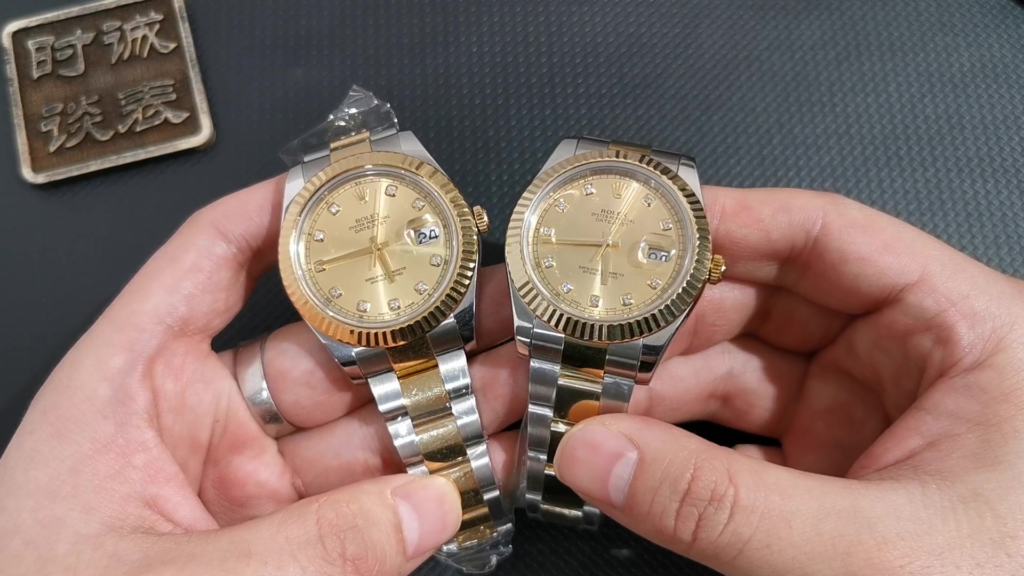
Buying super clone watches is easier when you treat the purchase as a small evidence project. You are choosing an exact configuration, evaluating one reserved sample, agreeing to transaction rules, accepting import and service risks, and checking the delivered watch before your claim window closes.
A polished listing does not complete any of those jobs. Grade names such as “one-to-one,” “Swiss,” “top factory,” or “best edition” have no shared independent definition. The useful questions are specific: What is this watch supposed to be? What can the seller prove about this unit? Which defects will you accept? What happens if the package or watch does not match the agreement?
Search language can blur those questions. Phrases such as “buy replica watches,” “best replica watches,” “high quality replica watch,” or “replica watch online” describe shopping intent, not an independently verified grade. This super clone watch guide brings each phrase back to the exact unit, written terms, and evidence you can check.
Build the evidence before you send money. If the seller cannot support an essential claim, remove that claim from your decision or choose a different watch.
First, understand what you are buying
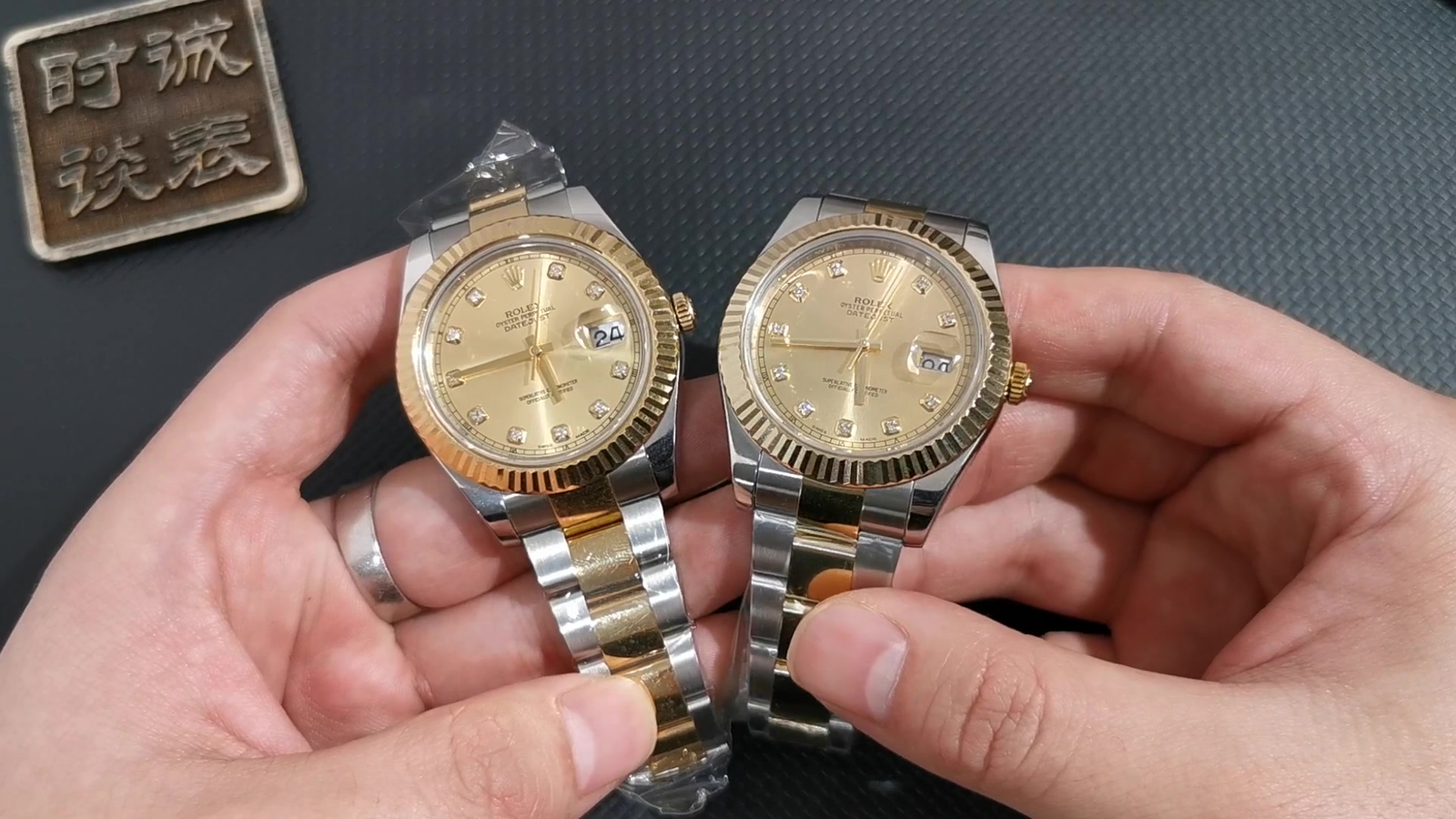
A super clone is a replica that aims for a closer visual and sometimes functional resemblance to a luxury watch. It is still a replica. It does not gain the original manufacturer’s identity, provenance, certification, warranty, authorized service, archive record, or recognized resale position.
That distinction helps you set the right goal. You may want a familiar dial layout, case shape, bracelet style, color, or complication display for personal wear. You may also value a mechanical movement and sample-level finishing. Those are product questions that you can investigate.
If your priority is authentic ownership, brand service, official records, or predictable resale, a replica cannot meet it. Compare an authenticated pre-owned watch, an homage under its maker’s own name, or an affordable original watch before deciding.
Never present a replica as authentic. Rules for sale, possession, import, and travel vary by location. Check the law and customs practice that apply to you before ordering.
Use five buying gates
The process below turns an attractive listing into a decision you can audit. Each gate should produce a written result before you move forward.
| Buying gate | Your question | Evidence to collect | Stop when |
|---|---|---|---|
| 1. Fit and configuration | Is this the exact version you want and can wear? | Reference target, dimensions, weight, bracelet range, color, functions, and option list | The seller cannot identify the configuration or measurements conflict with your needs |
| 2. Seller and terms | Can you identify the seller and understand the transaction? | Contact route, recent history, written QC, return, shipping, and claim terms | Answers change, protection is unclear, or payment must move outside an agreed system |
| 3. Reserved-sample QC | Is this individual watch acceptable? | Current photos, continuous video, measurements, visible function checks, and rejection deadline | Images are stock, sample identity changes, or an essential defect appears |
| 4. Payment and delivery | Can you afford the total loss and respond to a problem? | Final invoice, fees, protection rules, shipment method, tracking, insurance, and import responsibility | The loss exceeds your limit or practical recourse disappears |
| 5. Receipt and ownership | Does the delivered watch match, work, and have a service path? | Unboxing video, QC comparison, timing log, pressure test if needed, and repair contact | The watch is materially different, unsafe to use, or unsupported within the claim window |
Do not let a later gate repair a failure in an earlier one. An attractive QC set cannot fix unsafe payment terms. A good movement cannot make an uncomfortable case fit your wrist. A promise of replacement is weak when the return process is not written.
Define the exact configuration before discussing quality
Start with a one-page specification sheet. Record the design reference you are using for comparison, case size, thickness, lug-to-lug length, bracelet or strap, dial and bezel color, clasp type, movement claim, functions, included accessories, and total price.
Ask which details describe the seller’s listing and which describe the exact reserved watch. An original manufacturer’s dimension is only a comparison target. It does not prove that the replica matches it.
Fit deserves priority. Compare the measurements with a watch you already wear comfortably. Lug-to-lug length, first-link spread, case-back shape, thickness, clasp length, and bracelet range can matter more than diameter. Request caliper and scale photographs when a measurement affects your decision.
Function claims should be literal. A chronograph-looking dial may not operate like the original. A GMT hand may be independently adjustable or merely linked. Ask the seller to list every working function and show each one in a continuous video.
Translate seller claims into evidence
Words are cheap until they connect to a method. Use a claim-and-proof table so you know what a photo or test can actually establish.
| Seller claim | Useful evidence for the exact sample | What the evidence still cannot prove |
|---|---|---|
| Accurate dimensions and weight | Caliper and scale images with measuring points and bracelet setup visible | Material composition, internal construction, or comfort on your wrist |
| Clean dial and case | Sharp front, side, rear, and angled photos under more than one light | Hidden parts, future wear, or authenticity |
| Identified movement | Clear movement photos plus architecture and caliber information a watchmaker can compare | Assembly quality, lubrication, component origin, or future durability |
| Good timekeeping | A stated timegrapher setup and several days of real-use observation after delivery | Performance in every position or long-term reliability |
| Water resistance | A dated pressure-test method and result tied to the same unit | Permanent resistance after shipping, opening, damage, or seal aging |
| Premium material or coating | Reliable documentation or suitable material and coating tests | Other untested properties or manufacturer identity |
| Easy returns | Written address, deadline, condition rules, cost allocation, and refund method | Cooperation when a dispute occurs or customs acceptance of the return |
ISO’s horology catalogue separates water resistance, shock resistance, magnetism, glass, coatings, wear, and other properties into different standards. That is a useful buying lesson: one result does not prove everything about a watch.
Check the seller before checking the dial
A seller review is more useful when it tests identity, consistency, and problem handling. Look for a stable contact route, recent transaction history, clear terms, and examples of how issues were resolved. Search the seller or site name with words such as complaint, review, refund, or scam. Read more than the star rating.
The FTC’s marketplace guidance recommends checking the seller, actual-item photos, platform protection, payment method, return policy, and deadlines. It also warns that an encrypted HTTPS page does not prove a site is legitimate.
Ask practical questions before discussing a specific sample:
- When is the reserved unit assigned and how is it identified in QC?
- How long do you have to review QC, and what reasons allow rejection?
- What happens after one rejection?
- Who pays if the shipped watch differs materially from approved QC?
- What are the claim and return deadlines after delivery?
- Is the return address in the same country as the shipping origin?
- Who bears shipping, customs, tax, insurance, and seizure loss?
Save the answers. If important terms remain in voice messages, summarize them in writing and ask the seller to confirm.
Make QC about your reserved sample
QC means quality control only when it helps you decide whether to accept a particular unit. Stock photos, factory photos, and review videos may show the general design, but they do not establish the condition of your watch.
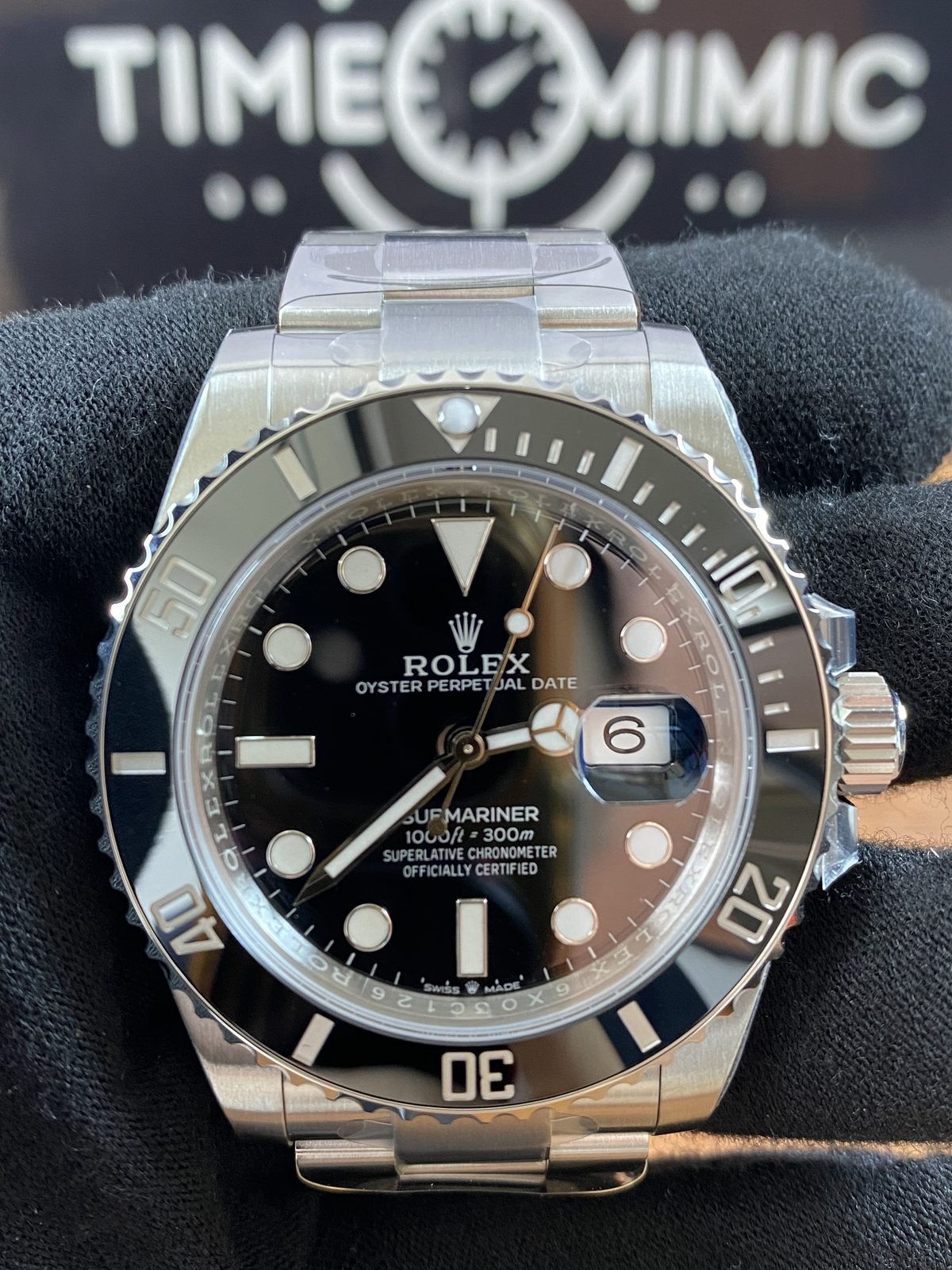
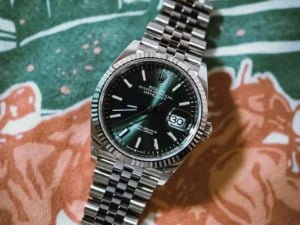
Request a current identifier in the frame. Ask for the front, back, both sides, crown, crystal edge, bezel, bracelet, end links, clasp, case back, and any area that matters to you. The front-view QC image below is a visible example: it can support observations about alignment and exterior condition, but it does not prove authenticity, exact materials, movement origin, water resistance, or durability.
Add one continuous video. It should show the identifier and watch together, then winding, setting, date change, and every advertised function. A continuous sequence reduces the chance that separate photos show different units.
Decide your acceptance rules before the files arrive. Separate essential requirements from preferences. A stopped movement, wrong color, damaged crystal, non-working function, or major dimension error may be automatic rejection. A tiny dust speck or small printing difference may be a preference. Your list prevents excitement or extreme magnification from moving the standard during review.
Keep the original QC files, not screenshots alone. Record the date, seller, order, claimed configuration, accepted defects, and approval message.
Treat movement identity and service as separate questions
Movement choice affects case thickness, winding and setting, noise, timing, power reserve, function behavior, parts access, and repair cost. A decorated bridge or engraved rotor may resemble an original caliber without identifying the mechanism underneath.
Ask for the exact caliber and a clear movement image. Real movement makers publish model-specific information. MIYOTA’s 8215 page lists dimensions, functions, frequency, jewels, running time, and an accuracy range. A seller phrase such as “Swiss movement” or “clone movement” gives a watchmaker much less to work with.
Find a repair route before payment. Ask a local watchmaker whether they accept replicas, recognize the claimed base movement, can obtain parts, and would service or replace it after a major failure. Some shops decline counterfeit products, while official brand service may refuse a replica or hybrid watch.
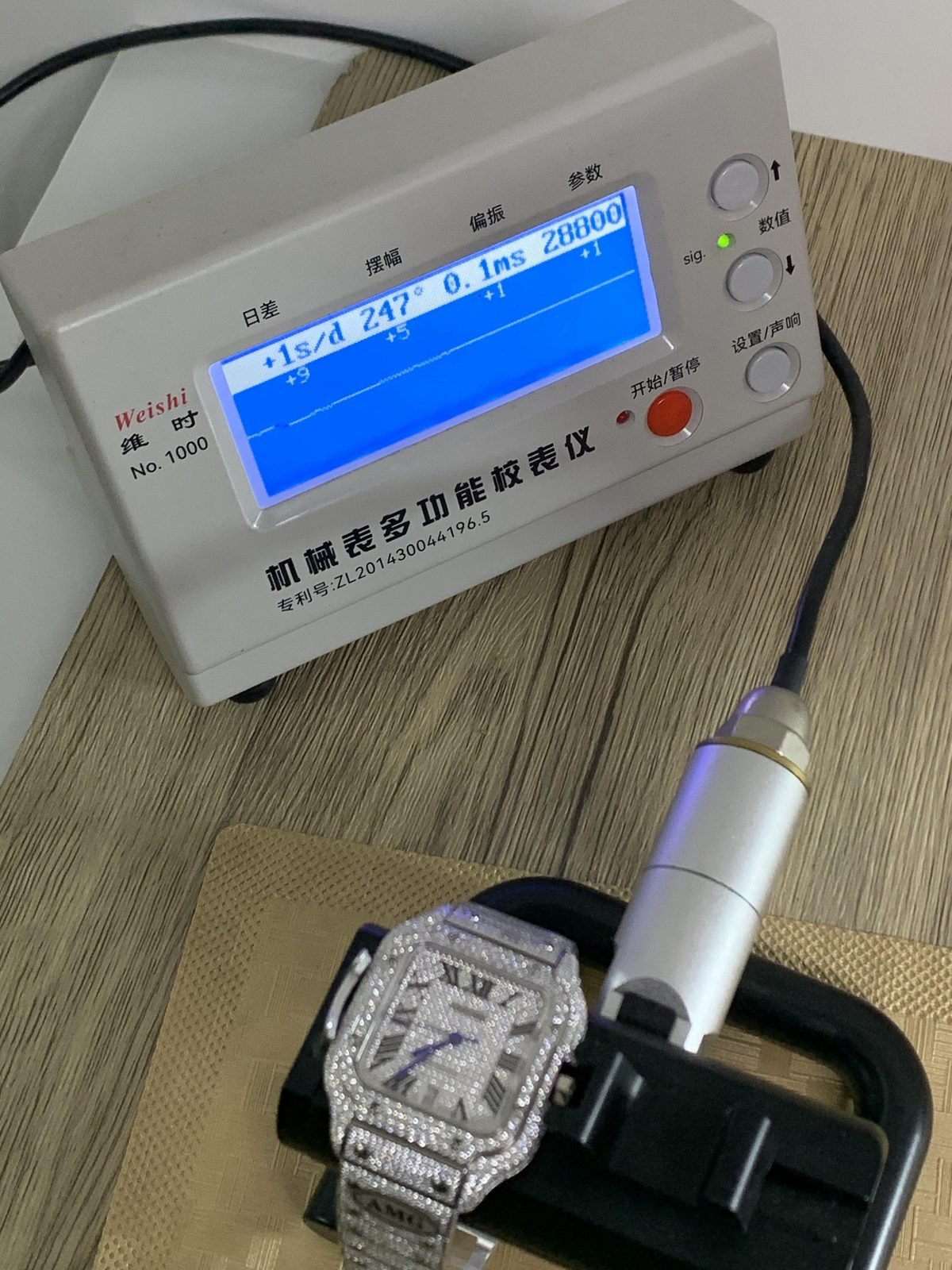
The timegrapher QC image below shows one test setup for one photographed sample. It can start a timing discussion. It cannot identify the movement, guarantee future accuracy, or establish durability. Ask for the position, wind state, lift-angle setting, duration, and displayed values. Compare the delivered watch over several days of normal wear.
Do not infer water resistance from appearance
A screw-down crown, diver-style bezel, thick case, or faucet video does not prove pressure resistance. ISO 22810 defines requirements and test methods for watches described as water resistant.
If water use matters, request a dated pressure-test method and result tied to your reserved unit. Treat the result as valid for those conditions and that time. Shipping impact, crown damage, opening the case, seal aging, and later service can change resistance.
Keep the watch dry after delivery until a trusted local watchmaker tests it. Add the test and possible gasket work to your budget.
Choose payment by protection, not convenience
Understand what the platform, card, wallet, bank, or payment service covers before you pay. Protection may exclude certain goods, off-platform transactions, international returns, or claims filed after a short deadline.
The FTC advises buyers to use safer methods such as a credit card or a secure payment system with buyer protection, and to avoid sellers who demand payment outside a marketplace. It warns that wire transfers, gift cards, cash-like reload methods, and cryptocurrency can be hard to reverse.
Card disputes are governed by your location, issuer agreement, transaction, and deadlines. The U.S. Consumer Financial Protection Bureau recommends contacting the seller first and explains that some problems may support a dispute. Do not assume a replica transaction automatically qualifies.
Keep the listing, specification sheet, invoice, seller messages, QC files, approval, payment record, tracking, and delivery evidence. Put the claim deadlines on your calendar before the package ships.
Price the full transaction
The listed watch price is one line in the budget. Add payment and currency fees, shipping, insurance, tax and duty, local sizing, pressure testing, regulation, repair reserve, and possible return shipping.
Set a maximum loss amount. Cross-border replica purchases can fail through seller conduct, shipping damage, customs action, payment limitations, or a watch that is not economical to repair. If losing the full amount would create stress, lower the budget or choose a purchase path with clearer support.
Do not count on resale to recover the cost. Counterfeit resale can be prohibited, restricted by platforms, and difficult to value. Buy for personal use only after checking your local rules.
Understand shipping and customs before checkout
Import rules are separate from private possession. A seller’s statement that shipping is “safe” or “guaranteed” is not legal advice and does not control customs.
OECD research on small parcels and counterfeit goods describes how postal and express shipments are used in counterfeit trade and how those channels appear in seizure data. The OECD analysis of counterfeit Swiss goods specifically discusses watches and small-parcel routes.
Check the destination customs authority and applicable law. Do not assume that a traveler’s personal-use allowance applies to a mailed order. In the United States, for example, CBP describes a limited traveler exemption that concerns an article accompanying a traveler under stated conditions. That is not a general promise for postal imports.
Write down who bears loss for detention, seizure, tax, failed delivery, and return. If the answer is vague, include the entire price in your risk limit.
Inspect the package before the claim window closes
Film the sealed parcel, shipping label, all sides, and opening in one continuous recording. Keep the packaging. Compare the delivered watch with the approved QC before removing protective film or sizing the bracelet.
Check the reference, color, visible condition, serial presentation, bracelet, clasp, crown, winding, setting, date transition, and every function. Photograph any mismatch immediately. Keep the watch dry.
Over the first several days, record timekeeping, power reserve, date change, crown feel, rotor noise, clasp security, and any condensation. Arrange pressure testing if water use matters. Contact the seller in writing before the claim deadline when a material problem appears.
Do not open or modify the watch until you understand how that affects the seller’s terms. A repair attempt can make evidence harder to interpret and may be used to refuse a claim.
Keep a simple ownership file
Your purchase file should contain the specification sheet, seller terms, invoice, payment record, QC, approval, tracking, unboxing record, test results, and service notes. This gives a repairer useful history and helps you avoid repeating unsupported claims later.
Plan for ordinary mechanical ownership. Keep the watch clean, avoid impact and strong magnetic exposure, do not force the crown, and respond to unusual noise, resistance, condensation, or sudden timing change. Service intervals depend on the movement, condition, use, and watchmaker’s assessment; a universal number from a seller is not evidence.
Final buying checklist
Before paying, you should be able to answer yes to these questions:
- Do I understand that the watch is a replica and not an authentic brand product?
- Is the exact configuration written down and suitable for my wrist?
- Are the seller, QC rights, return terms, shipping responsibility, and deadlines clear?
- Can I verify the reserved sample through current photos, video, measurements, and defined tests?
- Do I understand the movement claim and have a realistic service route?
- Have I checked local import, ownership, travel, and resale rules?
- Does the payment method provide protection that actually applies?
- Can I afford the full loss, testing, and repair reserve?
- Do I know what I will inspect immediately after delivery?
If one answer is no, pause at that gate. Ask for the missing evidence or choose another path.
Final answer
Everything you need to know about buying super clone watches comes back to evidence, limits, and timing. Define the exact watch, verify the seller and terms, review the reserved sample, choose payment with applicable protection, understand shipping and customs, inspect the delivery quickly, and keep a service plan.
The logo and grade name should have little influence on those steps. A well-managed purchase is one where you know what has been shown, what remains uncertain, which defects you accepted, how much you can lose, and what you will do if the delivered watch differs from the agreement.
Looking for a Top-Tier Clone or Custom Build?
Direct access to VS, ZF, 3KF, Clean & BTF factory stock. We provide detailed multi-angle QC photo & video approval prior to final payment.