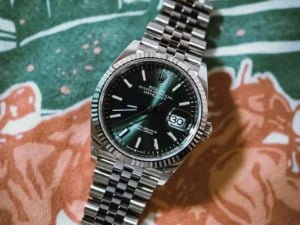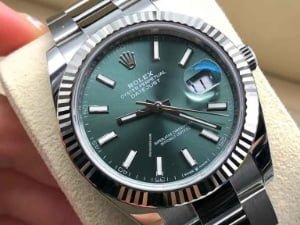
How to Choose the Right Super Clone Watch for Your Style?
Verified Reddit Watch Specialist (RepTime / RepGuild)
The right watch for your style is the one that fits your real week, your wrist and the clothes you already wear. Begin with the situations in which you want to wear it. Then choose a design family, check the full case profile, decide how much visual detail feels natural, and ask for evidence from the exact sample offered to you. A famous model name cannot make an uncomfortable or impractical watch right for you.
A simple order works well: life first, proportions second, design third, functions fourth and sample quality last. If a watch survives all five decisions, it has a good chance of feeling like yours after the first week.
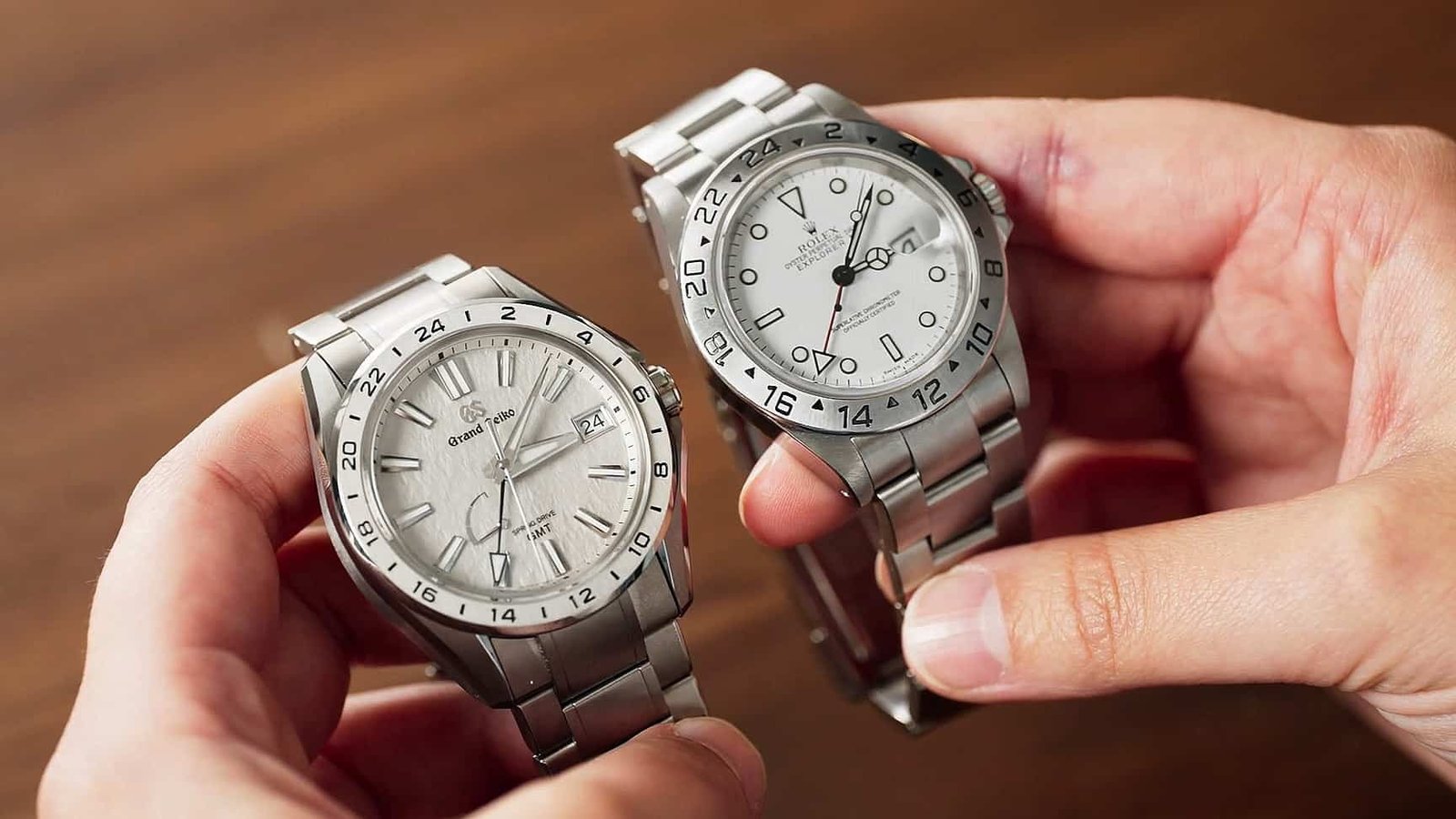
Start with your week, not a model name
Think through seven ordinary days. Note when you dress formally, work at a desk, travel, exercise, meet clients or spend time outdoors. Your watch should suit the situations that occupy most of that week. Buying for a rare imagined event often produces a watch that stays in a box.
A clean dial, restrained bezel and slim case usually sit quietly with a shirt cuff. A steel sports design carries more visual weight and often works with casual clothing. A diver-style bezel, large luminous markers or a busy chronograph dial looks deliberately technical. A rectangular case creates a sharper dress or design-led impression. These are visual signals, not rules about gender or status.
Original watchmakers organize collections around similar design roles. Patek Philippe describes the Calatrava through a simple round form, while its Gondolo collection uses form cases and Art Deco geometry. IWC separates Pilot’s Watches, Portugieser, Portofino, Ingenieur and Aquatimer, which makes the range from instrument-led to restrained styles easy to see. You can use those families as a visual vocabulary without assuming that a replica shares any published genuine specification.
| Your usual setting | Design direction to try first | Why it may work | Check before choosing |
|---|---|---|---|
| Office, tailoring, formal events | Simple round or rectangular dress design | Low dial clutter and a quieter profile | Cuff clearance, dial contrast, strap finish |
| Mixed work and casual wear | Three-hand steel sports design | Flexible visual weight and easy pairing | End-link span, bracelet comfort, clasp thickness |
| Travel across time zones | GMT-style design | Second-time-zone display can be useful | Hand-setting sequence and bezel alignment |
| Outdoor or water-adjacent use | Diver-style design | Strong markers and a timing bezel | Independent water test, bezel action, crown feel |
| Motorsport or technical look | Chronograph-style design | Layered dial and pushers create a mechanical look | Working registers, reset alignment, overall thickness |
| Design-focused wardrobe | Square, rectangular or integrated-bracelet design | Distinct geometry can anchor an outfit | Corner comfort, bracelet articulation, refinishing risk |
Choose the design family that matches your visual volume
Some watches whisper; others lead the whole outfit. Visual volume comes from more than diameter. Bezel width, dial contrast, polished surfaces, crown guards, pushers, bracelet width and the number of markings all affect how large and assertive a watch appears.
For a quiet style, begin with two or three hands, a narrow bezel, moderate contrast and a leather strap or tapered bracelet. The Grand Seiko Heritage design language shows how legibility and restrained geometry can coexist. If you prefer a watch that acts as the center of an outfit, consider a stronger bezel, an integrated bracelet, a bright dial or a chronograph layout. OMEGA’s four main families illustrate how dress, diving, chronograph and everyday designs can create different impressions within one brand.
Square and rectangular watches deserve a separate try. Their diagonal span and corners can feel larger than their nominal width suggests. Cartier’s design account explains how line, shape, proportion and details distinguish Tank and Santos forms. The practical lesson is to judge the complete outline on your wrist, not to compare a rectangular width directly with the diameter of a round watch.
Avoid choosing solely by what looks impressive in a close photograph. Wide-angle phone images can enlarge the watch nearest the lens, and a bright studio light can make polished surfaces dominate. Ask for a straight-on wrist photo from a sensible distance and one side view. The side view often reveals more about thickness, end-link projection and crown position than the front view.
Fit depends on four measurements, not one diameter
Measure your wrist circumference, but also look at the flat width across the top of your wrist. Two people with the same circumference can have different wrist shapes. A flatter wrist may support a longer case, while a rounder wrist can make the same lugs project.
The Victorinox fit guide treats diameter, lug-to-lug length, thickness and strap width as a group. That is the right way to assess any super clone watch too. Add two more details: whether the first bracelet links articulate downward and whether fixed end links extend beyond the case. A nominally moderate case can wear long when the bracelet begins with rigid projecting links.
Use these checks:
- Ask for case diameter without the crown.
- Ask for lug-to-lug length, or the effective tip-to-tip span when the end links are fixed.
- Ask for total thickness, including a raised crystal or display back.
- Compare bracelet or strap width at the case and at the clasp.
- Check whether the crown or pushers touch the back of your hand when your wrist bends.
- Confirm that enough removable links or adjustment holes are available for your wrist.
There is no universal chart that can promise a perfect fit from circumference alone. Print a life-size outline from verified dimensions, place it across your wrist, and photograph it from about one meter away. If possible, try a genuine watch with the same reference dimensions at a boutique only to understand size and shape. That fitting does not confirm how a replica bracelet, clasp or case back will feel.
Let your wardrobe choose the dial before trends do
Open your wardrobe and count the colors you actually wear. Black, white, silver and dark blue dials are easy to repeat across many outfits. Green, red, ice blue or gem-set designs can be excellent when you enjoy a focal accessory, though they may demand more deliberate pairing.
Contrast affects both style and reading. A dark dial with bright markers looks crisp and technical. A silver dial with polished hands can appear softer, yet it may be harder to read when reflections align. Sunburst, textured and glossy dials also change character across lighting conditions. Ask for daylight video, indoor video and a still image without heavy editing.
The seller may describe a luxury replica watch as a perfect color match. Color accuracy cannot be settled by one screen image because camera white balance, display settings and lighting all shift the result. Compare the sample under neutral light and focus on whether you like the color on its own. You will spend far more time looking at your watch than comparing it with a reference photograph.
Decide how you want the watch to meet your skin
A bracelet makes the case and watch feel like one object. It can add presence, reflected light and visual structure. It can also create pressure points if the links do not articulate well or the clasp is too long for the underside of your wrist. Ask for a video showing the bracelet hanging freely, the clasp opening and the micro-adjustment or half-link arrangement.
Leather usually makes a watch look quieter and more formal. It also changes the effective fit because the strap can pull the lugs down around the wrist. Rubber gives a more casual or technical appearance and can be comfortable in heat, though stiffness, taper and buckle position matter. An integrated-bracelet case may offer fewer replacement choices, so check whether compatible straps and links will remain available.
A useful shortcut is to choose the head of the watch first and imagine it on two strap types. If you like it only on the exact bracelet shown, treat bracelet comfort and spare-link availability as essential requirements. If you like it on leather, rubber and steel, the design is more adaptable.
Match functions to what you will actually use
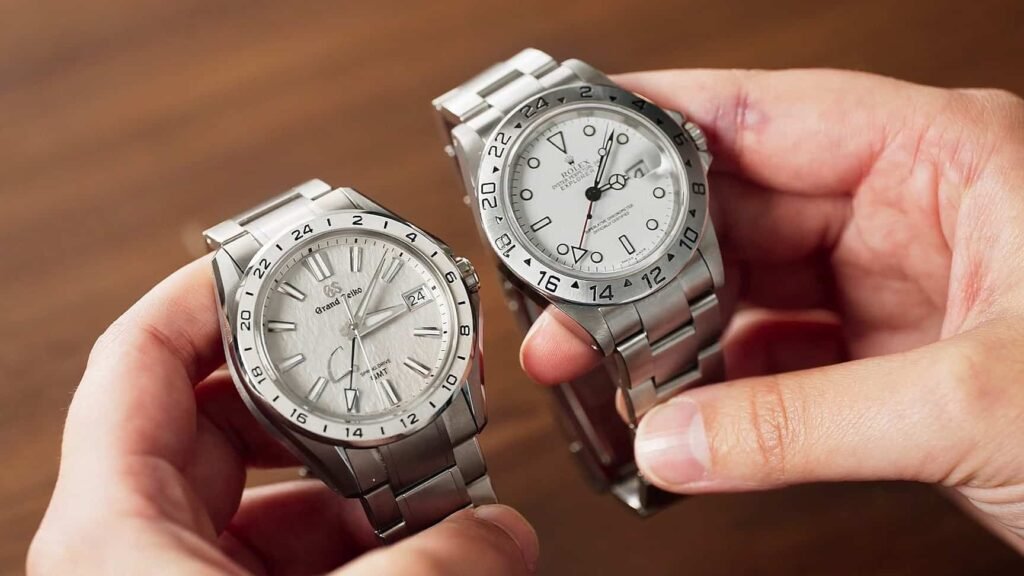
Functions change both the look and the ownership burden. A GMT hand and 24-hour scale help when you regularly track another time zone. Rolex presents the GMT-Master II around simultaneous time-zone reading, while its Explorer II guide shows why the hand-setting sequence matters. On a replica, test the exact sequence rather than assuming it copies the original mechanism.
A chronograph adds pushers, subdials and usually more thickness. If you want that look, confirm that every register has the disclosed purpose and that the central seconds hand starts, stops and resets consistently. The label chronograph replica watch says nothing about which counters function.
A rotating bezel and large markers create a diver look. They do not prove water resistance. Treat any waterproof replica watch claim as unverified until the exact watch passes an appropriate independent pressure test. Do not use the genuine model’s rating. A seller’s splash video, a screwed crown and text on the dial are not equivalent to a documented test.
An automatic replica watch also needs a practical check. Ask how it winds, sets and behaves after resting. Movement decoration seen through a case back may be part of the style, but a photograph cannot confirm the internal caliber, service condition or power reserve. Choose the function because it serves your routine or gives you pleasure, then verify how the offered sample performs.
Compare watches side by side for one reason at a time
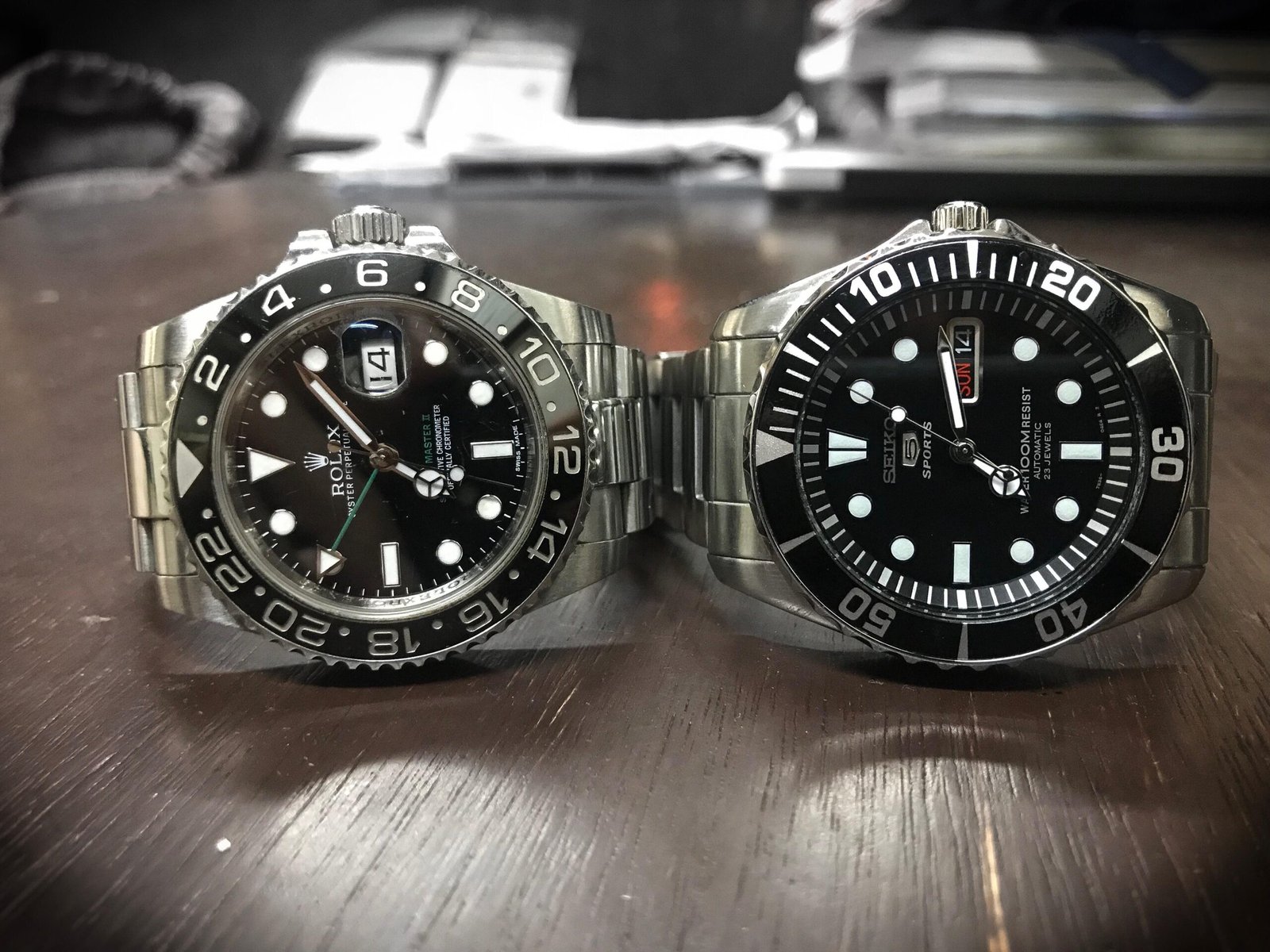
A side-by-side photo is useful when you decide what to compare before looking. First compare outline and wrist presence. Then cover the bezels mentally and compare dial density. Next compare bracelet width and taper. Finally compare color and polished area. Trying to judge all details at once usually leads you back to brand recognition instead of personal fit.
The same method helps when choosing between a dress design and a sports design. Ask which one works with more of your week, which one remains legible in your normal lighting, and which one you would still wear if the logo were hidden. The answer exposes whether you want the design or the recognition attached to it.
Search phrases such as high quality replica watch, exact replica watches and swiss super clone watches are commercial labels, not standardized grades. They can help you find listings, but they cannot choose a style or verify a sample. Translate each label into a question about dimensions, finish, function, origin evidence and after-sales support.
Choose the exact reference before you judge sample quality
A design family can contain many sizes, dial colors, bracelets and complications. Rolex’s configurator and the Patek Philippe collection index show how much variation can exist under familiar family names. Write down the exact reference or configuration you intend to assess. Without that target, you may compare the sample with the wrong dial, case size or bracelet generation.
Now separate reference accuracy from personal style. You may prefer a sample even when one detail differs from the original. That can still be a valid personal choice if the listing discloses it. The problem begins when a seller uses a vague family name, stock images or another unit’s QC to avoid showing what you will receive.
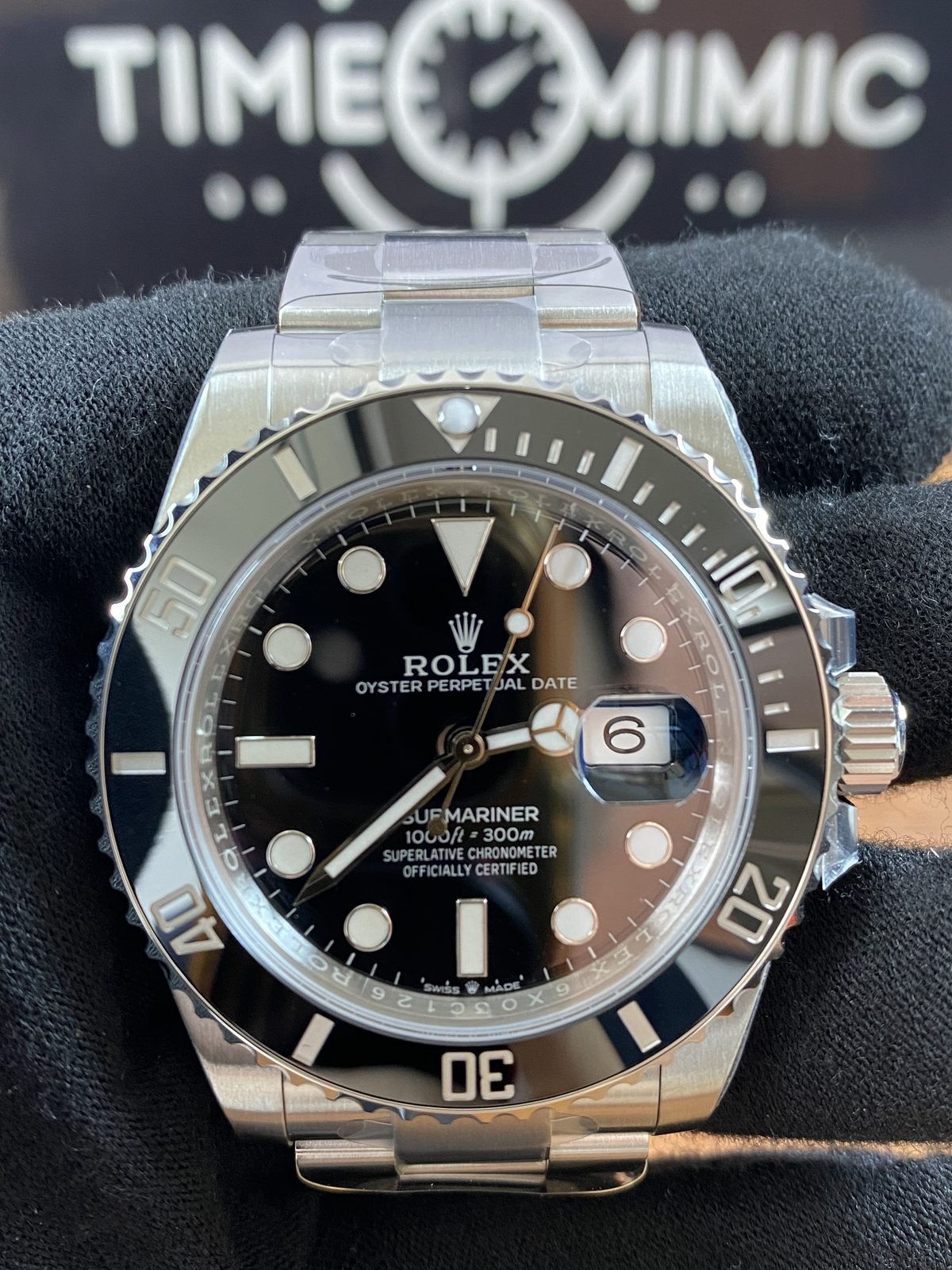
When you inspect a seller’s QC photo, use it to answer visible questions only. Check marker alignment, hand clearance, bezel centering, date position, exterior condition, bracelet gaps and obvious dust. Ask for a continuous video that connects the same watch’s front, sides, case back, clasp and functions. A front photograph cannot establish movement identity, material grade, water resistance, accuracy or long-term reliability.
| Decision step | What you compare | Evidence to request | Reason to pause |
|---|---|---|---|
| Lifestyle | Your most common settings | A written list of when you will wear it | You are buying mainly for a rare imagined event |
| Fit | Diameter, effective length, thickness, clasp span | Measured photos and a side view of the exact configuration | Only a generic size is provided |
| Style | Case shape, dial density, bezel, color, polished area | Neutral-light photos and a normal-distance wrist view | You like it only in edited close-ups |
| Functions | Time, date, GMT, chronograph or bezel behavior | Continuous function video of the exact sample | A decorative display is presented as working |
| Sample QC | Alignment, condition and control feel | Current serial-linked photos or another continuity marker | Stock photos replace unit-specific evidence |
| Ownership | Adjustment, spare links, repair path and return terms | Written terms saved before payment | Important answers remain verbal or vague |
Use a seven-step shortlist
- Write one sentence describing your usual style and the three situations in which you will wear the watch most.
- Pick two design families rather than ten individual models.
- Reject any option whose effective length, thickness or clasp shape does not suit your wrist.
- Choose one dial color and one alternative that both work with your existing wardrobe.
- Decide which functions you will genuinely use and remove the rest from your requirements.
- Compare two exact references using the same photos, angles and evidence standard.
- Approve only the exact sample after visible QC, function checks and written ownership terms are clear.
This process prevents endless browsing. It also reduces the temptation to buy several near-identical replica watches because each listing solves a different small doubt. One clear decision brief is more useful than dozens of saved product photos.
Common style mistakes you can avoid
Buying the largest watch your wrist can hold
A watch can fit inside your wrist edges and still feel visually oversized or top-heavy. Include thickness, bezel mass, dial opening and bracelet stiffness in the decision. Comfort after two hours matters more than a dramatic first photo.
Treating every formal watch as small and every sports watch as large
Design role comes from proportion and detail. A moderate sports watch may wear quietly, while a rectangular dress watch may make a strong statement. Judge the whole composition.
Choosing a complicated dial for imagined usefulness
Extra subdials and scales can be attractive even when you never use them. That is fine if you want the look. Confirm what each display actually does so your style choice is based on accurate information.
Assuming a label proves the specification
The terms super clone watches and replica watches cover a wide range of products. No shared certification defines those labels. Ask for evidence item by item, and never infer materials, movement, waterproofing, factory or origin from price or vocabulary.
Ignoring service and adjustment
A watch is difficult to enjoy when the bracelet cannot fit, the clasp creates a pressure point or no local watchmaker will service it. Include sizing, spare links, basic maintenance and the return process in your choice before payment.
The right watch should feel natural after the excitement fades
Your best choice is the watch that fits your normal clothes, clears your cuff, stays comfortable, shows the information you need and still looks appealing in ordinary light. Brand recognition may start the search, but proportion and daily use decide whether the watch belongs in your life.
Build the shortlist around your week, reduce it with real measurements, and approve the exact sample with focused QC. That gives you an answer you can act on: a style that works for you, supported by evidence you can actually inspect.
Looking for a Top-Tier Clone or Custom Build?
Direct access to VS, ZF, 3KF, Clean & BTF factory stock. We provide detailed multi-angle QC photo & video approval prior to final payment.