What Should You Look for When Buying the Best Replica Rolex?
Verified Reddit Watch Specialist (RepTime / RepGuild)
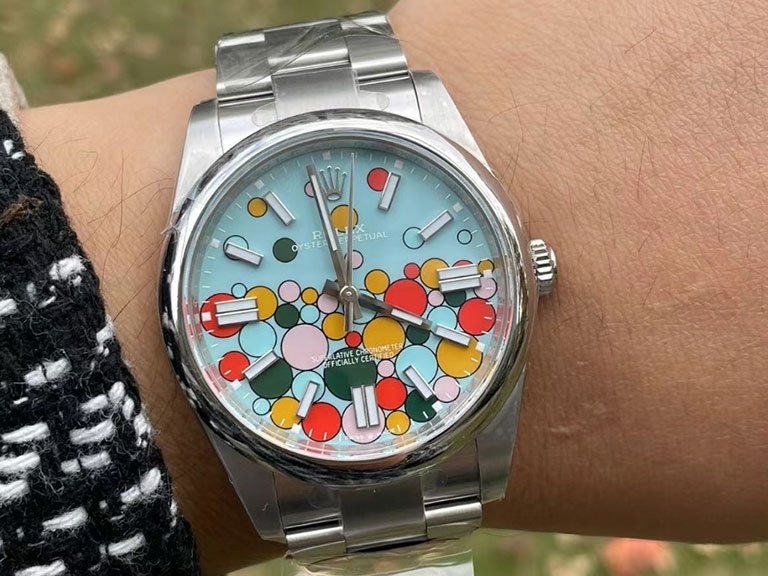
Buying a replica Rolex is difficult because familiar model names and polished photographs do not tell a buyer how a particular sample was built. Ten useful checkpoints are materials, movement, fine details, date magnification, weight, water resistance, bracelet and clasp, engravings, price, and seller reputation. Each point is most useful when tied to evidence a buyer can request before payment.
Searches for copies of Rolex watches cover very different products. A listing described as a Rolex super clone may still vary by batch, movement, assembly, testing, and after-sales support. The goal is therefore not to find a label that guarantees quality. It is to compare the exact watch, written specifications, current QC photographs, seller obligations, and realistic ownership risk.
At a Glance
| Check | Ask for | Do not assume |
|---|---|---|
| Materials | Written case, bracelet, crystal, bezel, and coating details | Metal grade or sapphire based on shine or weight |
| Movement | Exact calibre, functions, test context, and service options | Quality from a country label or smooth-looking seconds hand |
| QC | Front, sides, back, crown, bracelet, clasp, and dimensions | One catalogue image represents the shipped sample |
| Seller | Returns, warranty, delivery scope, and claim procedure | A high price or tier name guarantees support |
1. Verify material claims in writing
Listings often highlight 904L-family stainless steel, sapphire crystal, and solid construction. These specifications may be desirable, but appearance alone cannot identify an alloy or crystal. Ask the seller to state the case, bracelet, bezel, crystal, coating, and strap materials in writing. If a claim matters to the purchase, it should appear in the order record rather than only in advertising language.
Use exact-sample photographs to judge visible finish and condition. Compare brushing direction, polished transitions, bezel edges, crown shape, crystal seating, end-link fit, screws, pins, and protective film. A clean exterior supports a condition check; it is not laboratory proof of composition.
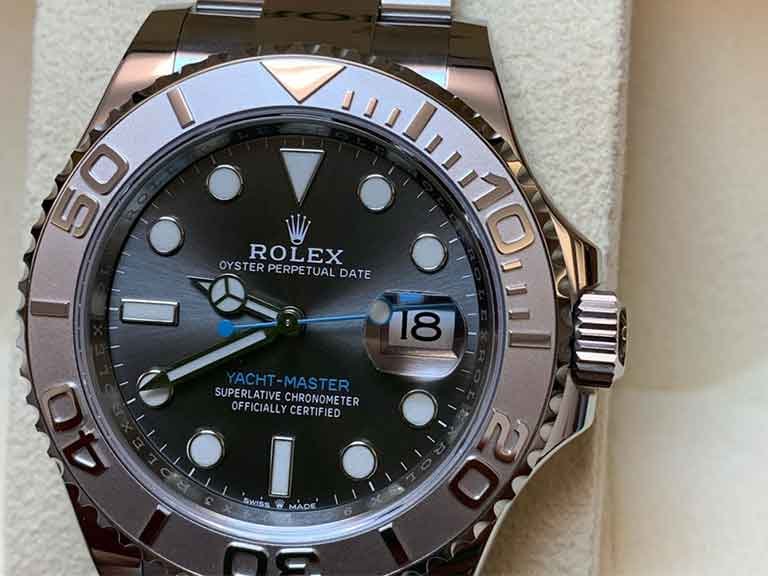
Model context also matters. A clone Rolex Submariner, a Rolex Yacht Master replica, and a dress-style model use different bezels, bracelets, cases, and proportions. Match the specifications to the exact reference being imitated instead of applying one generic material checklist to every watch.
2. Identify the movement and the service path
Swiss, Japanese, automatic, and quartz are common movement descriptions, but those labels are too broad to judge a watch. Request the exact movement designation, supported functions, winding and setting instructions, expected power reserve or battery type, and availability of parts. Confirm whether a local watchmaker is willing to service it.
For a mechanical watch, a current timegrapher image can add rate, amplitude, beat error, beat frequency, and test-position context. It is a snapshot, not a lifetime guarantee. A smooth-looking seconds hand also does not identify the calibre or prove accuracy. Test time setting, date change, winding, and any additional function without forcing the crown or pushers.
3. Inspect dial, hands, bezel, and case details
Attention to detail matters. Request straight-on, side, and angled images under neutral light. Check that dial text is even, markers are secure, hands have suitable length and clearance, lume is contained, the date is centered, and the bezel, rehaut, crown, and case transitions are consistent.
Compare the exact reference rather than a vague idea of how a Rolex should look. Fonts, bracelet type, bezel markings, date display, caseback, and crown guards differ by model and production period. Logos, serial-style markings, and packaging can be copied; their presence does not prove origin or official manufacture.
4. Assess the date magnifier from the right angle
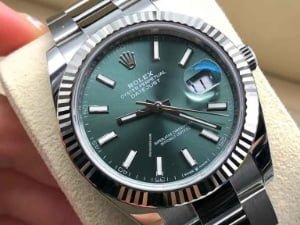
A figure around 2.5x is a familiar magnification benchmark. In practice, perceived magnification changes with the reference, lens, crystal, camera distance, and viewing angle. Ask for a straight-on close-up that shows the date centered and legible within the window, with the lens positioned over it.
A convincing date lens is only one detail. Reflections, camera processing, or an oblique photograph can make the date appear larger or smaller. Treat the magnifier as part of a wider review that also includes dial alignment, case dimensions, movement function, bracelet fit, and seller terms.
5. Judge weight and feel with context
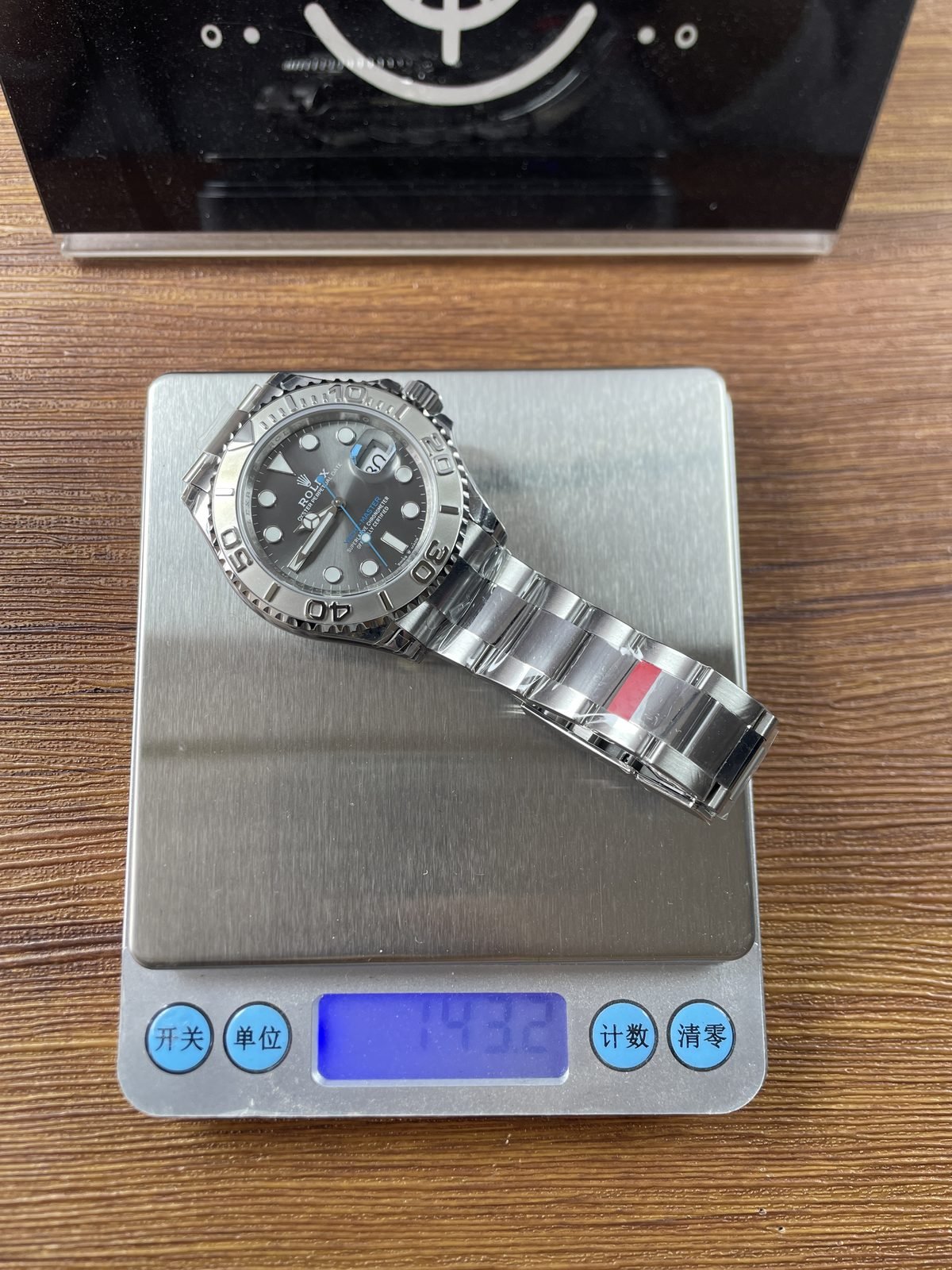
A substantial feel can be reassuring, but weight alone does not prove steel grade or quality. Case size, movement, crystal, bezel, bracelet design, and the number of installed links all affect the result. Ask for a scale photograph that shows the full watch, its configuration, and the measurement unit.
Comfort matters as much as mass. Look for sharp bracelet edges, stiff links, excessive gaps, an unstable clasp, a crown that presses into the wrist, or a case that sits too high for the buyer's preferred fit. A high quality Rolex replica should be evaluated as something to wear, not merely something that reaches a target weight.
6. Treat water resistance as a test result
Treat every water-resistance claim as something to verify. A 100-metre claim, dial text, or screw-down crown is not evidence for the shipped sample. Resistance depends on the case, crystal, crown, pushers, caseback, gaskets, assembly, and current condition. Ask for the test method, pressure, date, and result tied to the exact watch.
Confirm in writing what use the seller supports. Splashes, showers, swimming, and diving involve different pressure, heat, soap, and movement. Keep the watch dry if there is no current result. If condensation appears beneath the crystal, stop wearing it and arrange prompt inspection instead of applying direct heat.
7. Check bracelet, clasp, and wearable fit
The bracelet and clasp should articulate smoothly, close securely, and match the promised configuration. Review the front and back of the links, end-link seating, screw or pin condition, clasp blades, adjustment system, safety lock, and crown emblem. Rattle by itself is not a universal quality test, but rough movement, visible gaps, loose parts, or a clasp that releases unexpectedly require attention.
Ask whether sizing is included and whether removed links, pins, screws, and tools will be supplied. A bracelet that cannot be adjusted to the buyer's wrist may be unusable even when its finish looks good in photographs.
QC examples: what a seller's photographs can prove
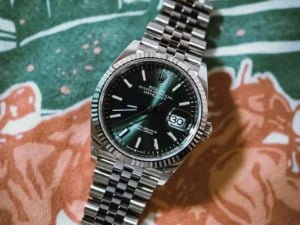
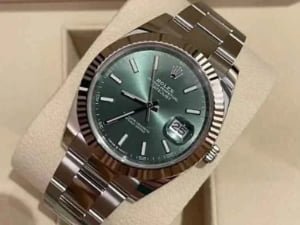
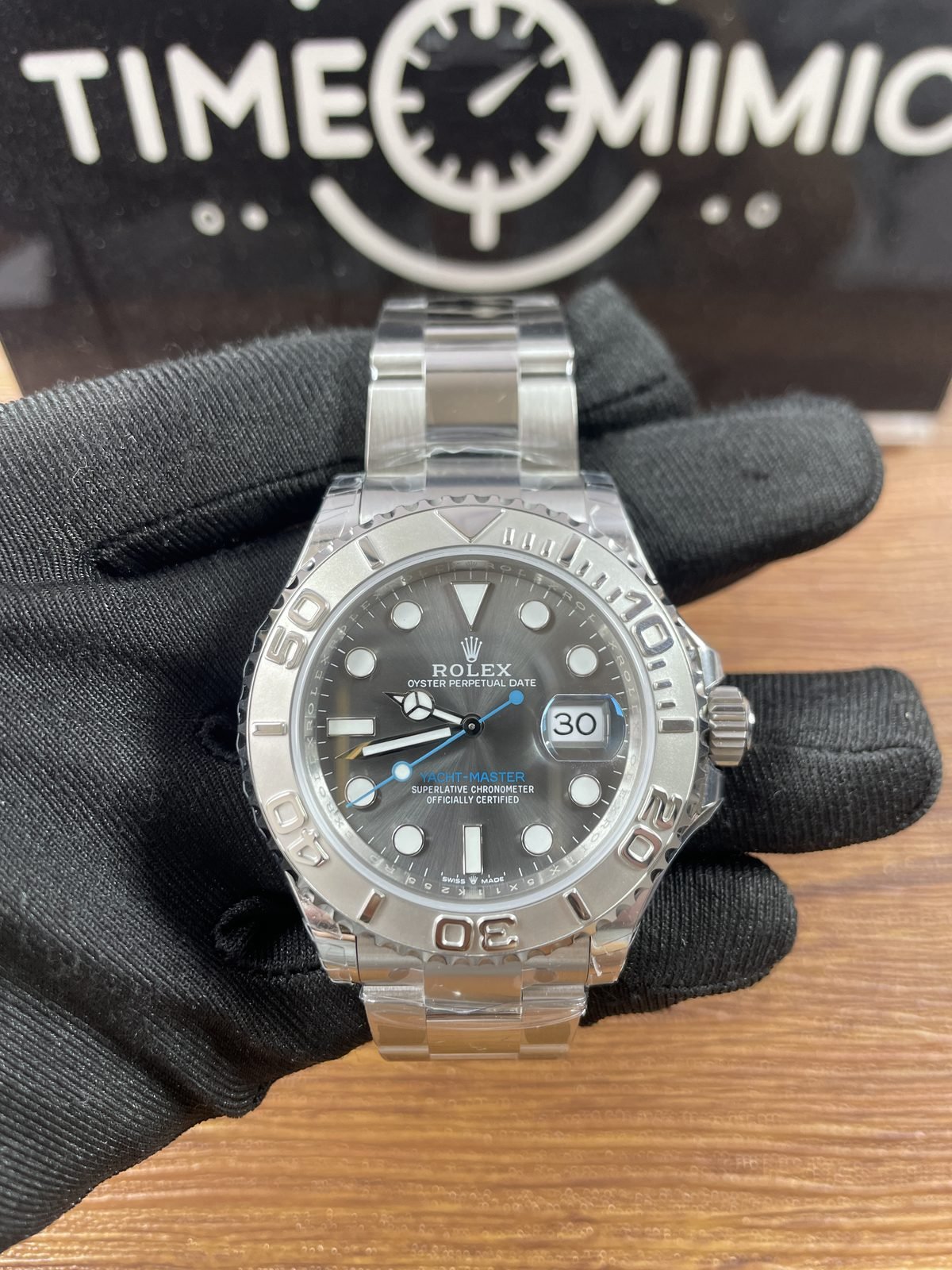
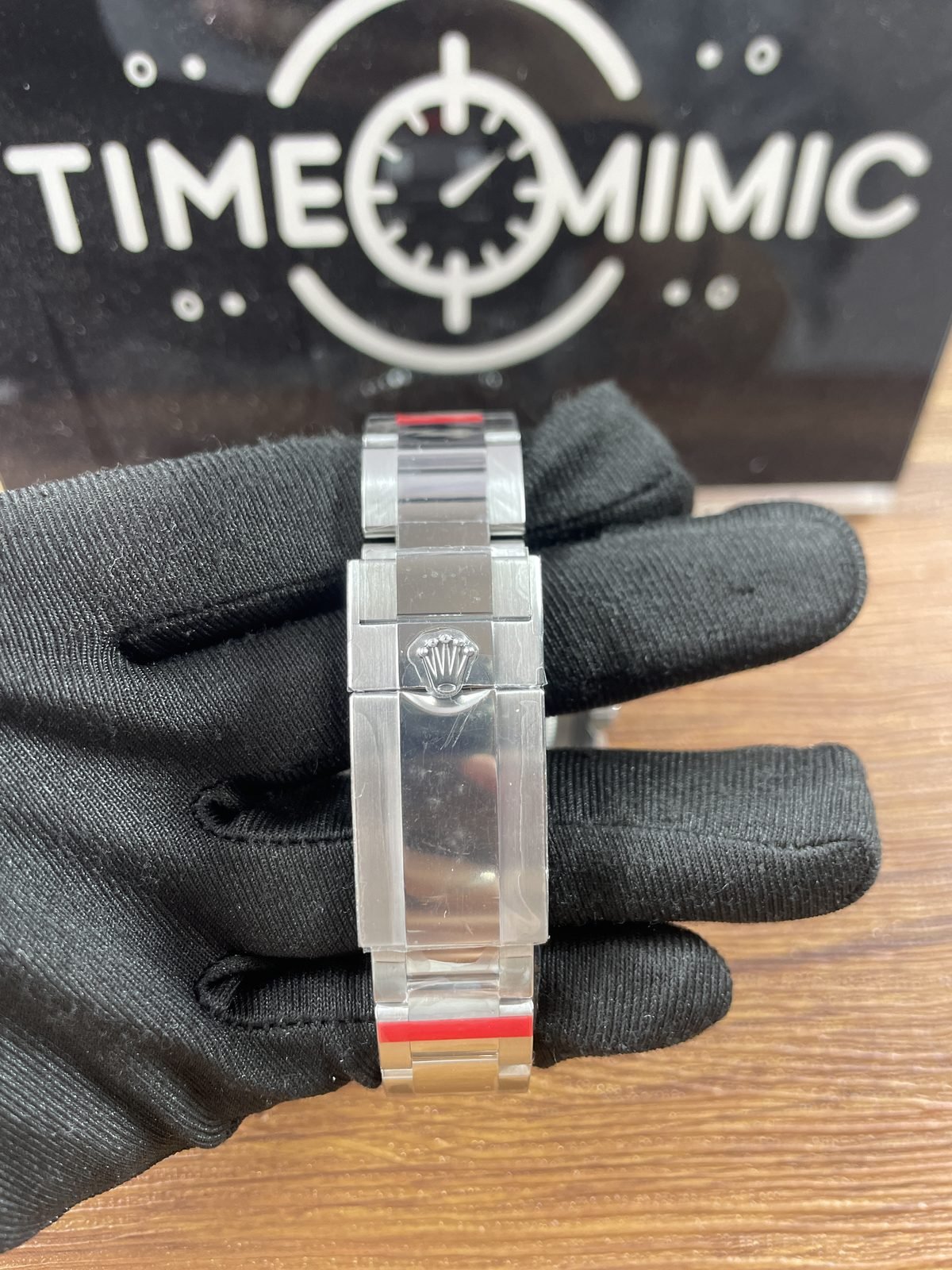
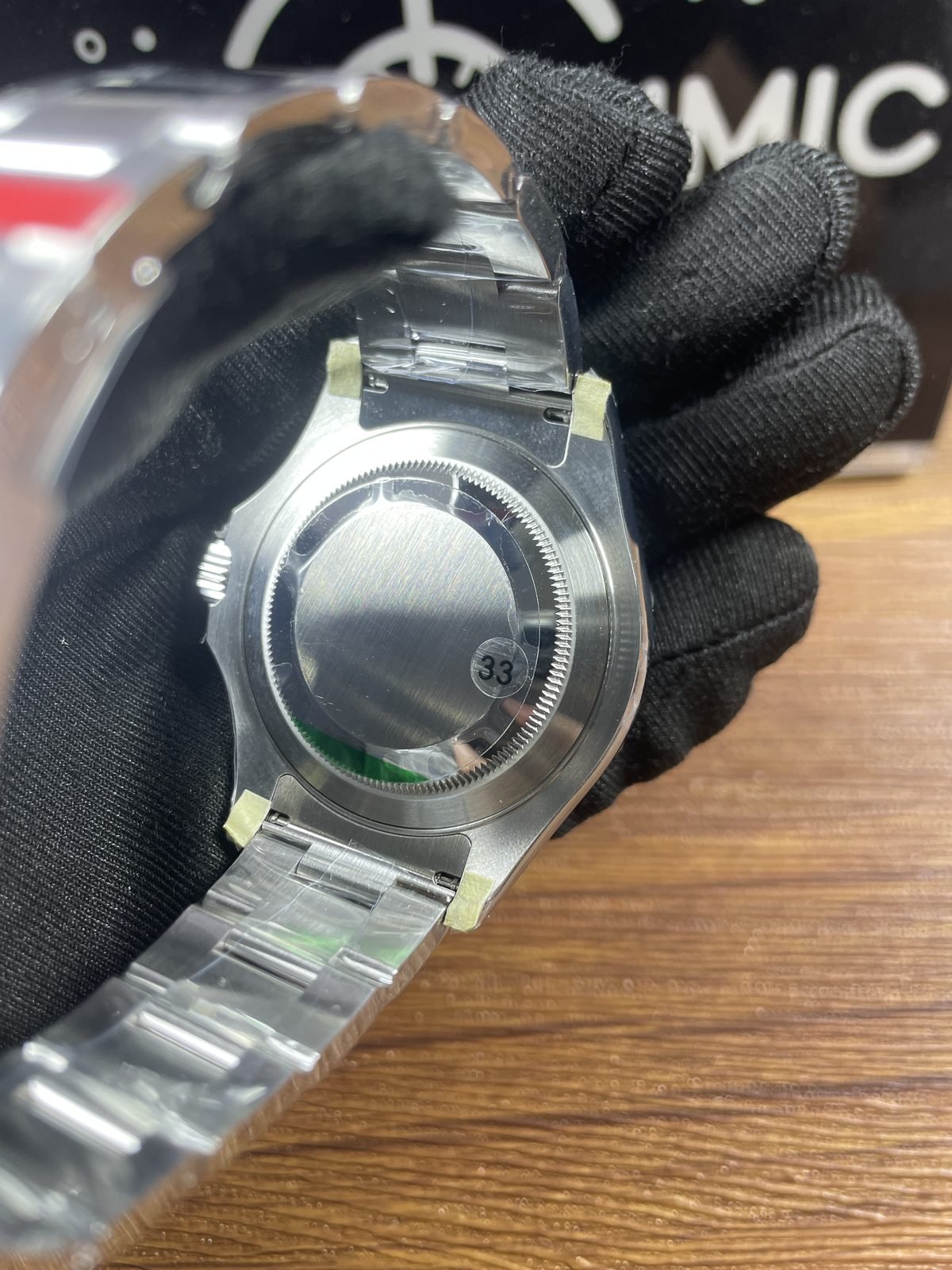
The four media-library images below document one Yacht-Master-style sample from several angles. The front view supports review of the dial, date, bezel, case, crown, and bracelet. The clasp image shows visible finish and closure parts. The scale photograph records one configured weight, while the caseback view documents external condition.
These photographs do not independently confirm steel grade, crystal, movement identity, timing, pressure resistance, calibration, factory source, or authenticity. Their value is sample-specific visibility. A useful QC set shows what is present and clearly separates that evidence from what remains untested.
8. Read engravings and serial-style markings cautiously
Engravings and serial numbers can reveal uneven depth, poor alignment, rough edges, or a mismatch with the promised design, so clear close-ups are useful. However, copied markings do not establish provenance, age, factory identity, or legitimacy.
Check the locations and style expected for the exact reference and production period. Ask the seller to explain any repeated stock number, sticker, or removable protective marking. The strongest record links the QC photographs, order, and shipped sample without presenting copied identifiers as authentication.
9. Compare price only after matching the package
Price does not reliably rank quality. A higher amount may include a different movement, better finishing, current testing, clearer QC, faster delivery, or stronger after-sales support; it may also reflect marketing. Compare like with like and include shipping, payment fees, taxes or duties, sizing, testing, return postage, service, and replacement parts.
Very low offers deserve scrutiny, but an expensive tier name is not evidence by itself. The sensible choice is the documented watch whose features, total delivered cost, and risk fit the buyer's intended use.
10. Choose a seller with clear, usable terms
Seller reputation is often the most practical checkpoint. Look for original exact-sample QC, consistent written specifications, realistic delivery information, and a return and warranty policy that explains deadlines, required evidence, shipping responsibility, and available remedies.
Read reviews for patterns rather than isolated praise. Useful reviews identify the model, purchase date, time owned, fault, communication, and resolution. Save the listing, invoice, messages, approved QC, and terms. Replica status should remain explicit: the watch is not manufactured, warranted, or authenticated by Rolex, and buyers should consider local purchase, import, resale, and trademark rules.
Conclusion: buy the evidence, not the label
Materials, movement, details, date magnifier, weight, water testing, bracelet, engravings, price, and seller reputation are ten practical decision points. Together they make it easier to separate a well-documented sample from a listing built mainly on broad promises.
A replica can provide a similar design direction at a lower price, while provenance, brand warranty, verified specifications, and collector value remain different from an authentic Rolex. The best purchase is not simply the watch described as closest to the original. It is the sample whose visible condition, functions, limits, total cost, and after-sales terms are clear before the buyer commits.
Looking for a Top-Tier Clone or Custom Build?
Direct access to VS, ZF, 3KF, Clean & BTF factory stock. We provide detailed multi-angle QC photo & video approval prior to final payment.