A Beginner’s Guide to Super Clone Watches
Verified Reddit Watch Specialist (RepTime / RepGuild)
Your first search for super clone watches can produce a wall of factory names, grade labels, movement codes, and promises of perfect similarity. You do not need to memorize that language before making a sensible decision. You need a repeatable route that turns each claim into something you can see, test, record, or price.
This guide follows the order in which a first purchase actually happens. You will define the watch you want, lock the exact reference, evaluate the seller, approve one physical sample, protect the transaction, inspect delivery, and watch the first week of ownership. Each step gives you a clear stop point, so you are not forced to solve every uncertainty after payment.
Quick answer: Choose the use case and exact reference before comparing sellers. Ask for current evidence tied to the reserved sample, demonstrate every function in one continuous video, and treat movement, timing, and water-resistance claims as separate questions. Keep written transaction records, budget for inspection and repair, check the law where you live, and approve a replacement sample only after a full new review.

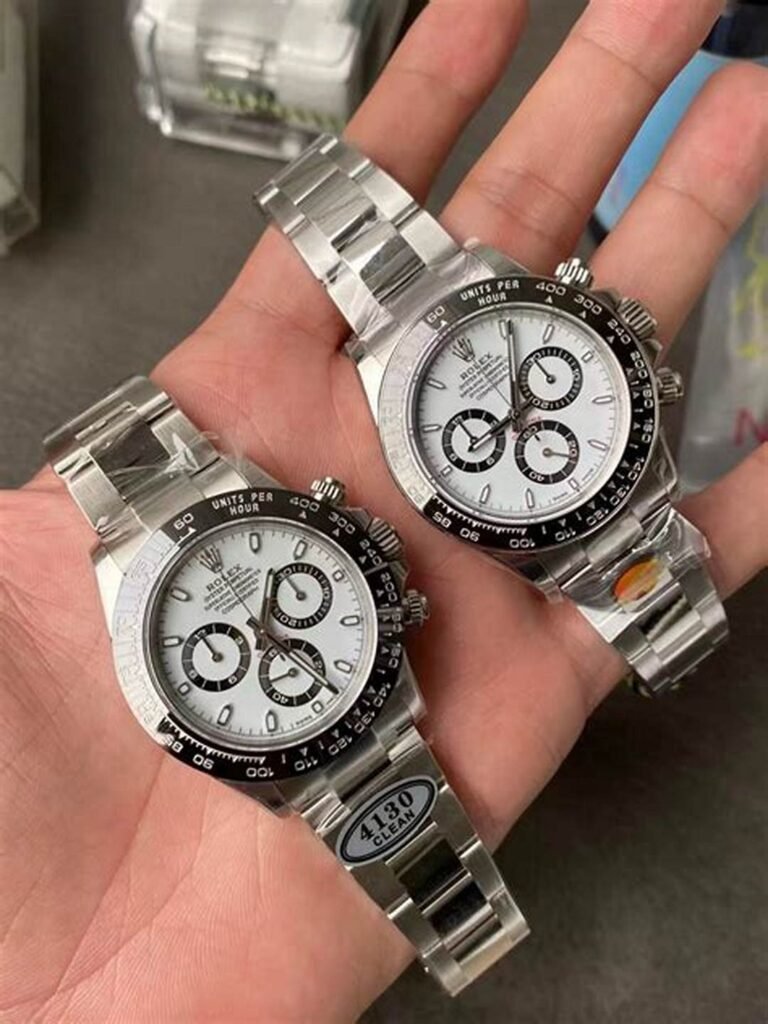
The supplied image used with this guide shows two chronograph-style watches in one hand. It can help you compare visible details such as bezel printing, dial spacing, hand position, case shape, pushers, bracelet links, and exterior condition. It is a design reference rather than current QC for your order. It does not prove authenticity, movement identity, exact materials, water resistance, durability, or factory source.
Step 1: Write a one-sentence purchase brief
Start with how you will use the watch. Write one sentence that includes the occasion, wrist fit, essential function, preferred appearance, and maximum complete cost. A useful brief might read: “I want a daily steel sports watch that fits under a cuff, shows the date, has no decorative functions, and remains affordable after delivery, sizing, inspection, and a repair reserve.”
This sentence keeps the process about you. If you rarely time events, a chronograph adds controls and parts without solving a need. If you travel, a GMT may be useful, but you still need to know whether the local-hour hand or the 24-hour hand adjusts independently. If you want a slim dress watch, case thickness and first-link behavior can matter more than a seller’s grade label.
Measure your wrist circumference and the flat width across the top. Record the diameter, thickness, lug-to-lug length, first-link shape, bracelet adjustment range, and clasp length of a watch that already fits. Those numbers give you a personal reference when listing photos exaggerate or hide proportions.
Step 2: Lock the exact reference before you compare quality
Model families change across generations. A dial color, bezel font, hand length, date window, bracelet, clasp, case profile, or crown can be correct for one reference and wrong for another. Do not compare a sample with a mixed folder of attractive photos. Save one official reference page or manual for the exact generation you intend to study.
Official pages make the method clear. Rolex publishes reference-specific information for the GMT-Master II 126720VTNR, Patek Philippe separates individual models within its Nautilus collection, and Cartier publishes dimensions and configuration for a named Santos de Cartier reference. These sources describe genuine watches. They help you identify the design target but do not authenticate a replica or confirm its materials.
Use this checkpoint sheet before you ask for a price.
| Checkpoint | What you record | Evidence that helps | Stop signal |
|---|---|---|---|
| Reference | Brand design, reference number, generation, size, dial, bezel, bracelet, clasp, and intended movement layout | One official product page, manual, or archive image for the exact reference | The seller mixes generations or cannot name the configuration being offered |
| Fit | Diameter, thickness, lug-to-lug, end-link behavior, clasp length, bracelet range, and your wrist measurements | Side view, wrist-level video, ruler or caliper photo, and comparison with a watch you own | Only diameter is supplied or the first links make the effective length unclear |
| Functions | Time, date, GMT, chronograph, bezel, moonphase, calendar, and any other control | One uninterrupted operating video that starts with the reserved sample identifier | A subdial is decorative, a pusher has no explained role, or the video cuts between operations |
| Complete cost | Watch, payment fees, exchange rate, delivery, tax, duty, inspection, sizing, testing, service reserve, and possible loss | Written invoice, shipping terms, return terms, and local service estimate | The purchase is affordable only if nothing goes wrong or the watch can be resold |
Search terms such as high quality replica watch, exact replica watches, or Swiss super clone watches show what buyers hope to find. They are not standardized grades. A useful comparison begins only after the exact reference and evidence requirements are written down.
Step 3: Screen the seller and protect the record
Before discussing fine dial details, confirm that the transaction leaves a usable record. The FTC’s marketplace guide recommends checking seller contact information, actual-item photos, return policies, marketplace protections, and safer payment methods. Its broader online shopping guidance advises comparing sellers and keeping records, while its pre-purchase alert warns that unfamiliar sites, manipulated reviews, and unusually low prices deserve more checking.
Save the listing, seller name, contact channel, invoice, promised configuration, QC rules, return deadline, payment record, shipping commitment, and every message. Ask what happens if the approved sample is replaced, a function fails, the parcel is lost, or customs stops it. A friendly answer is not enough; the terms should remain readable after the chat ends.
Do not let urgency erase your remedies. A countdown, limited batch, or payment discount does not improve the sample. If a payment route removes chargeback or marketplace protection, include that loss of protection in the cost. The FTC’s security tips are a useful reminder to verify the site and use safer payment practices before sharing financial information.
Step 4: Translate movement language into a service question
An automatic replica watch can contain different movement architectures even when two dials look similar. Ask for the movement family, clear movement photos, a full winding and setting video, expected power reserve, available parts, and a local repair route. A decorated bridge or rotor may change appearance without identifying the parts underneath.
Published movement documentation shows what verifiable information looks like. Miyota lists the dimensions, frequency, functions, jewel count, and expected accuracy range for its 9015 caliber. Its instruction manual explains winding and crown operation, and its parts list identifies service components. Those documents can help a watchmaker recognize a genuine 9015 architecture. They do not prove that a seller’s watch contains one.
Ask a local watchmaker three questions before buying: Will you inspect this type of watch? Can you service the stated movement family? Which failures or parts would make repair uneconomic? If the answer is no, you can still choose the watch, but the price and repair reserve should reflect a replace-rather-than-repair product.
Step 5: Review the exact sample in a fixed visual order
Quality control should identify one reserved watch. Request a harmless sample code in the image set and ask the seller to show the same code at the start of the function video. If the watch changes, begin again. A seller’s best stock photo is not evidence for the unit that will arrive.
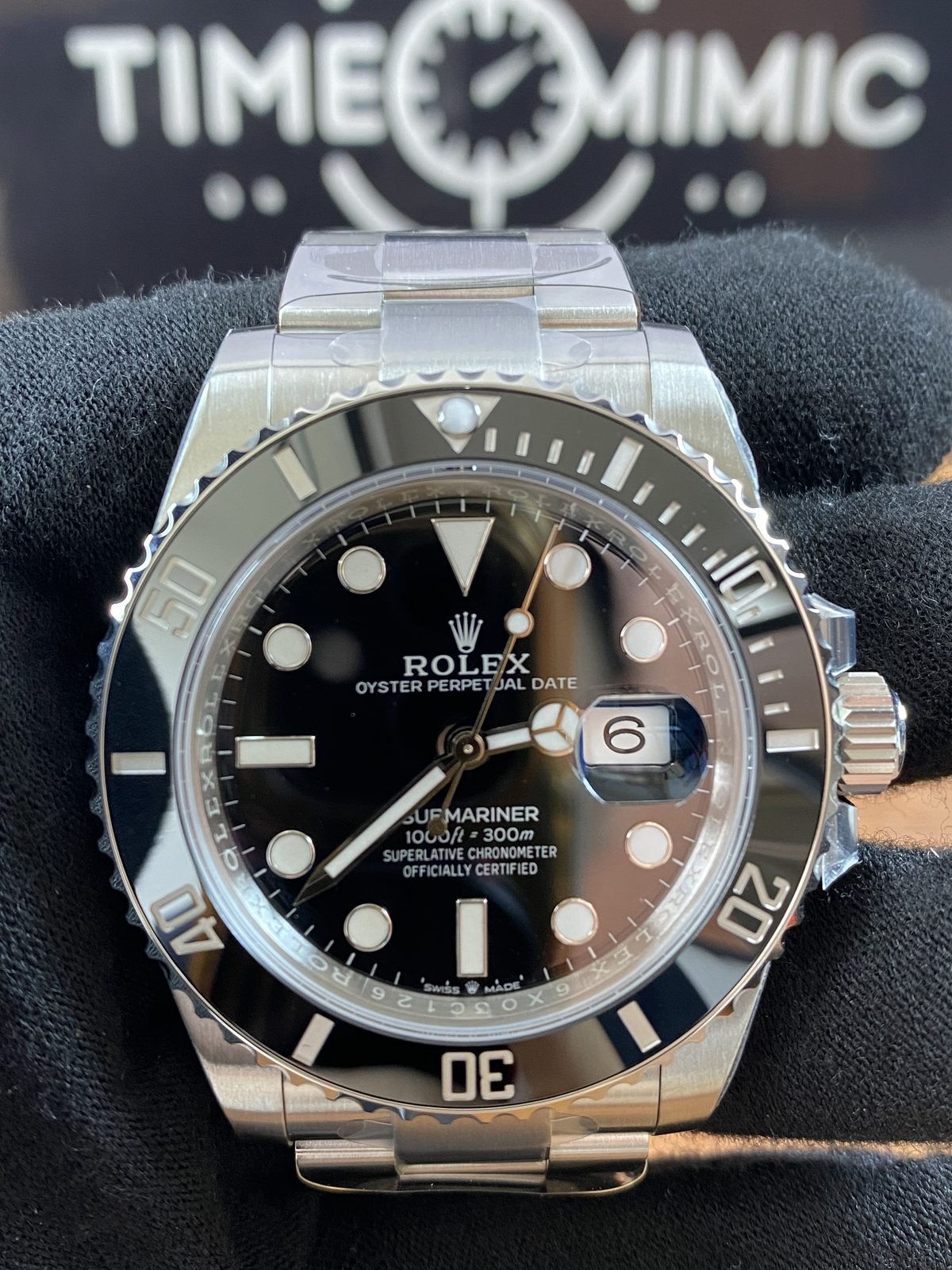
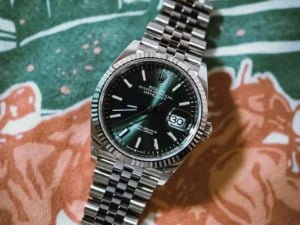
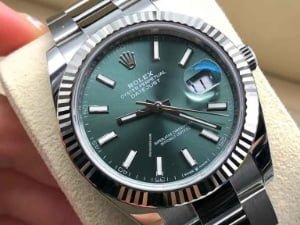
A front-view QC image below is one photographed example from the site’s media library. It lets you inspect visible alignment, dial printing, hand clearance, date placement, bezel relationship, case condition, bracelet gaps, and dust visible in the photograph. It does not establish authenticity, exact metal, movement maker, pressure resistance, factory identity, or long-term reliability.
Inspect in the same order every time: straight front, crown side, opposite side, both lug pairs, first links, clasp, case back, and moving light across polished and brushed surfaces. On the front, compare marker spacing, hand lengths, text position, date centering, bezel index, and rehaut relationship with the exact reference. On the sides, look for case thickness, crown alignment, pusher shape, gaps, edge condition, and whether the first links articulate freely.
Write each observation as accepted, needs another view, or stop. This simple classification prevents a minor color preference from being treated like a broken function, and it prevents a serious defect from disappearing inside a long list of attractive details.
Step 6: Make the watch demonstrate every function
Prepare a function script before the seller records video. For a time-and-date watch, show winding, time setting, quick-set date operation, and a natural date change through midnight. For a GMT, identify which hand jumps and show a complete setting cycle. Rolex’s GMT function overview illustrates the intended behavior of its genuine system, but the replica still has to demonstrate its own controls.
For a chronograph, show start, stop, resume, reset, and the role of each subdial without cutting the recording. Omega’s reference-specific Speedmaster manual demonstrates why a manual must match the actual caliber and control layout. Use it to form questions, not to assume that a similar-looking watch works the same way.
Watch the hands during setting. Note excessive play, jumping, rubbing, a date that sits between positions, a crown that will not engage cleanly, a chronograph that fails to reset, or a bezel with unexplained movement. You do not need to diagnose the cause. You only need enough evidence to decide whether the observed behavior fits your brief.
Step 7: Keep timing, magnetism, and water resistance in separate lanes
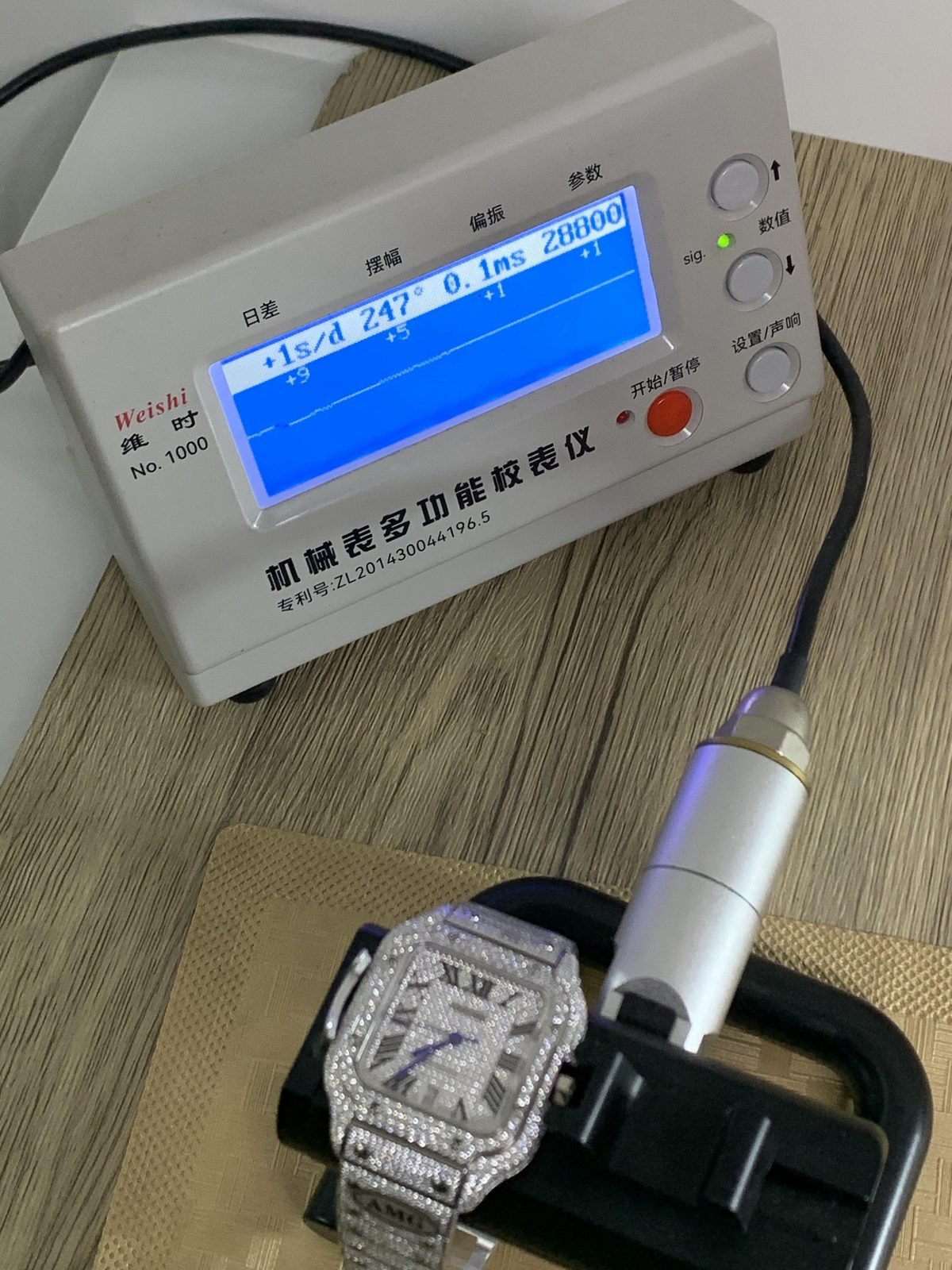
A timing example below records one setup for one photographed sample. A timing machine gives a narrow snapshot because rate, amplitude, and beat error depend on position, state of wind, lift-angle setting, test duration, and movement condition. The image does not identify the movement, prove power reserve, predict performance in every position, or guarantee future accuracy.
Ask which position was tested, how fully the watch was wound, which lift angle was entered, and whether the result was repeated. Seiko’s mechanical-watch accuracy guidance explains that real mechanical performance varies with wear, temperature, winding state, and position. Judge the delivered watch over several days rather than treating one screen as a permanent certificate.
Magnetic resistance and water resistance are different properties. ISO 764 covers magnetic-resistant watches, while ISO 22810 addresses water-resistant watches and test methods. A seller’s phrase such as waterproof replica watch is not a test result. If water exposure matters, require a dated result tied to the completed sample and have a competent local watchmaker retest it before use. Treat an untested watch as unsuitable for water.
Step 8: Price delivery, import, and legal uncertainty before payment
Copied trademarks create legal and border risk that varies by country and route. WIPO provides an overview of intellectual-property enforcement, and the OECD’s 2025 report documents the scale and variation of counterfeit Swiss watches found in enforcement data. Its small-parcels chapter explains why shipping route and parcel size matter to enforcement patterns.
Do not treat a seller’s past delivery as a guarantee for your parcel. U.S. Customs and Border Protection describes a narrow traveler personal-use exemption under stated conditions. It is not a general promise for mailed orders, and it does not describe another country’s law. Check the rules that apply to your location before ordering, include possible seizure or non-delivery in the amount you can afford to lose, and never present a replica as genuine.
Step 9: Inspect delivery before you remove evidence
Record the sealed parcel, shipping label, packaging, and unboxing in one continuous video. Confirm that the watch matches the approved sample and configuration before removing protective film or resizing the bracelet. Photograph any damage, missing item, wrong reference, or functional problem immediately and preserve the packaging.
With clean hands and over a soft surface, check winding, crown positions, time setting, date, complications, bezel, pushers, clasp, and bracelet screws. Do not force a crown or pusher that feels wrong. Do not expose the watch to water just because the crown screws down or the dial carries a depth marking.
If the watch passes the first check, set the time against a reliable reference and note the starting point. Arrange local inspection, pressure testing if relevant, and bracelet sizing. Your goal is to create a baseline while the seller’s return or defect window is still open.
Step 10: Use the first week as a controlled trial
The first week should answer practical ownership questions that seller photos cannot.
| Day | What you do | What you record | What the result tells you |
|---|---|---|---|
| Delivery day | Film unboxing, match the sample, test every control, and inspect the exterior | Photos, video, serial or sample identifier, function notes, and seller contact time | Whether the delivered watch is the approved configuration and arrives without obvious damage |
| Days 1-2 | Wear it in ordinary dry conditions and compare time once daily | Comfort, crown security, clasp behavior, rotor noise, time difference, and any stopping | Whether fit and basic operation match your purchase brief |
| Days 3-4 | Check the date change, power retention, and repeated function behavior | Start time, stop time if it stops, date-change window, and any control inconsistency | Whether the watch behaves consistently enough for local inspection |
| Days 5-7 | Ask a watchmaker to inspect the movement family, regulation need, bracelet, and pressure status if relevant | Written findings, test setup, estimate, and parts or service limitations | Whether to keep the watch, request a remedy within the deadline, or revise the maintenance plan |
Avoid turning the trial into a stress test. Do not use water, strong magnets, impacts, rapid repeated calendar changes near midnight, or controls in a way the actual movement does not support. The purpose is to learn whether normal use matches the evidence you approved.
Plan maintenance before a failure
Mechanical watches contain lubricated moving parts and require care. Seiko’s care guidance recommends keeping watches clean and protecting them from harmful conditions, while its service FAQ explains why periodic inspection matters. Your watch may use a different architecture, so set the actual interval with the watchmaker who sees it.
Keep the QC set, invoice, function video, test results, movement photos, sizing record, and repair notes together. A record will not create original-brand warranty or provenance, but it helps you explain the watch to a repairer and compare changes over time.
Before paying, compare the complete budget with an authorized watch, microbrand, used genuine watch, or no purchase. An authorized alternative may not copy the design you want, but it can offer published specifications, a clear warranty, legal resale, and an established service path. The right choice is the one whose benefits and risks match your brief, not the one with the longest list of seller adjectives.
Final answer
A beginner does not need to become a watchmaker before considering super clone watches. You need to keep the decision in the correct order: define your use, lock the reference, verify the seller, approve the exact sample, demonstrate the functions, separate each test claim, protect the transaction, and inspect the watch while remedies remain available.
You should assume that copied branding does not provide original provenance, warranty, certification, water resistance, or resale value. When a claim cannot be connected to your exact sample, record it as unknown. When the remaining uncertainty still fits your budget and your intended use, you can make the decision with much less pressure and far fewer unanswered questions.
Looking for a Top-Tier Clone or Custom Build?
Direct access to VS, ZF, 3KF, Clean & BTF factory stock. We provide detailed multi-angle QC photo & video approval prior to final payment.