Are Super Clone Watches Legal to Sell and Buy?
Verified Reddit Watch Specialist (RepTime / RepGuild)
Key Takeaway
Are super clone watches legal to buy or sell? Learn how trademark, customs, personal-use, resale and platform rules can change the answer by country.
The practical answer is different for selling and buying. Selling a watch that carries another company's trademark without permission is generally unlawful in major markets when the mark is counterfeit or the sale otherwise infringes trademark rights. Calling it a "replica" or telling the buyer it is not genuine usually does not cure the unauthorized use of the mark. Buying or privately possessing one item may not be a separate offence in some places, but import, customs seizure, resale, advertising and payment rules can still create real consequences.
You therefore cannot answer this question from the label "super clone watches" alone. You need to know what marks the watch carries, what you plan to do with it, where the seller is located, where the parcel or traveler will cross a border, and which country's law applies. This guide gives you a clear decision framework based on official sources. It is general information, not legal advice for a specific transaction.
A buyer and a seller do not face the same legal position. Sale is usually the highest-risk activity; import is a separate border question; private purchase or possession may be treated differently; and a narrow traveler exception is never a general permission to order, advertise or resell counterfeit goods.
Start by separating six different actions
People often ask whether replica watches are "legal" as if one rule covered the whole transaction. It does not. Your answer can change at each step:
- Manufacturing: applying a protected brand name, logo or other protected sign without consent.
- Advertising: displaying the unauthorized mark in a listing, photograph, domain or sales message.
- Selling or distributing: transferring the item for money, profit or business purposes.
- Buying or possessing: acquiring or keeping one item for private use.
- Importing or exporting: moving the item across a national customs border, whether by luggage, mail or courier.
- Reselling or gifting later: putting the item back into circulation after your original purchase.
The WTO's explanation of TRIPS enforcement shows why these distinctions matter. Members must provide civil remedies and border procedures, while criminal procedures are required at least for wilful trademark counterfeiting on a commercial scale. The WTO's detailed enforcement overview also explains that members retain choices about small non-commercial quantities. Each country implements those obligations through its own statutes and procedures.
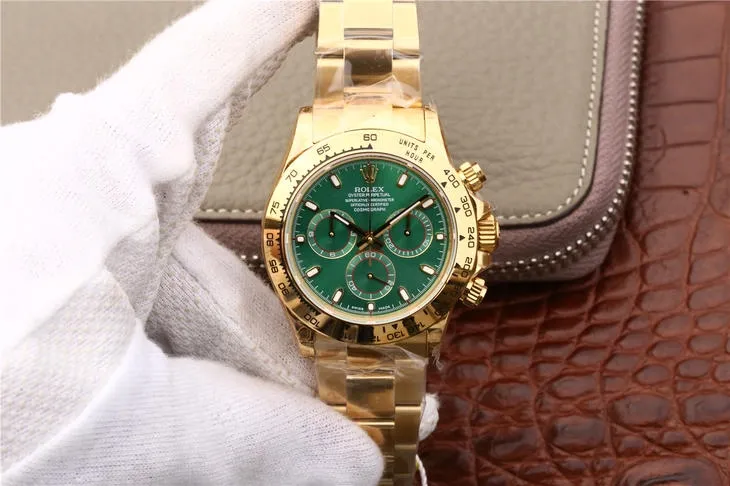
The supplied feature image shows a visibly branded chronograph-style watch held for inspection. It is useful for seeing the kind of dial marks and design details that may matter in a trademark review. The image does not establish who made the watch, whether any mark was authorized, whether the item is genuine, or whether a particular transaction is lawful.
What makes a watch counterfeit rather than merely similar?
The central issue is usually unauthorized use of protected intellectual property, especially a trademark. In U.S. criminal law, 18 U.S.C. 2320 addresses intentional trafficking in goods while knowingly using a counterfeit mark. Civil trademark rules are broader and can apply without a criminal prosecution; 15 U.S.C. 1114 covers specified unauthorized uses of registered marks in commerce.
A watch can resemble a well-known model without displaying that brand's name or logo. That is often called an homage, but the word itself is not a legal safe harbor. A product may still raise questions about protected designs, trade dress, copyright, unfair competition or misleading marketing. At the other end, a watch carrying a brand's name and logo while not made or authorized by that brand is much more likely to be treated as counterfeit. The USPTO's counterfeit-goods resources and WIPO's enforcement materials are useful starting points, but the governing rule remains national or regional law.
Do not assume that quality changes the classification. A seller may call an item a high quality replica watch, but precise finishing, an automatic movement or an honest disclaimer does not grant permission to use someone else's trademark. Legal analysis follows the protected sign, authorization, conduct and jurisdiction, not the seller's quality tier.
Is it legal to sell a super clone watch?
For a watch bearing an unauthorized counterfeit mark, sale is usually the clearest legal red flag. The U.S. criminal statute covers intentional trafficking with knowledge of a counterfeit mark, while civil trademark owners may also seek injunctions, damages and other remedies. The TRIPS Agreement requires member states to make effective civil remedies available and requires criminal procedures for wilful trademark counterfeiting on a commercial scale.
The position is similar in the United Kingdom. Section 92 of the Trade Marks Act 1994 addresses unauthorized application of a sign and, where the statutory conditions ar met, selling, offering, distributing or holding marked goods in the course of business with a view to those acts. Other countries use different wording and thresholds, so the available civil and criminal consequences vary.
Disclosing the truth to the buyer can reduce deception between the two people, but it does not create trademark authorization. Writing "not authentic," "for educational use" or "replica" does not erase a logo from the product or remove it from commerce. Nor does selling at cost necessarily make the transfer lawful. If you sell regularly, take orders, use paid promotion or ship across borders, the facts look even more commercial.
Your safest assumption is simple: do not list or sell a branded counterfeit. If the watch is genuinely unbranded, obtain advice about any remaining design, trade-dress or consumer-law issue before treating it as freely marketable.
Is it legal to buy or own one for personal use?
Private purchase and possession are more jurisdiction-dependent. Some laws focus enforcement on manufacture, commercial use, trafficking, import or sale rather than the mere act of keeping one item. That does not produce a worldwide rule that buying is legal. The order can still be stopped at the border, the item may be forfeited, and local law may attach consequences to acquisition, receipt or possession in particular circumstances.
You also need to distinguish purchase from import. Clicking "buy" may occur at home, but an overseas parcel then enters a customs process. A luxury replica watch that is not prohibited by a standalone possession rule can still be detained or seized as an infringing import.
Canada illustrates the enforcement distinction. The Canadian Intellectual Property Office identifies importing falsely branded knock-offs as a form of trademark infringement. The Canada Border Services Agency can temporarily detain suspected counterfeit or pirated goods under its rights-holder assistance process. That is why a seller's statement that "personal use is always legal" is not a reliable customs answer.
If you already own a watch, avoid converting private possession into advertising or distribution. Do not represent it as genuine, use it as collateral with an authenticity claim, or pass it to another person without first checking local law. If you need advice about an existing item, a local intellectual-property lawyer can assess your facts without relying on a seller's marketing.
Import rules can change the result before delivery
In the United States, 15 U.S.C. 1124 restricts admission of imported merchandise bearing infringing marks, subject to a statutory exception. CBP describes a narrow personal-use exemption: one article of a type bearing a protected mark may accompany an arriving traveler when it is for personal use, not for sale, and the traveler has not received the same type of exemption in the prior 30 days.
Read every part of that sentence. It concerns an article accompanying a traveler. It is not a blanket permission for mailed or couriered orders, multiple watches, business stock, or later resale. A product advertised as swiss super clone watches does not acquire Swiss origin, trademark authorization or customs clearance because of that phrase.
The EU customs framework also needs careful reading. Regulation (EU) No 608/2013 does not apply to non-commercial goods in travelers' personal luggage, but it separately provides procedures for suspected infringing goods and small consignments. The European Commission's customs enforcement page describes the wider border-enforcement role. An exclusion from that one regulation's scope is not a declaration that every purchase, import or possession is lawful under all EU and member-state law.
In the UK, official personal-goods guidance says commercial goods have no personal allowance, while the banned and restricted goods page warns that goods suspected of infringing intellectual-property rights may be seized and prosecution is possible. Australian Border Force likewise tells online buyers that trademark counterfeiting is illegal and that the importer is responsible for checking restrictions; IP Australia provides additional official background on counterfeiting and piracy.
| Situation | What you should assume | Why the result can change | Safer next step |
|---|---|---|---|
| One item in personal luggage | A narrow exception may exist, but only under local conditions | Quantity, prior exemptions, sale intent and national law matter | Read the destination customs rule before travel |
| One item ordered by mail | Traveler-luggage wording may not apply | Mail and courier shipments use different procedures | Ask customs or a local lawyer about the exact shipment |
| Several watches in one parcel | Commercial inference and enforcement risk increase | Quantity, packaging and repeat orders can affect treatment | Do not assume "personal collection" decides the issue |
| Stock for online sale | High legal and platform risk | Advertising, distribution and trademark use are commercial | Do not list branded counterfeit goods |
| Unbranded similar design | Not automatically risk-free | Design rights, trade dress and misleading claims may remain | Review the actual product and market with counsel |
Reselling your personal watch creates a new risk
An item bought for private use does not keep a permanent "personal" status when you advertise it. The moment you create a listing, quote a price or ship it to someone else, you may be using the mark in commerce, offering the goods for sale or distributing them. Local statutes can treat that differently from possession.
The fact that you disclose the watch as an automatic replica watch does not necessarily protect the listing. You may avoid telling the buyer it is authentic, yet still offer a product bearing an unauthorized trademark. Giving the watch away can also amount to distribution under some rules, especially when it supports a business, promotion or repeat supply.
If you inherited or accidentally purchased a suspected counterfeit, do not assume resale is the responsible way to recover money. Ask the marketplace, payment provider, seller and a local adviser about return, dispute or lawful disposal options. Keep the invoice, listing, messages, photos and any authenticity report. Do not alter serials, remove customs notices or create new paperwork.
Marketplace and payment rules may be stricter than criminal law
You can lose a listing or account even when no prosecutor is involved. eBay's counterfeit policy specifically gives a watch displaying a brand trademark but not made by the trademark owner as an example of a prohibited item. It also says unauthorized replicas are not allowed. Calling a listing exact replica watches or using a disclaimer does not override that policy.
Etsy's prohibited-items rules require sellers to follow applicable laws in the markets where they sell and prohibit illegal items. PayPal's Acceptable Use Policy prohibits transactions involving items that infringe trademark, copyright or other proprietary rights. Other marketplaces, advertising networks, hosts, couriers and card processors may impose their own restrictions.
Platform enforcement is contractual, not a court judgment on every element of trademark law. Even so, it has practical consequences: content removal, payment holds, account suspension, requests for authenticity documents and disclosure to rights holders or authorities where required. Check the platform's current policy before you post, not after a dispute begins.
Marketing claims add consumer-law problems
Trademark infringement is not the only issue. Statements about origin, material, movement, water resistance, certification or factory connection can create separate misleading-advertising or fraud concerns. A label such as waterproof replica watch is especially risky when no test result supports the delivered unit. "Swiss" can also be a regulated or misleading origin claim depending on the product and market.
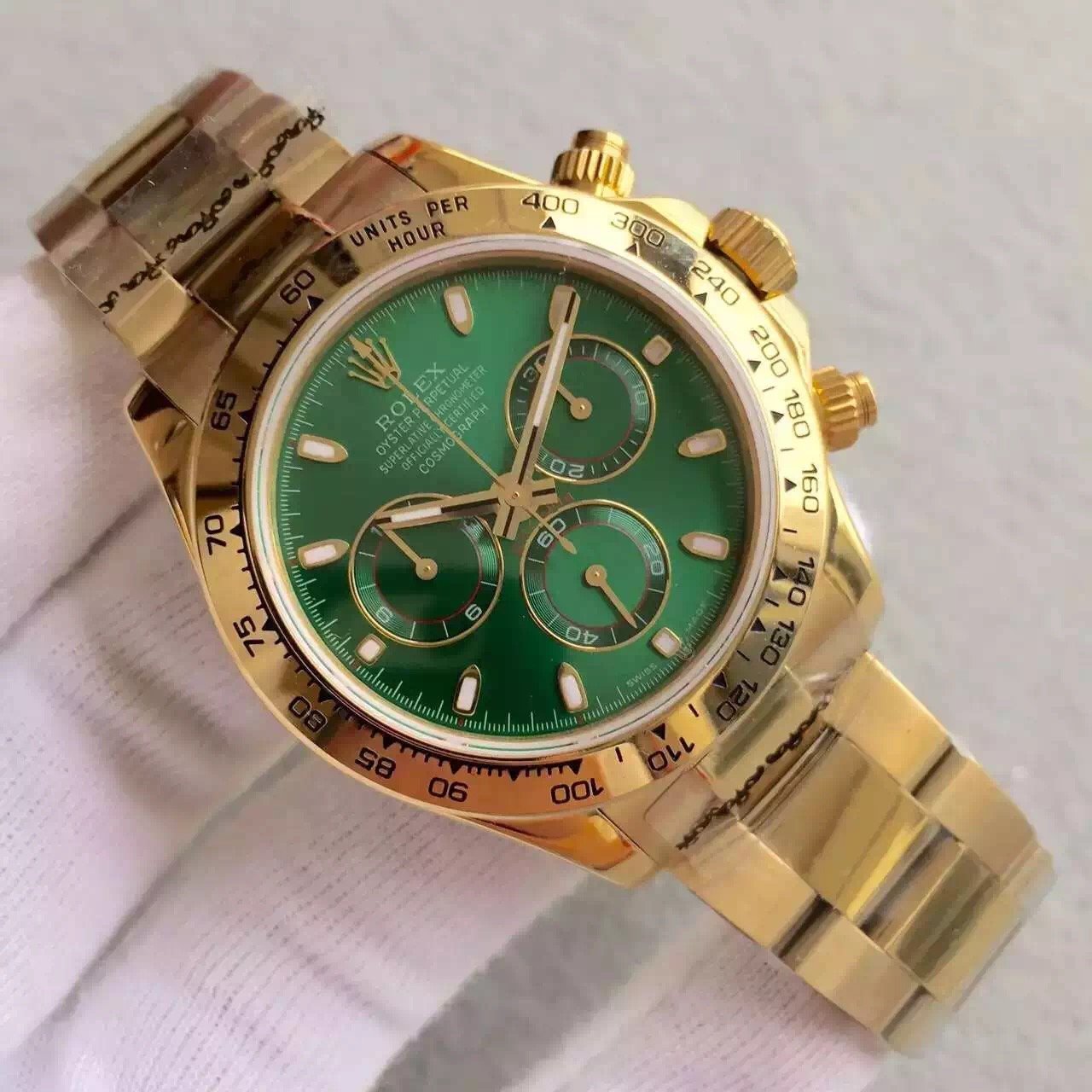
The supplied dial close-up shows visible branding and chronograph-style details. It can help you identify the claims a listing appears to make. It does not verify the case metal, movement, country of origin, water resistance, model identity or authorization from any brand.
Keep your description limited to facts you can prove about the exact unit. Do not copy an original manufacturer's specifications onto a replica listing. Do not describe a movement as Swiss, a case as precious metal, or a test as independent unless you hold evidence that applies to that watch. Truthful technical detail cannot legalize an unauthorized mark, but unsupported claims can make the situation worse.
Use a country-and-conduct checklist before you act
You do not need to become an intellectual-property lawyer to ask better questions. Work through this order:
- Identify the marks. Photograph the dial, clasp, crown, case back, packaging and papers. Note every brand name, logo and origin claim.
- Identify the conduct. Are you only keeping the item, carrying it while traveling, receiving it by mail, advertising it, selling it or supplying several units?
- Map the countries. Record the seller's location, shipping origin, transit route, destination and your own place of sale or use.
- Check customs separately. Read the official destination rule for traveler luggage or parcels. Do not transfer a luggage exception to postal imports.
- Check the sales channel. Read the current marketplace, payment and advertising policies.
- Preserve the evidence. Save the listing, invoice, payment record, correspondence, photos and any detention notice.
- Get local advice when money or enforcement is at stake. A lawyer or customs broker can apply current law to the exact transaction.
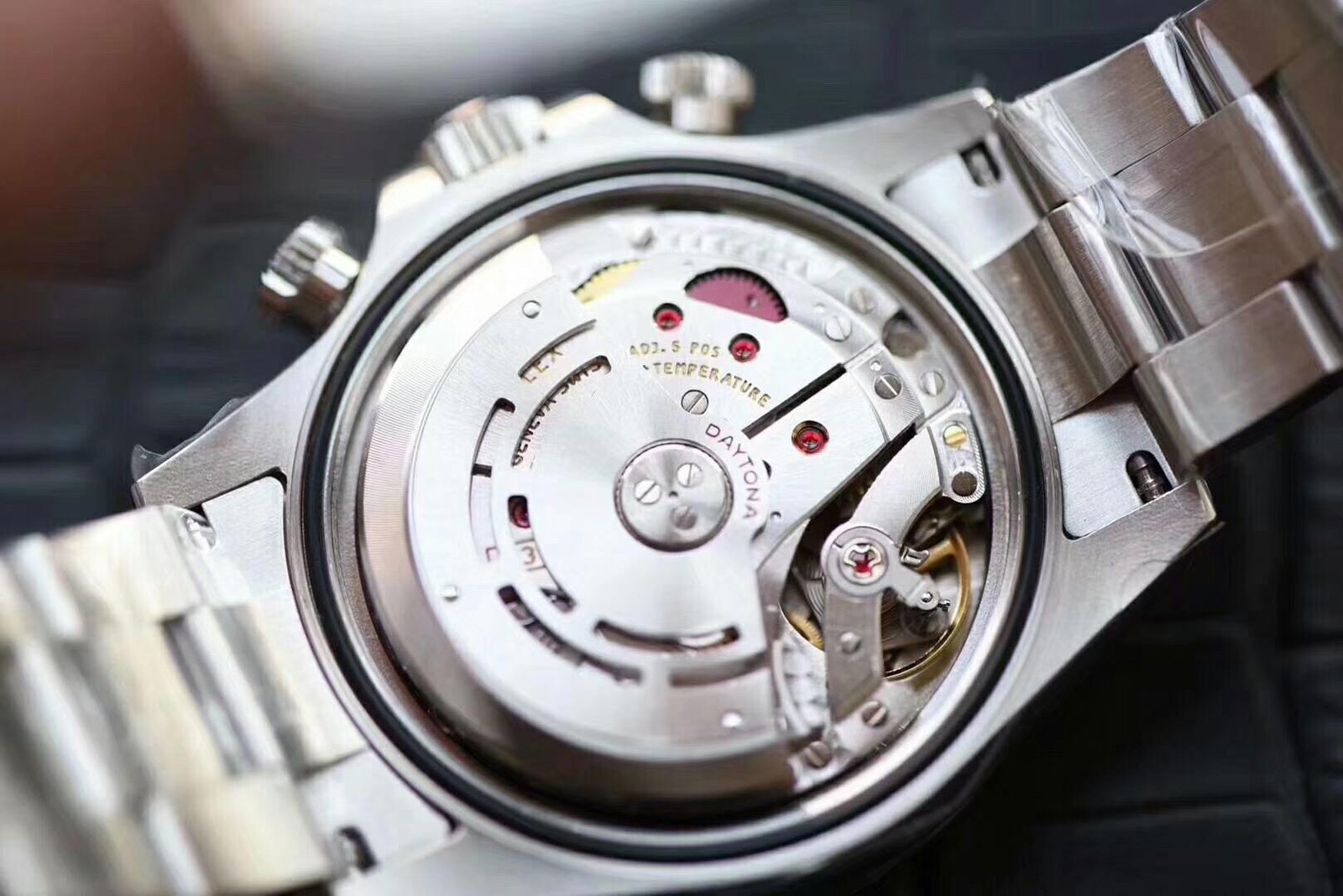
The supplied case-back photo shows a visible decorated movement and branded components. It can support an inventory of the marks and claims present on the item. It does not authenticate the movement, establish its origin, prove brand consent or answer the legal status of a sale.
| Common claim | What it misses | Better conclusion |
|---|---|---|
| "The buyer knows it is fake, so the sale is legal" | Trademark rights do not depend only on deceiving that buyer | Disclosure may not cure unauthorized trademark use |
| "One watch is always legal" | Purchase, possession, import and resale are separate acts | Check the exact country's rule and shipment method |
| "Personal use protects a mailed order" | Some exceptions apply only to goods accompanying a traveler | Do not extend a luggage rule to a parcel |
| "Removing the box solves the problem" | The protected mark may remain on the watch, dial, clasp or movement | Do not alter or conceal goods to avoid enforcement |
| "An expensive replica is treated like an original" | Price and build quality do not create authorization | Focus on the marks, consent, conduct and jurisdiction |
| "A platform allowed the listing, so it must be legal" | Detection can be delayed and platform rules are separate from law | A live listing is not legal clearance |
What to do if customs or a platform stops the item
Read the notice and its deadline. Customs procedures may give the importer, rights holder or both a limited time to respond. Do not ignore the communication, submit a false invoice or ask the seller to misdescribe a replacement. The CBSA's detailed border memorandum, for example, explains detention steps and the opportunity for a rights holder to pursue a civil remedy in Canada.
Gather the original listing, payment receipt, tracking record and all messages. If you did not know the item was counterfeit, preserve the evidence that supports that account. Ask the issuing authority how to contest, consent to abandonment, or obtain more information. For a valuable shipment or any allegation of wrongdoing, contact a qualified lawyer in the jurisdiction named on the notice.
If a marketplace removes your listing, use its appeal process only with accurate documents. Do not repost under altered spelling, cropped logos or a different account. That can create a record of repeated conduct and breach additional platform rules.
The clear answer
Selling a branded super clone watch is generally not a lawful business model in countries that enforce trademark rights. A disclaimer does not supply the brand owner's consent. Buying or privately owning one item can be treated differntly, but you still need to check local law and the separate rules for import, travel, mail, resale and platform use.
If your goal is a similar look with lower legal risk, choose a lawful unbranded design or a watch sold under its maker's own authorized trademark, then verify that its advertising does not misuse protected names, designs or origin claims. If you already have a suspected counterfeit, keep your records, do not represent it as genuine, do not resell it without advice, and respond promptly to any official notice.
That approach gives you a useful answer without pretending one country's exception applies everywhere: identify the mark, identify the action, identify the countries, and verify the current rule before money or goods move.
Looking for a Top-Tier Clone or Custom Build?
Direct access to VS, ZF, 3KF, Clean & BTF factory stock. We provide detailed multi-angle QC photo & video approval prior to final payment.